14 citations
,
April 1976 in “Journal of Cutaneous Pathology” A calcified nodule on a boy's face came from hair follicles and expelled calcium through the skin.
2 citations
,
May 1979 in “PubMed” Monilethrix is not caused by a metabolic defect.
 January 2024 in “Oxford medical case reports”
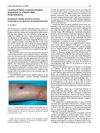
 Standard treatment for congenital erythropoietic porphyria was ineffective over five years.
 3 citations
,
March 2012 in “Actas Dermo-Sifiliográficas”
3 citations
,
March 2012 in “Actas Dermo-Sifiliográficas” An elderly man with skin amyloidosis and abnormal blood proteins was monitored without finding widespread disease after 18 months.
86 citations
,
November 2015 in “Journal of Gastroenterology” The NUDT15 R139C variant causes thiopurine-induced leukocytopenia through a different mechanism than previously thought in Japanese patients with inflammatory bowel disease.
 December 2023 in “Archives of iranian medicine”
 Higher iron levels in hair may increase the risk of esophageal cancer.
252 citations
,
January 1991 in “Electron Microscopy Reviews” 4 citations
,
January 1981 in “PubMed” Hair medullary cells in mammals vary in complexity, with humans having more structured cells similar to inner root sheath cells.
7 citations
,
August 2025 in “Journal of Nanobiotechnology” Bioengineered microneedles and nanomedicine offer promising, precise treatments for tissue regeneration.
13 citations
,
April 1982 in “The Journal of Dermatology” Poly(ADP-ribose) synthesis is linked to skin cell differentiation.
 15 citations
,
April 2007 in “Journal of child neurology”
15 citations
,
April 2007 in “Journal of child neurology” An 11-month-old boy with Menkes disease had severe brain shrinkage and abnormal blood vessels, and didn't respond well to treatment.
December 2017 in “Canadian journal of ophthalmology” A rare skin condition was misdiagnosed as a harmless mole on a woman's eyelid.
17 citations
,
January 2024 in “Burns & Trauma” miR-26b-5p in macrophage exosomes helps keloids grow.
10 citations
,
January 1985 in “PubMed” Trace elements like calcium, iron, and zinc are unevenly distributed in hair, while sulfur is even, and increased phosphorus and potassium levels are linked to skin reactions.
September 2019 in “The journal of investigative dermatology/Journal of investigative dermatology” Mononuclear cells may protect against certain chemotherapy-induced hair loss.
11 citations
,
January 1977 in “Archives of dermatological research” Mouse tail skin has different keratinization near hair follicles and scales.
353 citations
,
May 2016 in “TrAC Trends in Analytical Chemistry” Droplet microfluidics improves efficiency and control in chemistry, biology, and nanotechnology.
66 citations
,
October 2002 in “Human molecular genetics online/Human molecular genetics” A gene mutation in mice causes skin defects and early death.
September 1990 in “Journal of Dermatological Science” 
Fibronectin nanogel microneedles improve skin health and wound healing.
January 2014 in “Institutional Repositories DataBase (IRDB)” Fibroblast spheres can form stem cells, but marker distribution needs more study.
136 citations
,
March 1998 in “Oncogene” Overexpression of E2F1 can lead to skin tumors and disrupt hair growth.
September 2011 in “Chinese Journal of Dermatology” A man's skin condition was misdiagnosed and later identified as a rare type of skin cancer, which did not improve with treatment.
2 citations
,
May 2020 in “JAAD case reports” Ruxolitinib can cause a delayed skin reaction on the nose.
 3 citations
,
December 2020 in “Scientific reports”
3 citations
,
December 2020 in “Scientific reports” Mitochondrial problems in tooth cells lead to bad enamel and dentin development in mice.

A new microneedle treatment shows promise for repigmenting skin in vitiligo.
 1 citations
,
February 2017 in “The American journal of dermatopathology/American journal of dermatopathology”
1 citations
,
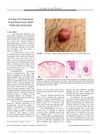
February 2017 in “The American journal of dermatopathology/American journal of dermatopathology” A man with a skin nodule was diagnosed with a rare skin condition called cutaneous focal mucinosis, which can be confused with other skin cancers.
 April 2023 in “The journal of investigative dermatology/Journal of investigative dermatology”
 Researchers found three types of melanocytes in developing mouse skin, each with different genes and locations.
 March 2024 in “Poster presentations”
 A woman with lupus and Kikuchi-Fujimoto disease improved with treatment.
 28 citations
,
April 2009 in “Annals of laboratory medicine”
28 citations
,
April 2009 in “Annals of laboratory medicine” The dense fine speckled pattern in ANA tests is common in autoimmune diseases, challenging previous beliefs that it was unrelated.