July 2025 in “Ecotoxicology and Environmental Safety” Higher levels of molybdenum and lead in hair are linked to increased cholesterol and dyslipidemia risk.
August 2020 in “Benha Journal of Applied Sciences” Higher NLR, PLR, and MPV may help diagnose androgenetic alopecia.
7 citations
,
March 1990 in “Pigment Cell Research” Certain chemicals cause hair graying in black mice but not yellow mice.
 33 citations
,
January 2007 in “Pediatric dermatology”
33 citations
,
January 2007 in “Pediatric dermatology” Hair thinning and loss in a girl with a rare metabolic disorder was linked to her condition.
 4 citations
,
January 2014 in “BioMed Research International”
4 citations
,
January 2014 in “BioMed Research International” Engineering the cell microenvironment is key for advancing tissue engineering and regenerative medicine.
 1 citations
,
January 2014 in “The Journal of Dermatology”
1 citations
,
January 2014 in “The Journal of Dermatology” A patient with Ivemark syndrome developed mixed type vitiligo after a hepatitis C infection, showing different treatment responses and immune cell involvement in the skin.
September 2019 in “Journal of Investigative Dermatology” EGFR and MEK inhibitors reduce PD-L1 in hair follicles, possibly causing inflammation.
February 2025 in “Research Society and Development” Microneedling is safe and effective for improving skin health and appearance.
 April 2024 in “Benha Medical Journal”
 H. pylori infection may be linked to the hair shedding condition Telogen Effluvium.
8 citations
,
August 1971 in “Canadian Journal of Zoology” Chinchillas have specific blood and protein levels, with variations possibly linked to pregnancy or hair growth.
 January 2025 in “JCEM Case Reports”
 Enzyme replacement therapy may help alleviate symptoms in complex cases like this.
April 2025 in “Experimental Eye Research” The Oat mouse model shows mild retinal degeneration, useful for testing treatments.
30 citations
,
August 2005 in “British journal of dermatology/British journal of dermatology, Supplement” A specific gene mutation causes hair loss and potential eye issues, even if vision seems normal.
10 citations
,
February 2022 in “Pharmaceuticals” Smaller curcumin nanocrystals penetrate skin and hair follicles better than larger ones.
47 citations
,
April 1978 in “Journal of Cutaneous Pathology” Basal cell epithelioma resembles fetal hair follicles, not adult or fetal skin.
82 citations
,
November 1985 in “Archives of Dermatology” The newborn's skin condition improved over time, leaving only lighter skin patches.
 67 citations
,
September 2003 in “Journal of cutaneous pathology”
67 citations
,
September 2003 in “Journal of cutaneous pathology” Skin problems are very common in people with end-stage kidney disease.
 9 citations
,
July 2017 in “Journal of medical case reports”
9 citations
,
July 2017 in “Journal of medical case reports” Ruxolitinib treatment may cause eyelash growth.
July 2026 in “Journal of Investigative Dermatology”  1 citations
,
July 2023 in “Cytotherapy”
1 citations
,
July 2023 in “Cytotherapy” Magnetic nanovesicles from stem cells can improve hair growth by staying in the skin longer.
 February 2026 in “BMC Genomics”
 MEG3-miRNAs help control wool traits in young Tan sheep by regulating immune responses, but their decline with age leads to wool changes.
10 citations
,
February 2022 in “JEADV Clinical Practice” Dermoscopy helps diagnose and classify rosacea by revealing key features.
20 citations
,
September 2003 in “Journal of Investigative Dermatology” Targeting MIG and MCP-1 may help treat inflammation in alopecia areata.
May 2014 in “The journal of immunology/The Journal of immunology” Early over-expression of FoxN1 harms immune and skin development.
 14 citations
,
July 2012 in “Journal of the American Academy of Dermatology”
14 citations
,
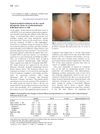
July 2012 in “Journal of the American Academy of Dermatology” Topical tacalcitol ointment can help improve symptoms of EFFC.
14 citations
,
January 2020 in “Women's health reports” Iron deficiency in menstruating women causes many health issues beyond anemia and needs early detection and treatment.
30 citations
,
October 1999 in “Differentiation” Mutant MK6a transgenes in mice cause blistering, hair loss, and potential human alopecia.
 4 citations
,
July 2025 in “Frontiers in Immunology”
4 citations
,
July 2025 in “Frontiers in Immunology” Early intervention with JAK inhibitors may prevent alopecia areata progression.
April 2025 in “OPAL (Open@LaTrobe) (La Trobe University)” Exosomes from small-tailed Han sheep can boost hair growth and thickness in mice.
119 citations
,
January 2000 in “British Journal of Dermatology” Different parts of the nail express different keratins, showing unique patterns of differentiation.