116 citations
,
April 1986 in “The journal of cell biology/The Journal of cell biology” Trichohyalin is a protein in hair follicles that helps form hair filaments.
19 citations
,
January 2013 in “Frontiers in Neuroanatomy” Zebrafish can help study and develop treatments for hearing loss.
 14 citations
,
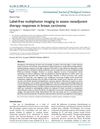
January 2020 in “International Journal of Biological Sciences”
14 citations
,
January 2020 in “International Journal of Biological Sciences” Multiphoton microscopy can effectively assess breast cancer treatment responses without labels.
12 citations
,
February 2011 in “Zenodo (CERN European Organization for Nuclear Research)” Hair properties vary with age and ethnic origin.
6 citations
,
May 2022 in “Pharmaceutics” Zinc pyrithione dissolves quickly on the skin and in hair follicles, especially in smaller particles.
 4 citations
,
July 2023 in “Pharmaceutics (Basel)”
4 citations
,
July 2023 in “Pharmaceutics (Basel)” Nanoparticle-based drug delivery to hair follicles is more effective when tested under conditions that match skin behavior.
1 citations
,
November 2023 in “Cosmetics” Surfactants damage hair, but sealing the cuticle can prevent this.
October 2024 in “Acta Biomaterialia” Collagen makes skin stiff, and preservation methods greatly increase tissue stiffness.
27 citations
,
July 2013 in “The journal of investigative dermatology/Journal of investigative dermatology” Lasers have become precise tools in skin treatment and diagnosis, with ongoing advancements improving their effectiveness.
20 citations
,
December 1995 in “Veterinary Dermatology” Yorkshire Terriers with Colour Dilution Alopecia have reduced melanin and hair structure issues.
4 citations
,
July 2010 in “International Journal of Cosmetic Science” Curved human hair has different structures on its convex and concave sides.
2 citations
,
March 2018 in “ACS Sustainable Chemistry & Engineering” Heating human hair creates hollow microtubes with smooth surfaces.
33 citations
,
June 1995 in “International journal of legal medicine” Environmental factors can greatly reduce drug levels in hair.
25 citations
,
May 2019 in “Cosmetics” 18-MEA and cationic surfactants can restore and maintain hair's hydrophobic nature, improving its beauty and feel.
27 citations
,
May 2019 in “Cosmetics” The hair cuticle is made of tough proteins that protect the hair, but more research is needed to fully understand its structure.
16 citations
,
July 2023 in “Frontiers in Medicine” Reliable, non-invasive tools are needed for better vitiligo diagnosis.
8 citations
,
January 2020 in “PeerJ” Alopecia Areata causes significant structural and compositional changes in hair.
4 citations
,
January 2019 in “Micron” Fetal hair follicles have melanocytes with melanosomes at different stages, which are broken down into pigment particles in keratinocytes.
 3 citations
,
February 2023 in “ACS omega”
3 citations
,
February 2023 in “ACS omega” Grape seed oil improved hair quality the most, followed by rosehip and safflower seed oils, and reduced damage from shampoo.
2 citations
,
June 2020 in “Journal of Investigative Dermatology” 3D imaging of skin biopsies offers better accuracy but is time-consuming and can't clear melanin.
1 citations
,
July 2017 in “Skin appendage disorders” A 9-year-old Hispanic girl has Uncombable Hair Syndrome, which may improve with age and biotin treatment.
 September 2024 in “Heliyon”
 Repeated hair dyeing significantly damages hair.

Sensory neuron changes and Merkel-cell changes in the skin happen independently during normal skin maintenance.

Sensory neuron and Merkel cell changes in the skin happen independently during normal skin maintenance.
 September 1997 in “Journal of The European Academy of Dermatology and Venereology”
 Examining scalp tissue under a microscope helps diagnose and understand hair loss diseases.
132 citations
,
April 2007 in “European journal of pharmaceutics and biopharmaceutics” The microemulsion delivered the dye deeper into the skin than the cream.
62 citations
,
December 2008 in “Journal of structural biology” Hair curvature in Japanese people is linked to specific cell types and filament arrangements in the hair cortex.
45 citations
,
January 2016 in “Journal of Nanomaterials” Silver nanoparticles from Ziziphus nummularia leaves have better antibacterial, antifungal, antioxidant, and hair growth effects than the leaf extract alone.
33 citations
,
September 2018 in “Frontiers in Microbiology” Human hair shafts inhibit Gram-positive bacteria growth but not Gram-negative bacteria.
15 citations
,
August 2020 in “Analytical chemistry” Hair lipids do not protect against humidity.