12 citations
,
December 2011 in “Canadian Journal of Microbiology” Serotype 4 of Ureaplasma showed the highest pathogenicity in female mice.
 July 2025 in “Journal of Investigative Dermatology”
 Miniaturized hair follicles in androgenetic alopecia show abnormal mitochondrial activity and damage.
November 2024 in “Journal of Investigative Dermatology” Blocking the JAK/STAT pathway may help reduce skin sensitivity in Xeroderma pigmentosum.
9 citations
,
January 2012 in “International journal of trichology” Trichostasis spinulosa can be diagnosed with a simple skin biopsy and treated with specific gels, but lesions may return after stopping treatment.
 24 citations
,
January 2011 in “International Journal of Trichology”
24 citations
,
January 2011 in “International Journal of Trichology” Light microscopy is useful for diagnosing different hair disorders.
 1 citations
,
June 2023 in “Reproduction”
1 citations
,
June 2023 in “Reproduction” Microglia, the brain's immune cells, may contribute to Polycystic Ovary Syndrome (PCOS) by altering the female brain's structure and function, with kisspeptin neurons and GABA neurotransmitters also playing a role.
4 citations
,
December 2021 in “Journal of clinical laboratory analysis” A new mutation in the DCAF17 gene was found to cause Woodhouse-Sakati syndrome in a large family.
 12 citations
,
November 2014 in “Journal of Cutaneous Medicine and Surgery”
12 citations
,
November 2014 in “Journal of Cutaneous Medicine and Surgery” Antiviral medication valganciclovir may improve skin and hair in Trichodysplasia Spinulosa patients.
 24 citations
,
May 2018 in “Journal of Molecular Endocrinology”
24 citations
,
May 2018 in “Journal of Molecular Endocrinology” The spiny mouse is a unique menstruating rodent that can help us understand menstruation and reproductive disorders.
February 1988 in “Journal of the American Academy of Dermatology”  1 citations
,
August 2023 in “Genome research”
1 citations
,
August 2023 in “Genome research” The spiny mouse regenerates ear tissue asymmetrically, with gene expression differences possibly explaining its unique healing abilities.
 December 2023 in “Urogenital tract infection”
 Seminal bacteria can lower sperm quality in subfertile men.
 June 2023 in “British Journal of Dermatology”
 The protein called small nuclear ribonucleoprotein polypeptide E is identified as a cause of a type of hair loss without other symptoms.
11 citations
,
November 2019 in “The FASEB Journal” A mutation in the MAP2 gene causes reduced hair follicle density, leading to hairlessness.
 25 citations
,
April 2007 in “Journal of The American Academy of Dermatology”
25 citations
,
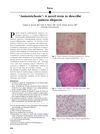
April 2007 in “Journal of The American Academy of Dermatology” The document suggests "anisotrichosis" as a new term for hair thickness variation in common baldness.
 October 2022 in “Rheumatology (Bulgaria)”
 Accurate diagnosis of progressive supranuclear palsy requires thorough neurological assessments and MRI.
 June 2025 in “ARSHI Veterinary Letters”
 The cat's skin condition improved and hair regrew after antifungal treatment.
26 citations
,
January 1993 in “Dermatology” A rare case of isolated trichothiodystrophy was identified, marked by brittle hair with low sulfur content.
 2 citations
,
January 2022 in “Boletín médico del Hospital infantil de México/Boletín médico del Hospital Infantil de México”
2 citations
,
January 2022 in “Boletín médico del Hospital infantil de México/Boletín médico del Hospital Infantil de México” Some immunosuppressed patients can get unusual skin infections from Malassezia, which can be treated with antifungal medication.
A new mutation in the TRPS1 gene caused Trichorhinophalangeal syndrome in a 17-year-old, highlighting the need for genetic testing.
4 citations
,
November 2016 in “The Journal of Dermatology” Pili torti hair is fragile due to loose keratin filaments and weak disulfide bonds.
 July 2003 in “British Journal of Dermatology”
 Some skin conditions are associated with other serious diseases, and office microscopy may miss many fungal infections.
36 citations
,
July 1988 in “Archives of Dermatological Research” Pili annulati is caused by a protein metabolism disorder affecting hair structure.

Menopause-related skin changes may increase fungal infections and inflammation.
April 2016 in “Journal of Investigative Dermatology” Mutations in the TSPEAR gene cause a new form of ectodermal dysplasia affecting hair and tooth development.
A new genetic mutation was found causing hair and eye issues in a boy.
November 2025 in “F1000Research” Certain fungi may contribute to hair loss in cynomolgus macaques.
June 2025 in “British Journal of Dermatology” Syphilis can mimic other diseases, making diagnosis challenging, but proper testing and treatment are effective.
 3 citations
,
March 2014 in “Veterinary dermatology”
3 citations
,
March 2014 in “Veterinary dermatology” Norwegian puffin dogs have a unique type of hair loss that often doesn't get better on its own and responds well to ciclosporin treatment.
6 citations
,
July 2005 in “Acta Ophthalmologica Scandinavica” Mitochondriopathy may cause eyelash loss.