 February 2010 in “Journal of The American Academy of Dermatology”
 Mimicking growth factors in a topical solution can prolong hair growth phase and reduce hair loss without side effects.
 February 2025 in “BMC Genomics”
 Melatonin improves cashmere quality and yield in goats by enhancing hair follicle development.
7 citations
,
November 2021 in “JAAD Case Reports” Mogamulizumab can cause hair loss and skin rashes.
![Discovery of 7-Methoxy-6-[4-(4-Methyl-1,3-Thiazol-2-yl)-1H-Imidazol-5-yl]-1,3-Benzothiazole (TASP0382088): A Potent and Selective Transforming Growth Factor-β Type I Receptor Inhibitor as a Topical Drug for Alopecia](/images/assets/9620bd26-3366-4f2a-bcac-f511697bbc41/small/35997.jpg) 6 citations
,
January 2013 in “Chemical & pharmaceutical bulletin/Chemical and pharmaceutical bulletin”
6 citations
,
January 2013 in “Chemical & pharmaceutical bulletin/Chemical and pharmaceutical bulletin” A new compound shows promise as a topical treatment for hair loss.
 34 citations
,
March 2004 in “Journal of Liposome Research”
34 citations
,
March 2004 in “Journal of Liposome Research” Minoxidil-loaded liposomes effectively deliver to hair follicles, potentially improving hair growth and treating alopecia.
June 2026 in “International Journal of Advanced Multidisciplinary Research and Studies” The new treatment for hair loss is effective and safer with fewer side effects.
October 2025 in “Frontiers in Endocrinology” Methimazole for hyperthyroidism has known and new side effects needing more study for safety.
6 citations
,
November 1990 in “DICP” 42 citations
,
August 2012 in “Psychoneuroendocrinology” Finasteride reduces certain behaviors caused by D1-like receptor agonists but not by D2-like receptor agonists in mice.
 July 1994 in “Annals of Pharmacotherapy”
 Cromolyn sodium's effectiveness for treating asthma in children under 2 is unclear, possibly more beneficial for older children, and further research is needed.
 November 2022 in “Animal Bioscience”
 Adding methionine to a low-protein diet helps Angora rabbits grow better fur.
23 citations
,
August 1975 in “Experimental Biology and Medicine” Copper supplements during pregnancy improve survival and development in mutant mice.
 April 2026 in “microPublication”
 Minoxidil might partially activate estrogen receptors, affecting hair growth.
5 citations
,
June 2020 in “Medicine” A patient with a rare disease had a unique genetic mutation linked to their symptoms.
 January 2013 in “The Pan African medical journal”
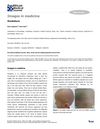
 Monilethrix causes short, fragile hair with no specific treatment available.
52 citations
,
May 1997 in “Journal of Biological Chemistry” High ornithine decarboxylase levels may lead to hair loss and cancer by increasing CK2 activity in the nucleus.
 April 2016 in “Journal of Investigative Dermatology”
 FOL-005, a new substance, was found to reduce hair growth without toxicity when injected into skin, suggesting it could be used to treat excessive hair growth.
 85 citations
,
January 2007 in “Journal of Drug Targeting”
85 citations
,
January 2007 in “Journal of Drug Targeting” Liposomes better deliver minoxidil for hair loss treatment than niosomes.
February 2026 in “Toxicology Letters” MK-0773 is a moderate inhibitor of the SRD5A2 enzyme.
 July 2026 in “Current Issues in Molecular Biology”
 Plerixafor may help restore skin pigmentation safely.
30 citations
,
January 2024 in “Frontiers in Pharmacology” These migraine prevention drugs can cause side effects like constipation, hair loss, injection site reactions, fatigue, and sometimes unexpected issues like Raynaud's phenomenon and weight gain.
 5 citations
,
December 1991 in “Annals of the New York Academy of Sciences”
5 citations
,
December 1991 in “Annals of the New York Academy of Sciences” Minoxidil boosts hair growth by undergoing a process in hair follicles and certain skin cells, and by increasing the production of compounds essential for hair growth and maintenance.
 August 2021 in “Research Square (Research Square)”
 Ferulic acid can reduce seizures and depression-like behaviors in catamenial epilepsy by balancing hormones and brain enzyme activity.
8 citations
,
January 1989 in “PubMed” Minoxidil did not affect hair growth in newborn mice.
Sinsun-yukza-hwan extract promotes hair growth in mice.

Oral Minoxidil could be a safe and effective alternative treatment for various non-androgenic alopecias.
Iontophoresis and chitosan microparticles improve minoxidil delivery and retention for hair loss treatment.
Vismodegib effectively treats advanced basal cell carcinoma but requires careful management of serious side effects.
 3 citations
,
April 2010 in “Journal of Receptors and Signal Transduction”
3 citations
,
April 2010 in “Journal of Receptors and Signal Transduction” Minoxidil, a common alopecia medication, might cause eye changes due to its properties and lack of tissue selectivity.
 February 2024 in “Journal of Molecular Structure”
 The new minoxidil and salicylic acid hydrogel improves alopecia treatment.