 March 2020 in “Hair transplant forum international”
 Taking minoxidil by mouth for hair growth might not be safe if you also take aspirin.
 15 citations
,
January 1995 in “Archives of Dermatological Research”
15 citations
,
January 1995 in “Archives of Dermatological Research” Minoxidil boosts elastin production, potentially helping skin diseases.
 5 citations
,
January 2021 in “Journal of The American Academy of Dermatology”
5 citations
,
January 2021 in “Journal of The American Academy of Dermatology” Low-dose oral minoxidil is an effective and safe treatment for hair loss.
 2 citations
,
November 2009 in “Korean journal of chemical engineering”
2 citations
,
November 2009 in “Korean journal of chemical engineering” Adding Brij 78 to minoxidil microparticles in a certain solution helps them stick to the skin better and prevents clumping.
 1 citations
,
August 2017
1 citations
,
August 2017 Minoxidil helps stimulate hair growth and enlarge small follicles in common hair loss, but doesn't stop it, and its effects can be boosted when combined with finasteride.
15 citations
,
August 1988 in “Archives of Otolaryngology - Head and Neck Surgery” Minoxidil can cause excessive hair growth in the ear canal, leading to ear infections and hearing loss.
32 citations
,
August 1996 in “Journal of Investigative Dermatology”  20 citations
,
February 1977 in “Circulation”
20 citations
,
February 1977 in “Circulation” Minoxidil lowers blood pressure and increases heart efficiency, but may raise lung artery pressure in some people.
 53 citations
,
May 1990 in “Journal of Dermatology”
53 citations
,
May 1990 in “Journal of Dermatology” Minoxidil speeds up hair growth in rats without prolonging growth phase.
 3 citations
,
January 2018 in “Annals of Dermatology”
3 citations
,
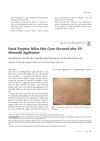
January 2018 in “Annals of Dermatology” A woman developed facial hair cysts after using a 3% minoxidil solution for hair loss, which disappeared after stopping the treatment and removing the cysts surgically.
 35 citations
,
August 1980 in “Circulation”
35 citations
,
August 1980 in “Circulation” Minoxidil may cause heart issues in animals and humans.
September 2024 in “Dermatology Online Journal” Facial hair growth from minoxidil stopped after she quit using it.
 May 2026 in “Zenodo (CERN European Organization for Nuclear Research)”
 Minoxidil in New Hair4U Solution helps reduce hair thinning and promotes hair growth.
8 citations
,
January 1989 in “PubMed” Minoxidil did not affect hair growth in newborn mice.
June 2024 in “International Journal of Pharmaceutical Research and Applications” Minoxidil tablets with 6% croscarmellose sodium dissolve quickly and work well.
 August 2023 in “Drug Design Development and Therapy”
 Minoxidil may work for hair loss by reducing androgen sensitivity and altering hormone-related enzymes.
July 2021 in “Journal of reports in pharmaceutical sciences” The 2% minoxidil nanosuspension is as effective as the commercial product but safer and easier to use.
May 2019 in “International Journal of Research In Pharmaceutical Chemistry and Analysis” Researchers developed a simple and accurate method to measure Minoxidil in tablets using UV light.
 June 2026 in “Preprints.org”
 Oral minoxidil can harm arteries at higher doses, while dutasteride may be safer.
April 2025 in “International Journal of Pharmaceutics” Liposomes improve minoxidil delivery to hair follicles, enhancing treatment for hair loss.
 8 citations
,
April 2020 in “Journal of The American Academy of Dermatology”
8 citations
,
April 2020 in “Journal of The American Academy of Dermatology” Oral minoxidil is a reasonably safe alternative for patients allergic to the topical form.
January 2021 in “Systematic Reviews in Pharmacy” Melatonin and minoxidil together may improve hair growth when applied to the skin.
 36 citations
,
September 2018 in “Dermatologic Therapy”
36 citations
,
September 2018 in “Dermatologic Therapy” Oral minoxidil helps hair growth, is cost-effective, and mostly well-tolerated.
 January 2025 in “Journal of Drugs in Dermatology”
 Oral minoxidil is easier to use and more satisfying for hair loss treatment than topical minoxidil.
 March 2024 in “Journal of the Dermatology Nurses’ Association”
 Low-dose oral minoxidil is being revisited as a promising hair loss treatment.
 August 2025 in “Indian Dermatology Online Journal”
 Combining minoxidil with phototherapy improves vitiligo treatment better than phototherapy alone.
December 2024 in “Brazilian Journal of Development” Farmácias de manipulação precisam melhorar o controle de qualidade do Minoxidil.
 February 2026 in “Frontiers in Medicine”
 Oral minoxidil improved hair loss more than oral dutasteride.
12 citations
,
July 1993 in “In Vitro Cellular & Developmental Biology - Animal” Minoxidil enhances hair growth and preserves the root sheath in cultured follicles.