 July 1988 in “Journal of The American Academy of Dermatology”
 Various dermatologic treatments were effective for skin conditions like acne, rosacea, hair loss, and psoriasis from December 1986 to December 1987.
Treatments for hair loss vary, but cell-based options may be the future.
 1113 citations
,
August 1999 in “The New England Journal of Medicine”
1113 citations
,
August 1999 in “The New England Journal of Medicine” Hair follicle biology advancements may lead to better hair growth disorder treatments.
 203 citations
,
December 2004 in “Journal of The American Academy of Dermatology”
203 citations
,
December 2004 in “Journal of The American Academy of Dermatology” Early diagnosis and treatment, using finasteride, minoxidil, or hair transplantation, improves hair loss outcomes.
 119 citations
,
June 2005 in “Journal of Molecular and Cellular Cardiology”
119 citations
,
June 2005 in “Journal of Molecular and Cellular Cardiology” Potassium channel openers are effective in treating heart conditions, high blood pressure, pulmonary diseases, bladder issues, and hair loss, but more selective drugs are needed.
 68 citations
,
May 2012 in “Annals of Oncology”
68 citations
,
May 2012 in “Annals of Oncology” Some breast cancer chemotherapy can cause permanent hair loss.
 12 citations
,
March 2021 in “Molecules”
12 citations
,
March 2021 in “Molecules” Cedrol Nanoemulsion was found to be more effective at promoting hair growth than traditional treatments and had better bioavailability.
 2 citations
,
January 2020 in “International Journal of Cosmetic Science”
2 citations
,
January 2020 in “International Journal of Cosmetic Science” Niacinamide does not promote hair growth.
 July 2018 in “Elsevier eBooks”
 Some drugs can cause reversible hair loss, but certain chemotherapy drugs may lead to permanent hair loss; drugs can also change hair color and texture.
 421 citations
,
April 2012 in “The New England Journal of Medicine”
421 citations
,
April 2012 in “The New England Journal of Medicine” Alopecia Areata is an autoimmune condition causing hair loss with no cure and treatments that often don't work well.
 162 citations
,
August 2002 in “Survey of Ophthalmology”
162 citations
,
August 2002 in “Survey of Ophthalmology” Latanoprost can make eyelashes longer, thicker, and darker.
 115 citations
,
January 2014 in “Journal of Cutaneous and Aesthetic Surgery”
115 citations
,
January 2014 in “Journal of Cutaneous and Aesthetic Surgery” Platelet-rich plasma (PRP) is a cheap and easy treatment for hair loss, but not suitable for everyone. It also helps in healing ulcers, rejuvenating skin, and improving hair transplants.
 111 citations
,
March 2012 in “Expert Opinion on Drug Delivery”
111 citations
,
March 2012 in “Expert Opinion on Drug Delivery” Liposomes could improve how skin care products work but are costly and not very stable.
 76 citations
,
January 2007 in “American Journal of Clinical Dermatology”
76 citations
,
January 2007 in “American Journal of Clinical Dermatology” Women with PCOS often have skin problems like excessive hair, acne, hair loss, and dark patches, which can be treated with hormonal and non-hormonal therapies.
 53 citations
,
March 2014 in “Cold Spring Harbor Perspectives in Medicine”
53 citations
,
March 2014 in “Cold Spring Harbor Perspectives in Medicine” The document explains different types of hair loss, their causes, and treatments, and suggests future research areas.
 44 citations
,
November 2010 in “Current Opinion in Supportive and Palliative Care”
44 citations
,
November 2010 in “Current Opinion in Supportive and Palliative Care” Many patients find hair loss from chemotherapy very distressing, and while treatments like minoxidil and scalp cooling may help, there is no sure way to prevent it.
 41 citations
,
July 2015 in “Current Drug Discovery Technologies”
41 citations
,
July 2015 in “Current Drug Discovery Technologies” Some plants may help with hair growth and have fewer side effects than synthetic drugs, but more research is needed to confirm their effectiveness.
 20 citations
,
January 2015 in “Current problems in dermatology”
20 citations
,
January 2015 in “Current problems in dermatology” Hair gets thinner, grayer, and changes texture with age due to genetics, environment, and cellular changes, affecting the growth cycle.
 19 citations
,
April 2014 in “Hormones”
19 citations
,
April 2014 in “Hormones” Hormones and genetics play key roles in male and female baldness, which can affect mental health and may be linked to other health issues.
 18 citations
,
January 2007 in “Pharmaceutical Biology”
18 citations
,
January 2007 in “Pharmaceutical Biology” Citrullus colocynthis extract is effective for hair growth, comparable to minoxidil.
 18 citations
,
June 1999 in “Statistical Methods in Medical Research”
18 citations
,
June 1999 in “Statistical Methods in Medical Research” The document concludes that PK/PD modeling is important for determining the safe and effective dosages of drugs.
 16 citations
,
January 2017 in “Acta dermatovenerologica Alpina, Pannonica et Adriatica (Tiskana izd.)”
16 citations
,
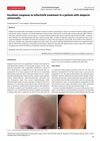
January 2017 in “Acta dermatovenerologica Alpina, Pannonica et Adriatica (Tiskana izd.)” A patient with complete hair loss regrew all her hair using tofacitinib.
 15 citations
,
September 2015 in “Journal der Deutschen Dermatologischen Gesellschaft”
15 citations
,
September 2015 in “Journal der Deutschen Dermatologischen Gesellschaft” Skin doctors should recognize and treat conditions like hair-pulling and skin-picking early, often using therapy and medication, to help 50-70% of patients.
 14 citations
,
January 1985 in “International Journal of Dermatology”
14 citations
,
January 1985 in “International Journal of Dermatology” The cause of alopecia areata was unknown, and while various treatments existed, no best treatment was agreed upon.
 8 citations
,
March 2018 in “Expert Review of Respiratory Medicine”
8 citations
,
March 2018 in “Expert Review of Respiratory Medicine” Inhalation therapy may repair and protect elastin in the lungs of COPD patients.
 8 citations
,
January 1989 in “Journal of Dermatological Treatment”
8 citations
,
January 1989 in “Journal of Dermatological Treatment” This text talks about how to treat hair loss in women. It suggests different options and stresses the importance of support.
 8 citations
,
October 1988 in “Clinics in Dermatology”
8 citations
,
October 1988 in “Clinics in Dermatology” Current research explores hair growth drugs, while future research aims for personalized treatments.
 7 citations
,
May 2014 in “Clinical practice”
7 citations
,
May 2014 in “Clinical practice” Cooling the scalp may prevent hair loss from chemotherapy, hair often grows back after treatment, and nail issues usually improve after stopping the drug.
 3 citations
,
October 2019 in “Dermatologic Therapy”
3 citations
,
October 2019 in “Dermatologic Therapy” Hair loss in men is mainly caused by hormones and genes, and while current treatments can slow it down, they can't fully stop it.
 3 citations
,
January 2015 in “Social Science Research Network”
3 citations
,
January 2015 in “Social Science Research Network” The conclusion is that off-label drug use can lead to important medical discoveries and improve patient care.