 August 2016 in “Journal of Investigative Dermatology”
 The endocannabinoid system affects oil production and inflammation in skin cells.
 August 2016 in “Journal of Investigative Dermatology”
 Zinc deficiency disrupts hair growth and cycle, but zinc supplements can fix this.
 November 2011 in “Pediatric dermatology”
 Marie-Unna Hereditary Hypotrichosis is a rare genetic condition causing sparse hair growth, requiring specific recognition for proper care.
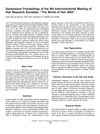 November 2005 in “Journal of Investigative Dermatology Symposium Proceedings”
 The 2004 hair research meeting presented new findings on hair cell differentiation, genetic factors in hair loss, hair pigmentation, and potential targeted therapies.
 August 2016 in “Journal of Investigative Dermatology”
 ![Discovery of 7-Methoxy-6-[4-(4-Methyl-1,3-Thiazol-2-yl)-1H-Imidazol-5-yl]-1,3-Benzothiazole (TASP0382088): A Potent and Selective Transforming Growth Factor-β Type I Receptor Inhibitor as a Topical Drug for Alopecia](/images/assets/9620bd26-3366-4f2a-bcac-f511697bbc41/small/35997.jpg) 6 citations
,
January 2013 in “Chemical & pharmaceutical bulletin/Chemical and pharmaceutical bulletin”
6 citations
,
January 2013 in “Chemical & pharmaceutical bulletin/Chemical and pharmaceutical bulletin” A new compound shows promise as a topical treatment for hair loss.
51 citations
,
December 2006 in “Mammalian Genome”  12 citations
,
January 2018 in “Journal of Drug Delivery Science and Technology”
12 citations
,
January 2018 in “Journal of Drug Delivery Science and Technology” The new particle system could be a promising treatment for diseases related to the 5-α reductase enzyme.
 14 citations
,
January 2017 in “Pharmacological Reports”
14 citations
,
January 2017 in “Pharmacological Reports” TP0427736 may help treat hair loss by blocking a specific protein and promoting hair growth.
 July 2022 in “The journal of investigative dermatology/Journal of investigative dermatology”
 A patient with a PLEC mutation has epidermolysis bullosa, muscular dystrophy, and myasthenia gravis, which improved with steroid treatment.
January 2016 in “Munich Personal RePEc Archive (Ludwig Maximilian University of Munich)” A new method using gold nanoshells and infrared light effectively delivers siRNA to cancer and stem cells with precision and minimal damage.
1 citations
,
June 2025 in “Cell Biochemistry and Biophysics”  November 2023 in “The journal of investigative dermatology/Journal of investigative dermatology”
 Removing MCPIP1 from myeloid cells in mice leads to hair loss and prevents skin tumors but causes pigmented spots.
1 citations
,
February 1991 in “Journal of Biological Chemistry” Researchers created a new mouse model, G4, that mimics human PCOS symptoms and links the condition to a specific gene.

A new peptide, murikal/SPR4, was found to significantly increase hair growth in mice, and its liposomal topical formulations enhanced hair growth more than commercial products. However, results on human scalp skin were unclear, needing more tests.
 6 citations
,
January 2020 in “International journal of biological sciences”
6 citations
,
January 2020 in “International journal of biological sciences” Removing the ROBO4 gene in mice reduces skin inflammation and hair loss by affecting certain inflammation pathways and gene expression.
26 citations
,
April 1996 in “Journal of Investigative Dermatology”  47 citations
,
December 2019 in “Frontiers in immunology”
47 citations
,
December 2019 in “Frontiers in immunology” A new mutation in the STING protein causes a range of symptoms and its severity may be affected by other genetic variations; treatment with a specific inhibitor showed improvement in one patient.
10 citations
,
November 2017 in “Letters in drug design & discovery” Researchers identified promising inhibitors for the BRD4 protein, including finasteride and amentoflavone.
The balance between cell renewal and differentiation controls the growth of cancerous cells in mouse skin.

mEphA1 receptor tyrosine kinase is important for skin and hair development and may play a role in certain diseases.
 76 citations
,
September 1992 in “Endocrinology”
76 citations
,
September 1992 in “Endocrinology” The human type II 5α-reductase gene has a specific structure important for understanding certain medical conditions.
3 citations
,
February 2018 in “Experimental and Molecular Medicine/Experimental and molecular medicine” A protein called PCBP2 controls the production of a hair growth protein by interacting with its genetic message and is linked to hair loss when this control is disrupted.
March 2026 in “Journal of Investigative Dermatology” July 2024 in “Journal of Investigative Dermatology” INTASYL is a promising, adaptable RNAi technology for treating skin cancers.
4 citations
,
January 2023 in “Skin Appendage Disorders” Changes in certain RNA and protein levels may contribute to alopecia areata and could be treatment targets.
April 2016 in “Journal of Investigative Dermatology” Mutations in the TSPEAR gene cause a new form of ectodermal dysplasia affecting hair and tooth development.
September 2025 in “Science Advances” PADI4 enzyme slows down cell growth in developing hair follicles.
215 citations
,
November 2000 in “Journal of Investigative Dermatology” The system allows precise control of gene expression in mouse skin, useful for studying skin biology.