 11 citations
,
January 1985 in “British Journal of Dermatology”
11 citations
,
January 1985 in “British Journal of Dermatology” The document concludes that an inherited nail condition often improves on its own, and spironolactone effectively treats acne in women.
May 2025 in “Clinical and Translational Allergy” Atopic dermatitis and alopecia areata have a major global socioeconomic impact, needing more research and better healthcare alignment.
35 citations
,
September 2003 in “Archives of dermatology” Tiger tail bands in hair are caused by wavy hair fibers with melanin, unlike straight fibers in normal hair.
 12 citations
,
November 1987 in “Pediatric dermatology”
12 citations
,
November 1987 in “Pediatric dermatology” Four children had unmanageable pale blond hair due to uncombable-hair syndrome.
Hair dysplasias involve various hair disorders causing fragility, breakage, and poor hair adhesion.
 33 citations
,
March 2006 in “Seminars in cutaneous medicine and surgery”
33 citations
,
March 2006 in “Seminars in cutaneous medicine and surgery” The document explains how to identify different hair problems using a microscope.
65 citations
,
May 2006 in “Journal of Structural Biology” Hair curliness is due to uneven distribution of different cortices within the hair fiber.
February 2013 in “Journal of the American Academy of Dermatology” Uncombable hair syndrome causes dry, frizzy hair that can't be combed flat, seen in a young child.
 December 2025 in “IP Indian Journal of Clinical and Experimental Dermatology”
 Hair shaft disorders often indicate genetic or systemic issues and are managed by minimizing damage.
 September 2021 in “Mağallaẗ al-Muẖtar li-l-ʿulūm”
 Two sisters have rare hair disorders causing short, fragile, kinky hair.
 5 citations
,
March 2009 in “Pediatric Dermatology”
5 citations
,
March 2009 in “Pediatric Dermatology” The study found that pili bifurcati causes hair to intermittently split into two branches, each with its own outer layer.
8 citations
,
May 2005 in “The American journal of dermatopathology/American journal of dermatopathology” The hair defect is due to abnormal inner root sheath keratinization.
 19 citations
,
October 1985 in “British Journal of Dermatology”
19 citations
,
October 1985 in “British Journal of Dermatology” The document concludes that unruly hair can be congenital or acquired, often lacks specific treatments, and can be managed with oils and short hairstyles.
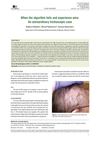 January 2026 in “Forum Dermatologicum”
 Thorough hair examination is crucial for accurate diagnosis and treatment.
34 citations
,
December 1984 in “Journal of Cutaneous Pathology” Monilethrix hair issues are due to problems in the hair's internodes.
 January 2019 in “Global Dermatology”
 Genetic hair shaft abnormalities can be seen with microscopes and often affect scalp hair.
 January 2018 in “Indian Dermatology Online Journal”
 Trichoscopy can help tell the difference between artificial hair fibers and other scalp artifacts.
7 citations
,
May 1988 in “International Journal of Dermatology” The patient's hair has unique structural differences with alternating bright and dark bands.
 19 citations
,
March 1988 in “International Journal of Dermatology”
19 citations
,
March 1988 in “International Journal of Dermatology” Hair shaft dysplasias are abnormal hair conditions that can be inherited or acquired and may signal other health issues, with limited treatment options available.
April 2016 in “Journal of the American Academy of Dermatology” A 4-year-old girl had a rare hair disorder affecting only part of her scalp.
 7 citations
,
November 2004 in “International Journal of Cosmetic Science”
7 citations
,
November 2004 in “International Journal of Cosmetic Science” Hair breaks differently when wet or dry and is affected by its condition and treatments like perms and bleaching.
 January 2006 in “Seibutsu Butsuri”
 Curly and straight hair differ in how their internal fibers are arranged.
Genetic factors might cause fibrosing alopecia linked to hair shaft abnormalities.
119 citations
,
November 2016 in “American journal of human genetics” Mutations in three genes cause Uncombable Hair Syndrome, leading to frizzy hair that can't be combed flat.
 24 citations
,
November 2015 in “Scientific reports”
24 citations
,
November 2015 in “Scientific reports” Human hair has a new region with ordered filaments and the cuticle contains β-keratin sheets.
2 citations
,
March 2024 in “Pediatric Dermatology” Two siblings have a rare hair condition caused by a new genetic variant.
78 citations
,
May 2012 in “Journal of Investigative Dermatology” A specific gene mutation causes woolly hair and hair loss.
38 citations
,
September 1997 in “The journal of investigative dermatology/Journal of investigative dermatology” A mutation in mice causes hair loss and skin issues due to a defect in a gene affecting cell adhesion.
 3 citations
,
May 2006 in “Dermatologic Surgery”
3 citations
,
May 2006 in “Dermatologic Surgery” Most men's multi-hair follicles naturally stand perpendicular to a line from the top of their head, which is important for natural-looking hair transplants.
35 citations
,
May 2006 in “Journal of Investigative Dermatology” Monilethrix involves multiple genes affecting hair structure, including DSG4 mutations.