June 2026 in “British Journal of Dermatology” A rare genetic mutation in the EGFR gene caused severe skin issues and other health problems in a Slovakian girl, who is now 4 years old and receiving care.
Defective protein folding due to a mutation is key in ANE syndrome.
ANE syndrome is caused by a mutation in the RBM28 protein that disrupts ribosome assembly.
 11 citations
,
September 2012 in “The journal of investigative dermatology/Journal of investigative dermatology”
11 citations
,
September 2012 in “The journal of investigative dermatology/Journal of investigative dermatology” A mutation in the KRT71 gene causes a hair disorder by disrupting hair follicle structure and texture.
81 citations
,
March 2006 in “Journal of Investigative Dermatology” Mutations in the DSG4 gene cause specific hair and scalp issues.
48 citations
,
March 2003 in “International Journal of Cancer” DMBT1 and galectin-3 may help suppress epithelial skin cancer.
 14 citations
,
January 2018 in “Endocrine”
14 citations
,
January 2018 in “Endocrine” Cantú syndrome may be linked to pituitary adenomas.
11 citations
,
November 2019 in “The FASEB Journal” A mutation in the MAP2 gene causes reduced hair follicle density, leading to hairlessness.
11 citations
,
November 2011 in “The Journal of Dermatology” Connexin-26 gene mutations may increase cancer risk in KID syndrome patients.
 7 citations
,
June 2016 in “Bone Research”
7 citations
,
June 2016 in “Bone Research” A Chinese family had a child with a specific gene mutation causing vitamin D-resistant rickets, but the child improved with calcium and low-dose calcitriol.
6 citations
,
June 2021 in “The journal of investigative dermatology/Journal of investigative dermatology” A mutation in the SREBF1 gene causes both hereditary mucoepithelial dysplasia and IFAP syndrome, which are related conditions.
5 citations
,
January 2015 in “Case reports in medicine” A baby was diagnosed with IFAP syndrome due to a new genetic mutation, showing severe skin and developmental issues.
3 citations
,
October 2021 in “Turkish Journal Of Neurology” Genetic analysis is crucial for diagnosing and managing cerebral arteriopathy.
November 2025 in “Journal of Investigative Dermatology” Genetic variants in specific genes cause central centrifugal cicatricial alopecia.
August 2025 in “American Journal of Case Reports” Accurate diagnosis and early specialist referral are crucial for managing 46,XY Disorders of Sex Development.
November 2024 in “Journal of Investigative Dermatology” Genetic changes in specific proteins contribute to hair loss in some women of African descent.
 December 2023 in “Clinical Cosmetic and Investigational Dermatology”
 An 8-year-old Saudi boy was diagnosed with a rare genetic disorder causing hair loss, skin issues, and light sensitivity.
 April 2017 in “Journal of Investigative Dermatology”
 A boy with Oculodentodigital syndrome had a unique GJA1 gene mutation causing his symptoms.
April 2016 in “Journal of Investigative Dermatology” Mutations in the TSPEAR gene cause a new form of ectodermal dysplasia affecting hair and tooth development.
 28 citations
,
November 2019 in “Gene”
28 citations
,
November 2019 in “Gene” The ITGB6 gene is important for tissue repair and hair growth, and mutations can lead to enamel defects and other health issues.
 May 2025 in “Journal of the ASEAN Federation of Endocrine Societies”
 VHL disease can cause early paragangliomas, needing lifelong monitoring.
 September 2024 in “Egyptian Journal of Medical Human Genetics”
 Consider NF1 in newborns with rare congenital anomalies.
 January 2023 in “Revista Paulista de Pediatria”
 A Brazilian male with IFAP syndrome has a unique genetic variant causing his condition.
 January 2023 in “Indian dermatology online journal”
 A child with ectodermal dysplasia-syndactyly syndrome has a new mutation in the NECTIN4 gene.
 November 2020 in “International journal of contemporary pediatrics”
 Two siblings had a rare immune disorder caused by a FOXN1 gene mutation.
 January 2020 in “bioRxiv (Cold Spring Harbor Laboratory)”
 Certain genetic variants in ERN1, TACR3, and SPPL2C are linked to when Alzheimer's disease starts.
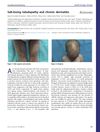 July 2018 in “Kidney international”
 Genetic testing for EGFR mutations is crucial in similar cases.
January 2016 in “Zurich Open Repository and Archive (University of Zurich)” Dietary L-serine supplementation can reduce symptoms of HSAN1 by lowering harmful 1-deoxySL levels.
 November 2003 in “Journal of Investigative Dermatology”
 Topical Imiquimod may fight vascular tumors by affecting blood vessels or the immune system, low iron might be linked to some hair loss, removing the top skin layer helps vitamin C get in, genetic testing helps diagnose skin conditions, and too much iron could worsen skin inflammation.
January 2002 in “映像情報メディア学会技術報告” Some prostate cancers have gene changes that may affect treatment with certain drugs.