 April 2017 in “Journal of Investigative Dermatology”
 The document concludes that various topical treatments show promise for skin conditions like atopic dermatitis, psoriasis, and hair loss.
1 citations
,
July 2024 in “Journal of Investigative Dermatology” MPZL3 protein affects hair growth cycles and could help manage hair loss.
1 citations
,
August 2019 in “Chinese Medical Journal” A man developed facial skin lesions after a stem cell transplant, which improved with specific treatments.
13 citations
,
March 2008 in “Journal of the European Academy of Dermatology and Venereology” Triamcinolone acetonide therapy for hair loss may cause a skin condition called linear lichen planus.
2 citations
,
December 2013 in “Journal of dermatology” A specific gene mutation causes a rare hair loss condition in a Chinese patient.
8 citations
,
April 2023 in “Dermatology Practical & Conceptual” Certain blood markers, especially MLR, can help diagnose alopecia areata.
 April 2019 in “Journal of Investigative Dermatology”
 Non-coding RNA boosts retinoic acid production and signaling, aiding regeneration.
November 2020 in “Acta Medica Bulgarica/Acta medica Bulgarica” The document concludes that treatment improved skin lesions but not scalp hair loss in two patients with Graham-Little-Piccardi-Lassueur syndrome.
 68 citations
,
July 2011 in “Journal of Biochemistry/The journal of biochemistry”
68 citations
,
July 2011 in “Journal of Biochemistry/The journal of biochemistry” New LPA receptors (LPA4, LPA5, LPA6) have diverse roles in the body.
 May 2025 in “The Journal of Rheumatology”
 Mixed Connective Tissue Disease can develop from overlapping symptoms of several autoimmune diseases, making diagnosis complex.
 November 2025 in “Journal of Nanobiotechnology”
 A new treatment using special nanovesicles with linoleic acid shows promise in improving hair growth and reducing irritation for hair loss.
 27 citations
,
November 2013 in “Dermatologic Therapy”
27 citations
,
November 2013 in “Dermatologic Therapy” New test predicts if hair loss treatment will work.
January 2026 in “Mendeley Data” January 2026 in “Mendeley Data” 32 citations
,
August 1982 in “Journal of the American Academy of Dermatology” GLPLS and LPP are variants of lichen planus.
 10 citations
,
June 2019 in “Case reports in dermatology”
10 citations
,
June 2019 in “Case reports in dermatology” LALPS causes non-scarring hair loss along the Blaschko line, with unique trichoscopic findings.
 2 citations
,
August 2019 in “PubMed”
2 citations
,
August 2019 in “PubMed” A specific enzyme that activates the hair growth medication minoxidil when applied to the skin was identified.
 2 citations
,
November 2022 in “Skin research and technology”
2 citations
,
November 2022 in “Skin research and technology” 5% topical minoxidil improves hair density and quality in monilethrix patients.
 9 citations
,
December 2023 in “Journal of Neuroimmune Pharmacology”
9 citations
,
December 2023 in “Journal of Neuroimmune Pharmacology” NDP-MSH protects brain cells and reduces inflammation in Parkinson's disease by activating MC1R and involving Tregs.
 7 citations
,
January 2019 in “Australasian Journal of Dermatology”
7 citations
,
January 2019 in “Australasian Journal of Dermatology” A genetic marker linked to a type of hair loss was found in most patients studied.
1 citations
,
November 2022 in “Journal of Investigative Dermatology” ALRN-6924 may prevent hair loss caused by chemotherapy.
 1 citations
,
April 2019 in “The journal of investigative dermatology/Journal of investigative dermatology”
1 citations
,
April 2019 in “The journal of investigative dermatology/Journal of investigative dermatology” Melanocyte-associated antigens may play a key role in alopecia areata and could be targets for new treatments.
 February 2024 in “Plant Cell Reports”
 AtVPS29 is essential for proper plant growth by regulating gibberellin signaling.
Loose anagen syndrome causes easy hair shedding in children, often resolving on its own.
 17 citations
,
July 2017 in “Molecular and Cellular Endocrinology”
17 citations
,
July 2017 in “Molecular and Cellular Endocrinology” Effective treatments for spinal and bulbar muscular atrophy are not yet available; more research is needed.
 23 citations
,
December 2017 in “Scientific Reports”
23 citations
,
December 2017 in “Scientific Reports” ARL15 is important for fat cell development and the release of the hormone adiponectin.
26 citations
,
April 2011 in “British Journal of Dermatology” New mutations in the DSG4 gene cause a rare hair condition.
November 2025 in “Journal of Investigative Dermatology” IMG-007 helps regrow hair and reduce scalp inflammation in severe alopecia areata.
12 citations
,
July 2004 in “Molecular genetics and genomics” A new mouse mutation causes skin and hair defects due to a gene change.
 5 citations
,
July 2020 in “JAMA Dermatology”
5 citations
,
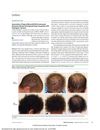
July 2020 in “JAMA Dermatology” Minoxidil solution applied twice daily improved hair growth in patients with Woolly Hair/Hypotrichosis due to LIPH gene issues, with mild side effects.