6 citations
,
November 2018 in “American journal of transplantation” UV light helped human hair transplants survive in mice without broad immunosuppression.
 9 citations
,
September 1997 in “Dermatologic Surgery”
9 citations
,
September 1997 in “Dermatologic Surgery” The technique of transplanting micrografts in hair restoration surgery is fast, practical, and efficient, minimizing damage to follicles and grafts.
 3 citations
,
September 2006 in “Hair transplant forum international”
3 citations
,
September 2006 in “Hair transplant forum international” Using both hands to place grafts makes the process quicker and less painful.
 2 citations
,
September 1996 in “The American Journal of Cosmetic Surgery”
2 citations
,
September 1996 in “The American Journal of Cosmetic Surgery” The authors suggest using a standard system to name hair grafts to improve communication in hair restoration.
 5 citations
,
September 2003 in “Archives of Facial Plastic Surgery”
5 citations
,
September 2003 in “Archives of Facial Plastic Surgery” Follicular-unit grafting is an effective hair transplant method that looks natural and has a high success rate.
 January 2016 in “Hair transplant forum international”
 The key points for successful grafting are how the recipient site is prepared and how the graft is placed.
 November 1998 in “Hair transplant forum international”
 The document's conclusion cannot be provided because the content is not accessible.
1 citations
,
January 1996 in “Aesthetic Plastic Surgery” The tumescent technique makes hair micrografting more comfortable and efficient.
 15 citations
,
December 2007 in “Dermatologic Therapy”
15 citations
,
December 2007 in “Dermatologic Therapy” Hair transplantation has improved with techniques that increase graft survival and patient satisfaction for more natural results.
 November 1994 in “The Journal of Dermatologic Surgery and Oncology”
 Thousand-graft hair transplants offer better coverage and look more natural but have concerns about graft survival and cosmetic risks.
 July 1999 in “Hair transplant forum international”
 Slot grafting can improve hair transplantation results.
 May 2025 in “Journal of International Medical Research”
 Micrografting may improve healing and hair growth, but more research is needed.
April 2016 in “The journal of investigative dermatology/Journal of investigative dermatology” Combining UVB irradiation and anti-CD154 antibody improves hair follicle transplant survival.
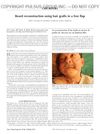 January 2011 in “Plastic Surgery”
 Hair grafts successfully restored a realistic beard and hid scars, satisfying the patient.
 October 2024 in “Skin Appendage Disorders”
 Autologous micrografting via the Rigenera® system shows promise in improving hair loss treatment.
 11 citations
,
June 1999 in “Seminars in Cutaneous Medicine and Surgery”
11 citations
,
June 1999 in “Seminars in Cutaneous Medicine and Surgery” The best hair transplant method depends on the desired look; faster techniques may not give better results or save money.
 January 2011 in “Hair transplant forum international”
 Doctors should ensure grafts are well-prepared and correctly placed.
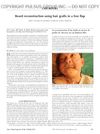 5 citations
,
December 2011 in “Canadian Journal of Plastic Surgery”
5 citations
,
December 2011 in “Canadian Journal of Plastic Surgery” Hair grafts can successfully reconstruct a beard on reconstructed jaw skin, improving appearance and patient satisfaction.
 8 citations
,
July 1984 in “The Journal of Dermatologic Surgery and Oncology”
8 citations
,
July 1984 in “The Journal of Dermatologic Surgery and Oncology” A new suturing technique for hair transplant donor sites leads to better scarring and allows more grafts to be taken.
 August 2023 in “Dermatologic Surgery”
 Person-to-person hair transplants can work for patients on lifelong immunosuppression, with high hair growth success.
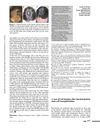 May 2018 in “European Journal of Dermatology”
 Adjusting the medication tacrolimus resolved a boy's red nail beds after a stem cell transplant.
 32 citations
,
July 2011 in “Facial Plastic Surgery”
32 citations
,
July 2011 in “Facial Plastic Surgery” New hair transplant methods offer more natural results and better graft survival, with ongoing research to increase donor hair options.
March 1996 in “The American Journal of Cosmetic Surgery” The technique offers natural-looking hair transplants with minimal bleeding.
January 2001 in “Chinese Journal of Medical Aesthetics and Cosmetology” Micrografts can grow natural hair and most patients are satisfied, but some need multiple procedures.
 57 citations
,
July 2018 in “Scientific Reports”
57 citations
,
July 2018 in “Scientific Reports” Using adipose tissue-derived fragments improves early skin graft success.
 July 1998 in “Dermatologic Surgery”
 Various techniques and tools for hair restoration were presented in 1998, including a mathematical model for donor area, use of lasers in surgery, methods for controlling grafted hair direction, and ways to increase graft yield. Satisfaction rates were around 39%, and studies showed trauma and dehydration can damage hair follicles.
 15 citations
,
January 2016 in “Journal of cell science & therapy”
15 citations
,
January 2016 in “Journal of cell science & therapy” Using a patient's own tissue for micro-grafts may effectively treat non-healing leg ulcers and relieve pain.
 4 citations
,
May 2019 in “Journal of The European Academy of Dermatology and Venereology”
4 citations
,
May 2019 in “Journal of The European Academy of Dermatology and Venereology” Hair loss treatment caused more hair loss in a man.
38 citations
,
June 2016 in “Journal of Tissue Engineering and Regenerative Medicine” Microcolumn grafting can effectively regenerate full-thickness, functional skin without scarring.
 19 citations
,
January 2007 in “Journal of medical investigation”
19 citations
,
January 2007 in “Journal of medical investigation” GFP transgenic mice help study cell origins in skin grafts.