2 citations
,
July 2021 in “Actas dermo-sifiliográficas/Actas dermo-sifiliográficas” Hair shaft disorders are diagnosed through examination and history, with general care and some treatments offering improvement.
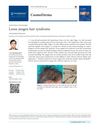 February 2023 in “Cosmoderma”
 Loose anagen hair syndrome causes easily shed hair but usually improves with time.
62 citations
,
October 1999 in “Journal of Investigative Dermatology” New mutations in hair keratin genes can change hair structure and cause monilethrix, with nail issues more common in certain gene mutations.
 58 citations
,
September 2012 in “Dermatologic Clinics”
58 citations
,
September 2012 in “Dermatologic Clinics” Male pattern hair loss caused by follicular miniaturization; early diagnosis and treatment can reduce psychological burden.
 March 2012 in “Journal of The American Academy of Dermatology”
 Temporal triangular alopecia usually starts in early childhood and treatment with Minoxidil has limited effectiveness.
61 citations
,
February 1982 in “Cell and Tissue Research” March 2014 in “CRC Press eBooks” Human head hair can grow very long and is thicker than most body hair.
6 citations
,
March 2017 in “Journal of the European Academy of Dermatology and Venereology” Identical twins with a rare KRT 86 gene mutation both have the hair disorder monilethrix.
38 citations
,
November 2005 in “The journal of investigative dermatology. Symposium proceedings/The Journal of investigative dermatology symposium proceedings” Understanding normal hair follicle development helps analyze abnormalities in mutant mice.
9 citations
,
April 1985 in “Canadian Journal of Zoology” Moose have unique interdigital glands with green hairs and larger glands during mating season.
 41 citations
,
January 2014 in “Annals of Dermatology”
41 citations
,
January 2014 in “Annals of Dermatology” Dermoscopic examination helps diagnose different types of hair loss conditions by showing specific patterns.
50 citations
,
February 2013 in “BMC evolutionary biology” Cetaceans lost hair due to changes in the Hr and FGF5 genes.
 July 2025 in “ACS Pharmacology & Translational Science”
 Maslinic acid from olive extracts promotes hair growth like minoxidil.
158 citations
,
December 2002 in “Development” Msx2-deficient mice experience irregular hair growth and loss due to disrupted hair cycle phases.
 2 citations
,
May 2012 in “Acta pharmaceutica sinica B”
2 citations
,
May 2012 in “Acta pharmaceutica sinica B” The study found unique microscopic features for hair or feather in five animal ingredients in Shenrongbian pill.
January 2006 in “DOAJ (DOAJ: Directory of Open Access Journals)” Loose anagen hair syndrome causes easily pulled, thin hair in kids but is harmless and temporary.
March 2024 in “Clinical Case Reports” Early detection of tinea capitis is possible by spotting specific hair patterns like comma or corkscrew hairs.
17 citations
,
May 1969 in “American Journal of Physical Anthropology” The silver marmoset's skin is thin, lacks pigment cells, and has unique features like keratinized spines and specialized glands.
 4 citations
,
January 2014 in “International Journal of Trichology”
4 citations
,
January 2014 in “International Journal of Trichology” A 12-year-old boy with a rare genetic condition has progressive hair loss with no effective treatment.
 January 2023 in “Sovremennye problemy nauki i obrazovaniâ”
 Miliacin may help prevent hair loss and improve hair growth in mice with a condition similar to human baldness.
January 2005 in “Journal of Zhejiang University(Sciences Edition)” Yuyi hairless mice lose hair after birth, develop thick, loose skin with folds, and show disorganized skin structure as they age.
53 citations
,
July 2002 in “Journal of Investigative Dermatology” The Dfl mutation in mice causes poor sebaceous gland function and complete hair loss.
 3 citations
,
July 2014 in “QJM”
3 citations
,
July 2014 in “QJM” A 35-year-old man had patchy hair loss that was actually due to syphilis, not alopecia areata.
 2 citations
,
March 2014 in “Veterinary World”
2 citations
,
March 2014 in “Veterinary World” Indian bison, black buck, and nilgai have distinct hair follicle patterns useful for species identification.
5 citations
,
November 1979 in “PubMed” A hereditary condition causes hair loss and twisted hair in some family members.
1 citations
,
September 2003 in “CRC Press eBooks” Hair is important for social and sexual communication in humans.
September 2024 in “The Journal of Dermatology” Nevus comedonicus can sometimes grow terminal hair, challenging previous beliefs.