 2 citations
,
January 2019 in “Dermatology Review”
2 citations
,
January 2019 in “Dermatology Review” Pigmented vellus and upright regrowing hairs predict hair regrowth in severe alopecia.
January 2005 in “Journal of Zhejiang University(Sciences Edition)” Yuyi hairless mice lose hair after birth, develop thick, loose skin with folds, and show disorganized skin structure as they age.
50 citations
,
March 2001 in “Clinics in dermatology” Human hair is complex and grows in cycles starting from embryonic life.
5 citations
,
July 1999 in “Journal of Anatomy” Methylene blue staining effectively reveals detailed nerve structures in rat snouts.
31 citations
,
November 1965 in “Journal of Mammalogy” The pituitary gland is crucial for normal mink fur cycles.
 December 2025 in “IP Indian Journal of Clinical and Experimental Dermatology”
 Hair shaft disorders often indicate genetic or systemic issues and are managed by minimizing damage.
33 citations
,
October 1996 in “Journal of Investigative Dermatology” 2 citations
,
January 2010 Tianzhu white yak hair varies in structure and density between fuzz and coarse hair.
90 citations
,
July 1993 in “Journal of Investigative Dermatology”  July 2025 in “Dermatology Practical & Conceptual”
 A 2-year-old boy has a rare hair disorder causing brittle hair and hair loss, which may improve with age.
3 citations
,
July 2024 in “Dermatology and Therapy” Hair shaft abnormalities can help distinguish mycosis fungoides from other skin conditions.
"Coco de mono" seeds cause temporary hair loss due to selenocystathionine.
 10 citations
,
January 2013 in “International Journal of Trichology”
10 citations
,
January 2013 in “International Journal of Trichology” More vellus hairs in frontal scalp indicate early female pattern hair loss.
2 citations
,
May 2022 in “International journal of trichology” Plica neuropathica is a tangled hair condition that may be caused by hair damage or psychiatric issues and is treated by cutting the hair and addressing mental health.
 127 citations
,
December 2007 in “Journal of Investigative Dermatology”
127 citations
,
December 2007 in “Journal of Investigative Dermatology” Mice hair growth patterns get more complex with age and can change with events like pregnancy or injury.
Otter rabbit, mink, and blue fox fur can be identified by their unique hair structures.
January 2022 in “Journal of clinical and diagnostic research” A rare skin bump with tiny hairs was successfully removed from a man's face.
January 2024 in “International Journal of Trichology” Matted hair should not be judged as a sign of mental instability; proper diagnosis and gentle care are key.
2 citations
,
August 2019 in “Electronics and Communications in Japan” The device mimics human hair follicles and detects tiny forces and moments with high sensitivity.
 1 citations
,
January 2012 in “Journal of The Society of Japanese Women Scientists”
1 citations
,
January 2012 in “Journal of The Society of Japanese Women Scientists” Murine hair has specific types of ceramides and glucosylceramides but lacks acylceramides.
2 citations
,
July 2019 in “Indian dermatology online journal” A 17-year-old girl and her brothers have a rare hair condition with long eyelashes, thick eyebrows, and easily pluckable hair.
 January 2019 in “Global Dermatology”
 Genetic hair shaft abnormalities can be seen with microscopes and often affect scalp hair.
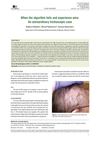 January 2026 in “Forum Dermatologicum”
 Thorough hair examination is crucial for accurate diagnosis and treatment.
21 citations
,
September 1997 in “British Journal of Dermatology” Monilethrix is linked to the type II keratin gene on chromosome 12q13.
January 1996 in “Studia iuridica” Two new gene mutations cause a rare hair disorder.
7 citations
,
June 2012 in “Journal of dairy science” Bovine milk fats applied to mouse skin can promote hair growth similar to known hair growth treatments.
August 2018 in “Journal of Investigative Dermatology” Humans evolved to have less hair and more sweat glands than chimpanzees and macaques.
 23 citations
,
January 2011 in “International Journal of Immunopathology and Pharmacology”
23 citations
,
January 2011 in “International Journal of Immunopathology and Pharmacology” Minoxidil 2% effectively treats Monilethrix without side effects.
 November 2021 in “International journal of research - granthaalayah”
 The document suggests that human hair has electrical charges because of a gap in nerve cell coverage that affects electromagnetic radiation.
17 citations
,
April 1990 in “Environmental Research” Methylmercury accumulates in mouse hair during growth, then decreases when growth stops.