2 citations
,
September 2021 in “JAAD case reports” A man with a weakened immune system was diagnosed with a rare skin condition called trichodysplasia spinulosa using skin examination techniques.
 June 2023 in “JAAD case reports”
 A rare scalp condition, cutis verticis gyrata, was found in a woman with primary scarring alopecia.
 May 2014 in “Clinical and Experimental Dermatology”
 A 70-year-old woman with a rare skin condition improved after treatment with topical steroids and acitretin.
October 2024 in “Frontiers in Oncology” A new gene mutation linked to Olmsted syndrome may increase cancer risk, suggesting the need for ongoing patient monitoring.
 1 citations
,
September 2015 in “Serbian Journal of Dermatology and Venereology/Serbian Journal of Dermatology and Venerology”
1 citations
,
September 2015 in “Serbian Journal of Dermatology and Venereology/Serbian Journal of Dermatology and Venerology” A 19-year-old male had two rare skin conditions causing scarring and permanent hair loss.
 April 2024 in “Oral Surgery Oral Medicine Oral Pathology and Oral Radiology”
 The patient was diagnosed with oral lichen sclerosus and needs long-term monitoring.
February 2018 in “Dermatologic Surgery” 
The woman has a scalp condition causing hair loss.
82 citations
,
March 2013 in “PLoS ONE” Vemurafenib causes skin side effects similar to RASopathies, requiring regular skin checks and UVA protection.
January 2020 in “Dermatology Review” Early diagnosis and treatment are crucial for managing alopecia areata, morphea, and psoriasis.
July 2025 in “Journal of Investigative Dermatology”  March 2026 in “Dermatopathology”
 Different types of skin gland tumors have unique genetic traits, which can guide personalized treatments.

Skin tumor cells in patients with tuberous sclerosis have higher levels of a protein called cathepsin B.
12 citations
,
September 2012 in “Pediatric Dermatology” The boy's skin condition improved significantly with a specific ointment after other treatments showed only mild results.
1 citations
,
April 2022 in “Clinical Cosmetic and Investigational Dermatology” Topical treatment improved rare scalp lichen amyloidosis.
3 citations
,
March 2013 in “American Journal of Dermatopathology” Ossification in trichilemmal cysts is more common than previously believed.
 2 citations
,
November 2015 in “Actas Dermo-Sifiliográficas”
2 citations
,
November 2015 in “Actas Dermo-Sifiliográficas” The document suggests a possible link between mast cells and scarring alopecia, recommending more research for potential treatments.
7 citations
,
June 2017 in “Journal of Cutaneous Pathology” Cystic panfolliculoma resembles hair follicle tumors due to specific cell interactions.
13 citations
,
June 2011 in “PubMed” The patient improved significantly after treatment, with only one small scar remaining.
2 citations
,
April 2020 in “International Journal of Dermatology and Venereology” Beta-HPV and MCPyV are linked to certain skin cancers, with ongoing research and vaccine development.
1 citations
,
October 2021 in “bioRxiv (Cold Spring Harbor Laboratory)” Heat shock proteins help basal cell carcinoma grow by responding to inflammation signals.
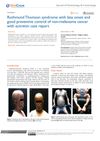 August 2024 in “Journal of Dermatology & Cosmetology”
 Acitretin effectively prevented skin cancer in a patient with late-onset Rothmund-Thomson syndrome.
September 2023 in “Journal of the American Academy of Dermatology” A rare benign scalp tumor in an infant requires surgical removal.
15 citations
,
November 2009 in “Journal of Comparative Pathology” Epidermolysis bullosa in calves was not caused by mutations in the keratin genes bKRT5 and bKRT14.
37 citations
,
September 2005 in “Australasian Journal of Dermatology” A man with scalp and neck skin issues improved after a year of oral isotretinoin.
 May 2024 in “Indian Journal of Dermatology”
 The woman has a rare skin condition called follicular Dowling-Degos disease, which has limited treatment options.
 September 2022 in “JAAD case reports”
 The man has a genetic skin condition called pachyonychia congenita.
 January 2016 in “대한피부과학회지”
 Bortezomib chemotherapy can cause temporary skin rashes.
7 citations
,
January 2020 in “Dermatology online journal” An adult with a rare skin condition improved with tazarotene treatment.
May 2019 in “CINECA IRIS Institutial Research Information System (University of Genoa)” MITF+ melanoma patients are more likely to have multiple melanomas and unique skin patterns.