January 2014 in “Spectrum Research Repository (Concordia University)” FA-MNPs effectively targeted and killed cancer cells but didn't overcome drug resistance.
6 citations
,
March 2016 in “Multiple sclerosis and related disorders” Dimethyl-fumarate may cause temporary hair loss.
December 2025 in “OPAL (Open@LaTrobe) (La Trobe University)” A new combination of tadalafil and finasteride improves drug performance and stability.
4 citations
,
February 2023 in “International Journal of Stem Cells” The FTO gene hinders stem cells in hair follicles from becoming pigment cells.
November 2025 in “Cureus” A young man had a rare skin condition causing hair loss and forehead lesions.
 6 citations
,
January 2020 in “Czech Journal of Animal Science”
6 citations
,
January 2020 in “Czech Journal of Animal Science” The FAT1 gene and its variations can help improve wool quality in Chinese Merino sheep through selective breeding.
53 citations
,
June 2019 in “JEADV. Journal of the European Academy of Dermatology and Venereology/Journal of the European Academy of Dermatology and Venereology” Frontal fibrosing alopecia mainly affects postmenopausal women and may be linked to thyroid hormones.
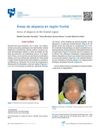 January 2025 in “Revista del Centro Dermatológico Pascua”
 Early diagnosis and treatment can help manage fibrosing alopecia in older women.
 July 2023 in “Developmental medicine and child neurology/Developmental medicine & child neurology”
 DFMO treatment improves hair growth, muscle tone, and development in Bachmann-Bupp syndrome patients.
12 citations
,
July 2020 in “Actas Dermo-Sifiliográficas” Frontal fibrosing alopecia mostly affects postmenopausal women, often involves eyebrows, and is linked to conditions like lichen planus and rosacea.
January 2020 in “JAAD case reports” Hair loss condition FFA was seen before the appearance of skin depigmentation vitiligo in a patient.
July 2026 in “bioRxiv (Cold Spring Harbor Laboratory)” FAKΔe4 helps cells sense and respond to different stiffness levels in their environment.
28 citations
,
June 1995 in “The Journal of Dermatology” The flaky skin mouse mutation is a natural model for studying human psoriasis.
 September 2017 in “Journal of Investigative Dermatology”
 Thermal imaging is a useful non-invasive method to diagnose active inflammation in frontal fibrosing alopecia.
 June 2023 in “Brazilian Journal of Case Reports”
 Botulinum Toxin Type A delivered through the skin may be a promising treatment for Frontal Fibrosing Alopecia.
 6 citations
,
June 2016 in “Experimental Dermatology”
6 citations
,
June 2016 in “Experimental Dermatology” Frontal Fibrosing Alopecia is a poorly understood condition that is hard to treat and causes distressing hair loss.
83 citations
,
February 1991 in “Development” Fos protein is crucial for cell transition to cornification in keratinized tissues.
 July 2022 in “The journal of investigative dermatology/Journal of investigative dermatology”
 Blocking mTORC1 activity with rapamycin could help increase hair pigmentation and growth, potentially reversing gray hair.
May 2026 in “Cell Reports Medicine” FR-1 reduces skin scarring and promotes healing without harmful effects.
 5 citations
,
September 1986 in “Pediatric Dermatology”
5 citations
,
September 1986 in “Pediatric Dermatology” A family showed a new condition with inherited hair loss and skin changes, possibly due to one genetic disorder.
 July 2023 in “Indian Journal of Animal Health”
 FGF-5 promotes Cashmere goat hair growth by increasing keratin genes and reducing certain LncRNA and target genes.
2 citations
,
May 2022 in “Advanced therapeutics” A new microneedle system effectively delivers a vasodilator to hair follicles, promoting hair growth better than current treatments.
 34 citations
,
May 2017 in “Lasers in Surgery and Medicine”
34 citations
,
May 2017 in “Lasers in Surgery and Medicine” Combining low-level light therapy and minoxidil 5% is more effective for female hair loss than using either treatment alone.
11 citations
,
July 2018 in “AJGP” Low-dose oral minoxidil effectively reduces hair loss in women with female pattern hair loss.
September 2023 in “Journal of the American Academy of Dermatology” Oral difelikefalin significantly reduces itch in notalgia paresthetica.
 July 2025 in “New Phytologist”
 MLO proteins help regulate calcium and ROS levels, promoting root hair growth in Arabidopsis.
 September 2021 in “Clinical research in dermatology”
 5-Alpha-Reductase inhibitors might help slow down hair loss in Frontal Fibrosing Alopecia but are not a primary treatment and need more research.
 1 citations
,
August 2022 in “International journal of women’s dermatology”
1 citations
,
August 2022 in “International journal of women’s dermatology” Botox injections may be a safe and effective way to treat severe, itchy skin disease when other treatments fail.

Frontal fibrosing alopecia can be managed with personalized combination therapies, but no cure exists yet.
 3 citations
,
December 2020 in “International Journal of Women's Dermatology”
3 citations
,
December 2020 in “International Journal of Women's Dermatology” Scalp micro-wounding helps promote hair growth in female pattern hair loss.