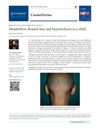
 January 2026 in “Cosmoderma”
 A 9-year-old girl has a rare hair disorder causing beaded, sparse hair.
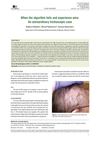 January 2026 in “Forum Dermatologicum”
 Thorough hair examination is crucial for accurate diagnosis and treatment.
 6 citations
,
August 2001 in “PubMed”
6 citations
,
August 2001 in “PubMed” The stump-tailed macaque is a good model for studying human hair loss, but it's expensive and hard to find, while rodent models are promising for understanding hair growth and finding new treatments.
 19 citations
,
November 1993 in “Mammalian Genome”
19 citations
,
November 1993 in “Mammalian Genome” A gene mutation in mice causes permanent hair loss and skin issues.
93 citations
,
May 1990 in “The EMBO Journal” Mice with extra sheep genes had hair that fell out and regrew in cycles.
 18 citations
,
April 1986 in “International Journal of Cosmetic Science”
18 citations
,
April 1986 in “International Journal of Cosmetic Science” Minoxidil promotes hair regrowth in early baldness stages and prevents baldness in non-bald scalps.
 54 citations
,
June 1985 in “American Journal of Dermatopathology”
54 citations
,
June 1985 in “American Journal of Dermatopathology” Minoxidil helps grow longer, thicker hair in bald scalps of stumptailed macaques, and early treatment is more effective.
 34 citations
,
December 1991 in “Annals of the New York Academy of Sciences”
34 citations
,
December 1991 in “Annals of the New York Academy of Sciences” The conclusion is that small hair follicles cause baldness in macaques, and treatments like antiandrogens and minoxidil can prevent hair loss and promote regrowth.
April 2016 in “Journal of Investigative Dermatology” Iron deficiency causes hair loss by affecting hair differentiation and cycling.
Maria is losing a lot of hair and is considering using Rogaine.
 2 citations
,
June 1980 in “International Journal of Dermatology”
2 citations
,
June 1980 in “International Journal of Dermatology” Scalp biopsies are important for diagnosing hair loss conditions.
 1 citations
,
January 2020 in “Indian Dermatology Online Journal”
1 citations
,
January 2020 in “Indian Dermatology Online Journal” Pigtail hair is a sign of new hair growth and should be recognized in hair loss conditions like acute telogen effluvium.
 12 citations
,
May 1989 in “Postgraduate Medicine”
12 citations
,
May 1989 in “Postgraduate Medicine” The document concludes that hair loss is common and can be treated with medications like minoxidil or surgical options, and it significantly affects people's psychological well-being.
23 citations
,
December 1991 in “Annals of the New York Academy of Sciences” Balding scalps slow down hair growth.
 September 2023 in “Cutis”
 A baby girl has a hair disorder called monilethrix, causing fragile hair that may improve over time.
January 2005 in “Lithuanian University of Health Sciences” Hair loss may be linked to imbalances in trace elements.

Mealworm extract may help prevent hair loss and promote hair growth due to its antioxidant activity.
1 citations
,
September 2003 in “Praxis” Hair loss is a significant challenge with psychological effects, but treatments like minoxidil and finasteride are effective.
 December 2024 in “Australian Journal of General Practice”
 The woman's hair loss pattern doesn't match typical conditions like alopecia areata or female pattern hair loss.
 May 2014 in “JAMA Dermatology”
 Mother and son diagnosed with a rare genetic hair loss condition with no effective treatment.
 1 citations
,
May 2003 in “Archives of Pathology & Laboratory Medicine”
1 citations
,
May 2003 in “Archives of Pathology & Laboratory Medicine” The boy had trichotillomania, causing hair loss, and treatment focused on habit reversal and support.
12 citations
,
October 1988 in “Clinics in dermatology” The mouse model could be useful for baldness research and testing treatments like testosterone, cyproterone acetate, and minoxidil.
158 citations
,
December 2002 in “Development” Msx2-deficient mice experience irregular hair growth and loss due to disrupted hair cycle phases.
December 2020 in “Dermatology practical & conceptual” Trichoscopy helped diagnose a teenage girl's hair loss as monilethrix.
August 2018 in “Archives on veterinary science and technology” Hair loss in lab macaques is not always due to neglect and has multiple causes.
1 citations
,
August 2020 The Shaven mutation in mice affects hair growth and causes a greasy coat due to abnormal lipid content.
17 citations
,
November 1967 in “American Journal of Anatomy” Hairless mice have longer hair follicles and abnormal structures during the catagen phase.
86 citations
,
June 1998 in “Journal of Investigative Dermatology” The hairless gene mutation causes baldness by disrupting hair follicle structure.