 September 2022 in “JAAD case reports”
 The man has a genetic skin condition called pachyonychia congenita.
Trichopigmentation is a non-invasive, reversible treatment for hair loss that offers natural-looking results for both men and women.
 1 citations
,
July 2009 in “Journal of dermatology”
1 citations
,
July 2009 in “Journal of dermatology” A 29-year-old man had a jaw plaque diagnosed as follicular mucinosis, linked to nestin-positive hair follicle stem cells.
 January 2026 in “Cosmoderma”
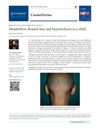
 A 9-year-old girl has a rare hair disorder causing beaded, sparse hair.
20 citations
,
August 1981 in “Developmental Medicine & Child Neurology” 13 citations
,
June 1981 in “Developmental Medicine & Child Neurology” 2 citations
,
March 2023 in “Frontiers in Medicine” Proper cleansing can resolve dermatosis neglecta, which may indicate underlying psychiatric issues.
 January 2025 in “Indian Journal of Paediatric Dermatology”
 Biopsy is crucial to correctly diagnose granuloma annulare, which can mimic other conditions like alopecia mucinosa.
22 citations
,
January 1985 in “Journal of Human Evolution/Journal of human evolution” Human skin and hair color variation is mainly due to melanin produced by a few genes, with melanin protecting against sun damage.
10 citations
,
January 2012 in “Case reports in medicine” Diphencyprone can cause unexpected and possibly permanent vitiligo.
1 citations
,
September 2024 in “Journal of Oncology Pharmacy Practice” Hydroxyurea treatment unexpectedly restored hair color from gray to dark brown in an older woman.
4 citations
,
July 2013 in “The Journal of Dermatology” A rare skin condition caused scarring hair loss on the scalp.
10 citations
,
July 2014 in “Annals of Saudi Medicine” A 30-year-old man with rare skin conditions improved with antibiotics and surgery, hinting at a link to rosacea.
1 citations
,
November 2014 in “Actas dermo-sifiliográficas/Actas dermo-sifiliográficas” December 2025 in “Dermatology Reports” Topical ruxolitinib quickly improves non-segmental vitiligo.
 18 citations
,
July 2018 in “Skin appendage disorders”
18 citations
,
July 2018 in “Skin appendage disorders” Trichoscopy helps diagnose hair and scalp disorders in dark-skinned people by identifying unique patterns.
September 2023 in “Journal of the American Academy of Dermatology” Patients often overestimate their skin type, affecting sun protection and treatment plans.
73 citations
,
November 1979 in “British Journal of Dermatology” Minoxidil can cause excessive hair growth.
19 citations
,
March 2011 in “The Journal of Dermatology” A child's rare skin disease was triggered by chickenpox.
 February 2023 in “Pakistan Journal of Medical and Health Sciences”
 Pregnancy can cause various skin changes, with stretch marks, dark lines on the abdomen, and skin darkening being the most common.
3 citations
,
September 2023 in “Stem Cell Research & Therapy” Stem cells can be used to create long-lasting skin cells for treating pigment disorders.

A 5-year-old boy grew too much hair after using minoxidil, but it went away after stopping the treatment.
 January 2006 in “Yearbook of Dermatology and Dermatologic Surgery”
 Hair graying is caused by the loss of pigment cells due to poor maintenance of stem cells in the hair follicle.
December 2024 in “Skin Appendage Disorders” Accurate diagnosis and treatment improved symptoms in a patient with alopecia linked to mycosis fungoides.

Ruxolitinib cream shows promise for vitiligo, and early melanoma diagnosis is crucial.
1 citations
,
July 2024 in “Journal of Investigative Dermatology” Immune cells boost stem cell activity in hairy moles, causing more hair growth.
 12 citations
,
January 2014 in “The Pan African medical journal”
12 citations
,
January 2014 in “The Pan African medical journal” Minoxidil caused unwanted hair growth in a child, but stopped after stopping treatment.
13 citations
,
March 2008 in “Journal of the European Academy of Dermatology and Venereology” Triamcinolone acetonide therapy for hair loss may cause a skin condition called linear lichen planus.
 January 2017 in “Archives of clinical and biomedical research”
 Enhancing melanin's energy generation may help treat alopecia areata.
4 citations
,
January 2019 in “Micron” Fetal hair follicles have melanocytes with melanosomes at different stages, which are broken down into pigment particles in keratinocytes.