 25 citations
,
July 2019 in “Experimental Dermatology”
25 citations
,
July 2019 in “Experimental Dermatology” Cholesterol balance is important for hair health, and problems with it can lead to hair loss conditions.
September 2025 in “Toxins” Botulinum toxins show promise in treating various conditions, but more research is needed for hair and scalp disorders.
 6 citations
,
September 2022 in “Frontiers in pharmacology”
6 citations
,
September 2022 in “Frontiers in pharmacology” Epimedium extract helps increase skin pigmentation and could be a new treatment for conditions with reduced pigmentation.
 April 2018 in “Journal of Investigative Dermatology”
 BMP signaling is important for skin color, affecting melanin production, pigment spread, and cell movement.
A drug helped quickly reduce a movement disorder, experts debated the severity of Raynaud phenomenon, and rapid weight loss was linked to temporary hair loss with good recovery.
 2 citations
,
March 2015 in “Dermatologic Therapy”
2 citations
,
March 2015 in “Dermatologic Therapy” Using too much minoxidil foam can cause a rare movement disorder with facial twitching, but symptoms go away when the correct dose is used.
 80 citations
,
March 2004 in “Neuropediatrics”
80 citations
,
March 2004 in “Neuropediatrics” Coats' Plus is a genetic disorder with eye abnormalities, brain calcification, poor growth, bone and skin issues, and movement disorders.
14 citations
,
July 2019 in “Journal of Investigative Dermatology” Integrin-linked kinase is crucial for melanoblasts to properly colonize the skin.
 1 citations
,
June 2017 in “Veterinary dermatology”
1 citations
,
June 2017 in “Veterinary dermatology” A cross-bred lamb with severe skin and movement issues had ichthyosis fetalis but normal vitamin A levels.
 1 citations
,
June 2022 in “Movement disorders clinical practice”
1 citations
,
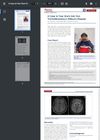
June 2022 in “Movement disorders clinical practice” A patient with Wilson's disease showed hair-pulling behavior as an initial symptom.
 November 2024 in “Rheumatology Advances in Practice”
 A thorough, team-based approach and clear communication improve outcomes in complex neuropsychiatric lupus cases.
 March 2025 in “Advanced Healthcare Materials”
 The dressing speeds up wound healing using sound waves without needing extra devices.
21 citations
,
March 2021 in “Frontiers in Neurology” The posterior cerebellum helps maintain balance by adapting to sensory inputs and self-motion.
 47 citations
,
June 2011 in “Movement Disorders”
47 citations
,
June 2011 in “Movement Disorders” The LRRK2-G2019S mutation in Parkinson's disease has a lifetime penetrance of 25-35%, and finasteride may help reduce symptoms in adult male Tourette syndrome patients.
 39 citations
,
May 2011 in “Movement Disorders”
39 citations
,
May 2011 in “Movement Disorders” Finasteride may help reduce symptoms in male Tourette syndrome patients.
 31 citations
,
June 2011 in “Movement Disorders”
31 citations
,
June 2011 in “Movement Disorders” The document describes a woman with familial Parkinson's disease due to a genetic mutation, showing severe symptoms and poor response to treatment, and suggests finasteride may help reduce symptoms in Tourette syndrome.
 17 citations
,
May 2011 in “Movement Disorders”
17 citations
,
May 2011 in “Movement Disorders” Finasteride significantly reduced tics and obsessive-compulsive symptoms in patients with Tourette syndrome.
 10 citations
,
June 2011 in “Movement Disorders”
10 citations
,
June 2011 in “Movement Disorders” THAP1 gene changes do not affect DYT1 dystonia; finasteride may help reduce tics and OCD in Tourette syndrome.
 7 citations
,
June 2011 in “Movement Disorders”
7 citations
,
June 2011 in “Movement Disorders” A specific gene mutation is linked to a hereditary form of dystonia that responds well to certain medications.
 5 citations
,
May 2011 in “Movement Disorders”
5 citations
,
May 2011 in “Movement Disorders” Finasteride significantly reduced tics and obsessive-compulsive symptoms in Tourette syndrome patients.
 5 citations
,
May 2011 in “Movement Disorders”
5 citations
,
May 2011 in “Movement Disorders” Finasteride may help reduce tic severity in male Tourette syndrome patients.
 4 citations
,
May 2011 in “Movement Disorders”
4 citations
,
May 2011 in “Movement Disorders” A woman's unique dementia was misdiagnosed, a genetic mutation increases Parkinson's risk with age, and finasteride may help with Tourette syndrome.
 March 2025 in “Human Movement”
 PRP might help athletes' injuries, but more research is needed.
 3 citations
,
March 2024 in “Cureus”
3 citations
,
March 2024 in “Cureus” Platelet-Rich Plasma (PRP) helps reduce jaw pain and improve function in young adults with mild TMJ disorder.
 260 citations
,
July 2010 in “Cell”
260 citations
,
July 2010 in “Cell” Mutations in the SRD5A3 gene cause a new type of glycosylation disorder by blocking the production of a molecule necessary for protein glycosylation.
 38 citations
,
January 2014 in “International Journal of Endocrinology”
38 citations
,
January 2014 in “International Journal of Endocrinology” Adrenal disorders can cause lasting brain and behavior issues in children.
 5 citations
,
February 2010 in “Expert Review of Dermatology”
5 citations
,
February 2010 in “Expert Review of Dermatology” Treating both the mind and skin together, especially by managing stress, can greatly improve outcomes for skin disorders linked to psychological issues.
 65 citations
,
March 2018 in “Journal of Dermatological Science”
65 citations
,
March 2018 in “Journal of Dermatological Science” Skin problems can be caused or worsened by physical forces and pressure on the skin.
 48 citations
,
May 2008 in “Drug Discovery Today: Disease Mechanisms”
48 citations
,
May 2008 in “Drug Discovery Today: Disease Mechanisms” Hair follicles offer promising targets for delivering drugs to treat hair and skin conditions.
 31 citations
,
January 2014 in “Journal of endocrinological investigation”
31 citations
,
January 2014 in “Journal of endocrinological investigation” Woodhouse-Sakati syndrome often causes sexual development issues, hair loss, learning disabilities, deafness, muscle contractions, limb pain, and diabetes.