 7 citations
,
July 2019 in “International Journal of Molecular Sciences”
7 citations
,
July 2019 in “International Journal of Molecular Sciences” PGA-4HGF may help treat hair loss by activating hair growth pathways and extending the hair growth phase.
 September 2016 in “Journal of Dermatological Science”
 A gene mutation worsens skin irritation in mice due to a lack of certain fats.
 25 citations
,
January 2017 in “Steroids”
25 citations
,
January 2017 in “Steroids” Allopregnanolone increases growth and changes gene activity in human brain cancer cells.
June 2026 in “The Egyptian Journal of Neurology Psychiatry and Neurosurgery” Mesenchymal stem cells show promise for treating Parkinson's disease by protecting and repairing brain cells.
MSC-CM cream speeds up burn wound healing better than the control treatment.
Defective nuclear transport may cause gene expression changes in Progeria.
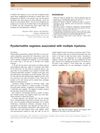 1 citations
,
January 2013 in “The Journal of Dermatology”
1 citations
,
January 2013 in “The Journal of Dermatology” A skin condition called pyodermatitis vegetans was found in a patient with multiple myeloma for the first time.
13 citations
,
March 1999 in “Biochemical Journal” Overexpressing SSAT in mice makes them highly sensitive to polyamine analogues, causing liver damage and high mortality.
 September 2022 in “Piretc”
 The document's conclusion cannot be provided because the document is not accessible or understandable.
January 2018 in “Refubium (Universitätsbibliothek der Freien Universität Berlin)” New nanocarriers were developed for safer, targeted drug delivery and diagnostics, showing promise for future medical use.
April 2005 in “Journal of Investigative Dermatology” Vitamin D helps protect skin, PSORS1 gene's risk interval for psoriasis is expanded, hair follicles can be generated from mouse cells, and interferon-γ may cause pigmented skin lesions.
 January 2024 in “Genetics in Medicine Open”
 A new IL6ST gene variant may cause a unique form of hyper-IgE syndrome with skin abscesses and high IgE levels.
29 citations
,
June 2014 in “Experimental Cell Research” EGF–FGF2 helps mouse stem cells grow and become more like nerve cells.
 103 citations
,
March 2015 in “Nature Communications”
103 citations
,
March 2015 in “Nature Communications” A genetic region near the PAX1 gene is linked to a higher risk of scoliosis in females.
 39 citations
,
January 2015 in “Journal of Electroanalytical Chemistry”
39 citations
,
January 2015 in “Journal of Electroanalytical Chemistry” New sensor detects minoxidil accurately and effectively.
9 citations
,
January 2021 in “Mediators of Inflammation” 15d‐PGJ2 cream protects against UVB-induced skin damage in mice.
1 citations
,
February 2025 in “Journal of the Neurological Sciences” Beta-trace protein may help diagnose and predict treatment response in certain nerve disorders.
26 citations
,
September 2009 in “Clinical genetics” Arab APS1 patients have unique and recurrent AIRE gene mutations.
July 2025 in “Clinical Case Reports” A new genetic mutation in the TRPS1 gene causes Trichorhinophalangeal Syndrome, leading to specific hair, dental, and bone issues.
 March 1998 in “Journal of dermatological science”
 Diphencyprone initially increases mouse hair growth, then slows it, possibly due to changes in specific protein levels.
36 citations
,
June 1988 in “Australian Journal of Biological Sciences” Mouse epidermal growth factor injections in sheep affected wool growth and skin, but saline did not.
 10 citations
,
March 2015 in “Journal of dermatology”
10 citations
,
March 2015 in “Journal of dermatology” The boy's severe skin disorder is caused by two new mutations in his TGM1 gene.
2 citations
,
June 2013 in “Journal of Clinical Pathology” The LMNA mutation affects skin structure even in asymptomatic carriers.
CCC1 is crucial for pH balance in plant cells, affecting growth and stress tolerance.
 January 2025 in “JCEM Case Reports”
 Enzyme replacement therapy may help alleviate symptoms in complex cases like this.
20 citations
,
October 2001 in “British Journal of Ophthalmology” A patient with congenital erythropoietic porphyria showed eye issues due to porphyrin buildup.
478 citations
,
September 1996 in “Proceedings of the National Academy of Sciences” Overexpression of PTHrP in chondrocytes causes short-limbed dwarfism and delayed bone formation in mice.
 102 citations
,
July 2007 in “Genes & Development”
102 citations
,
July 2007 in “Genes & Development” A mother's PPARγ is crucial for preventing harmful milk that can cause inflammation and growth problems in babies.
9 citations
,
November 2007 in “Blood” TMPRSS6 is crucial for controlling hepcidin and normal iron absorption.
 January 2025 in “Frontiers in Immunology”
 IVIG therapy significantly improved symptoms in a patient with APS-2 and SPS.