44 citations
,
January 2017 in “Journal of Investigative Dermatology” Mutations in the KLHL24 gene cause skin blistering in epidermolysis bullosa simplex.
January 2025 in “Genetics in Medicine Open” A new gene variant in a girl with Coffin-Lowry Syndrome may link the condition to early puberty.
37 citations
,
January 2010 in “Human Molecular Genetics” FTase and GGTase-I are essential for skin keratinocyte health.
 1 citations
,
March 2023 in “Frontiers in Cardiovascular Medicine”
1 citations
,
March 2023 in “Frontiers in Cardiovascular Medicine” A specific gene variant is linked to heart disease, increased heart muscle, curly hair, and thick skin on palms and soles.
11 citations
,
January 2018 in “Jaypee's international journal of clinical pediatric dentistry” Papillon-Lefèvre Syndrome causes early tooth loss and skin issues, needing early dental diagnosis.
 3 citations
,
June 2002 in “Transgenic Research”
3 citations
,
June 2002 in “Transgenic Research” Scientists made a mouse that can be made to lose hair and then grow it back.
7 citations
,
March 2022 in “The FASEB journal” Adult mice with CBS deficiency show minimal health issues and normal lifespan despite high homocysteine levels.
16 citations
,
January 2019 in “Aging” Lack of functional CYLD in mice leads to early aging and cancer.
April 2011 in “The FASEB Journal” Profilin1 speeds up wound healing.
3 citations
,
September 2023 in “Stem Cell Research & Therapy” Stem cells can be used to create long-lasting skin cells for treating pigment disorders.
11 citations
,
May 2012 in “Genesis” Bmpr2 and Acvr2a receptors are crucial for hair retention and color.
January 2009 in “ScholarlyCommons (University of Pennsylvania)” The P133R mutation in AKR1D1 enzyme causes harmful bile acid buildup, explaining related health issues.
July 2025 in “Biochimica et Biophysica Acta (BBA) - Molecular Cell Research” MicroRNA-22-3p hinders hair regrowth in male pattern baldness by affecting a specific protein.
 August 2004 in “Journal of the American College of Surgeons”
 Several genes, including Hox-7A, Stra6, and Lim-1, are involved in normal palate formation.
46 citations
,
March 2005 in “Endocrinology” Overexpression of the glucocorticoid receptor in mice causes developmental defects similar to ectodermal dysplasia.
38 citations
,
May 1971 in “Clinical genetics” A specific metabolite, not a receptor protein, triggers the production of certain kidney enzymes, but this process is disrupted in mice with a mutation causing testicular feminization.
 10 citations
,
May 2012 in “PloS one”
10 citations
,
May 2012 in “PloS one” Low ERCC3 gene activity is linked to non-pigmented hair growth.
July 2008 in “VTechWorks (Virginia Tech)” PrPC is important for neural differentiation in cattle and mouse embryonic stem cells.
 4 citations
,
December 2013 in “The Journal of Dermatology”
4 citations
,
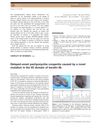
December 2013 in “The Journal of Dermatology” A new mutation in the K6b gene caused a girl's late-appearing nail condition.
 April 2017 in “The journal of investigative dermatology/Journal of investigative dermatology”
 HSD11b1 affects skin nerves and increases non-histaminergic itch.

mEphA1 receptor tyrosine kinase is important for skin and hair development and may play a role in certain diseases.
 2 citations
,
June 2023 in “Journal of cell science”
2 citations
,
June 2023 in “Journal of cell science” Mutations in iRhom2 affect hair and skin in mice and are linked to esophageal cancer, with ADAM17 playing a crucial role.
 105 citations
,
February 1996 in “Journal of biological chemistry/The Journal of biological chemistry”
105 citations
,
February 1996 in “Journal of biological chemistry/The Journal of biological chemistry” The TGM3 gene's promoter region is key for skin and hair cell function and may aid gene therapy.
53 citations
,
October 2003 in “Developmental Biology” Too much Sonic Hedgehog protein stops hair growth in embryos.
Loss of the p53 gene alone causes tumors, and losing both p53 and Rb genes speeds up aggressive skin cancer.
April 2020 in “The FASEB Journal” Loss of Rap1 protein speeds up heart aging in mice.
10 citations
,
December 2015 in “Experimental dermatology” EGFR helps mouse hair follicles stop growing by reducing certain growth regulators.
 34 citations
,
April 2018 in “EMBO journal”
34 citations
,
April 2018 in “EMBO journal” The protein SLC1A3 is important for activating skin stem cells and is necessary for normal hair and skin growth in mice.
 35 citations
,
November 1931 in “Journal of Genetics”
35 citations
,
November 1931 in “Journal of Genetics” Hairless mice lack fur due to a genetic mutation affecting skin response, not hormone issues.
 5 citations
,
February 2019 in “bioRxiv (Cold Spring Harbor Laboratory)”
5 citations
,
February 2019 in “bioRxiv (Cold Spring Harbor Laboratory)” Rapamycin may help treat Leigh syndrome by targeting protein kinase C.