
An 11-year-old female Pinscher with Pemphigus Foliaceus was successfully diagnosed and treated.
 January 2018 in “Elsevier eBooks”
 The document concludes that alopecia has significant social and psychological effects, leading to a market for hair loss treatments.
 November 2017 in “Journal of Surgical Academia”
 Visual field defects in lupus nephritis can be caused by hypertensive retinopathy, not glaucoma or medication toxicity.
 April 2017 in “Australasian Journal of Dermatology”
 Most patients with Lichen planopilaris improved with acitretin, but treatments often didn't work well; preventing infection in skin surgery is important, and bupivacaine might be a better anesthetic.
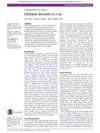 October 2016 in “Veterinary record case reports”
 A cat had a rare skin disorder with hair loss and scaling, linked to a suspected tumor.
 September 2016 in “Springer eBooks”
 Looking older on the outside might be linked to aging faster on the inside and can be affected by lifestyle choices and health risks.
 September 2016 in “Elsevier eBooks”
 Different types of hair loss in dogs and cats have various causes and treatments, with outcomes ranging from good to uncertain.
 April 2016 in “Journal of The American Academy of Dermatology”
 Both atopy and eosinophilia are linked to more severe hair loss in people with alopecia areata.

The article concludes that understanding the causes of hair loss and using continuous treatments like minoxidil and finasteride can help manage it, despite potential side effects.
 August 2015 in “Arquivo Brasileiro de Medicina Veterinária e Zootecnia/Arquivo brasileiro de medicina veterinária e zootecnia”
 Caffeine intake during pregnancy and lactation can cause skin lesions in mother rats and their babies, not linked to cortisol levels.
 January 2015 in “Journal of cosmetology & trichology”
 Mesotherapy might help make eyebrows thicker and darker for some people.
 December 2013 in “Research Portal (King's College London)”
 Hair loss in Lichen Planopilaris is caused by immune system issues damaging hair follicles and stem cells.
 September 2013 in “Neurodegenerative disease management”
 Teriflunomide is effective and generally safe for treating relapsing multiple sclerosis, reducing relapse rates and disability progression.
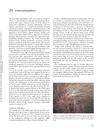 April 2012 in “Informa Healthcare eBooks”
 Lichen planopilaris is a rare, chronic condition causing hair loss, mainly in middle-aged women, and early treatment is important to prevent permanent baldness.
 January 2011 in “Elsevier eBooks”
 Alopecia in animals can be hereditary, congenital, or acquired, with treatments and outcomes varying widely.
 March 2010 in “Anti-inflammatory & anti-allergy agents in medicinal chemistry”
 Biologic agents can be effective for rheumatic diseases but have risks like infections and require careful monitoring and patient information.
 February 2010 in “Journal of The American Academy of Dermatology”
 Methotrexate treatment for rheumatoid arthritis has a serious infection rate of about two per 100 patient-years.
 February 2010 in “Journal of The American Academy of Dermatology”
 White hirsute women with PCOS have higher insulin resistance, but similar nitric oxide and fibrinogen levels compared to those with idiopathic hirsutism.
 February 2010 in “Journal of The American Academy of Dermatology”
 Ustekinumab significantly improved sexual function and quality of life for people with moderate to severe psoriasis.
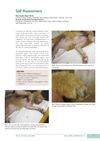 April 2008 in “Companion Animal”
 The cat's skin condition was linked to cancer and did not improve with treatment, leading to a poor outcome.

Children under 18 had milder SARS with no deaths, but teenagers faced higher severe illness risk, and effective treatments were uncertain.
 June 2001 in “Annals of Internal Medicine”
 The document concludes that more research is needed on the hepatitis B vaccine's side effects and the effectiveness of certain treatments for specific diseases.
 June 2001 in “Annals of Internal Medicine”
 The conclusion suggests that the zinc lozenge study is valid despite imperfect blinding, as many participants could not correctly identify their lozenge type.

A 5-year-old boy grew too much hair after using minoxidil, but it went away after stopping the treatment.
 February 2010 in “Journal of The American Academy of Dermatology”
 Lower nitric oxide and higher fibrinogen found in hirsute women; impaired sexual function in 22.6% of hair loss patients, linked to psoriasis severity.
 23 citations
,
October 2018 in “Australasian Journal of Dermatology”
23 citations
,
October 2018 in “Australasian Journal of Dermatology” The current understanding of frontal fibrosing alopecia involves immune, genetic, hormonal factors, and possibly environmental triggers, but more research is needed for effective treatments.
 23 citations
,
January 2014 in “International Journal of Biological Sciences”
23 citations
,
January 2014 in “International Journal of Biological Sciences” African American men with prostate cancer have more androgen receptor mutations, which may lead to more aggressive cancer compared to Caucasian American men.
 23 citations
,
June 2003 in “Journal of Investigative Dermatology Symposium Proceedings”
23 citations
,
June 2003 in “Journal of Investigative Dermatology Symposium Proceedings” Alopecia Areata is an autoimmune disease affecting hair follicles, influenced by genetic and environmental factors, with rodent models being essential for research.
 9 citations
,
August 2017 in “Journal of comparative pathology”
9 citations
,
August 2017 in “Journal of comparative pathology” Trichoblastomas in rabbits are linked to uncontrolled embryonic hair growth and have distinct histological features.
 2 citations
,
August 1994 in “The Journal of Dermatologic Surgery and Oncology”
2 citations
,
August 1994 in “The Journal of Dermatologic Surgery and Oncology” The article concludes that hair transplantation is advancing, but a reliable way to ensure complete tumor removal is still needed.