2 citations
,
July 2016 in “Veterinary dermatology” Hyperaesthetic leucotrichia in horses causes painful, recurring skin lesions and hair color changes, especially in Arabian and American paint horses.
48 citations
,
February 1998 in “British Journal of Dermatology” Thallium poisoning can cause severe neurological symptoms and hair loss.
February 2019 in “Americanae (AECID Library)” Selenium and zinc deficiency in sheep leads to thyroid and skin problems.
7 citations
,
January 2008 in “Indian Journal of Dermatology” Pigmentary mosaicism causes skin color changes and can affect multiple body systems, but has no cure.
January 2025 in “Зоологический журнал / Russian Journal of Zoology” Baikal seals' skin shows normal adaptations and potential pathologies possibly linked to climate change and a viral pathogen.
1 citations
,
January 2025 in “Pediatria i Medycyna Rodzinna” Accurate diagnosis and zinc supplements can improve life quality in acrodermatitis enteropathica, even with normal zinc levels.
29 citations
,
January 2002 in “Biological Trace Element Research” 53 citations
,
March 2006 in “Biopolymers” TTD hair is brittle due to fewer sulfur amino acids and unstable disulfide bonds.
 September 2021 in “Mağallaẗ al-Muẖtar li-l-ʿulūm”
 Two sisters have rare hair disorders causing short, fragile, kinky hair.
7 citations
,
August 2008 in “Immunogenetics” A gene mutation in mice causes increased mast cells and disorganized hair follicles in their skin.
2 citations
,
January 2006 in “Indian Journal of Veterinary Pathology” Trichophyton mentagrophytes causes skin issues and nutrient deficiencies in young sheep, especially in winter.
 33 citations
,
January 2007 in “Pediatric dermatology”
33 citations
,
January 2007 in “Pediatric dermatology” Hair thinning and loss in a girl with a rare metabolic disorder was linked to her condition.

Sensory neuron and Merkel cell changes in the skin happen independently during normal skin maintenance.
3 citations
,
January 2022 in “JAAD Case Reports” Alopecia areata and myasthenia gravis can occur as rare symptoms of breast cancer.
5 citations
,
December 2016 in “Microscopy Research and Technique” EPI-NCSCs from hair follicles may help treat brain development issues in mice.
1 citations
,
February 2025 in “Journal of the Neurological Sciences” Beta-trace protein may help diagnose and predict treatment response in certain nerve disorders.
January 2026 in “Clinical Case Reports” A 6-year-old girl had both monilethrix and trichorrhexis nodosa, causing brittle hair, with minimal improvement from treatment.
A rare genetic mutation causes severe immune issues, hair loss, and nail problems.
24 citations
,
January 1969 in “Archives of Dermatological Research” Hair malformations may occur due to timing issues in hair development.
17 citations
,
November 1967 in “American Journal of Anatomy” Hairless mice have longer hair follicles and abnormal structures during the catagen phase.
 74 citations
,
January 2006 in “The journal of investigative dermatology/Journal of investigative dermatology”
74 citations
,
January 2006 in “The journal of investigative dermatology/Journal of investigative dermatology” Mutations in the DSG4 gene can cause a rare hair disorder similar to monilethrix.
35 citations
,
May 2006 in “Journal of Investigative Dermatology” Monilethrix involves multiple genes affecting hair structure, including DSG4 mutations.
April 2020 in “Journal of the Endocrine Society” A toddler with unusual hypothyroidism symptoms improved with levothyroxine treatment.
63 citations
,
April 2005 in “Mechanisms of development” Mice with too much Claudin-6 have skin barrier problems and abnormal hair growth.
 February 2009 in “Journal of The American Academy of Dermatology”
 Most patients with Tuberous sclerosis had neurological or skin issues, and over half had psychiatric problems.
January 2009 in “Repositório Científico do Instituto Politécnico de Viseu (Instituto Politécnico de Viseu)” The skin lesion was diagnosed as a matrical cyst with unusual features.
 December 2025 in “Biology Bulletin”
 Baikal seals' skin shows normal features for protection and some pathologies possibly linked to climate change or a virus.
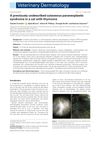 2 citations
,
March 2019 in “Veterinary dermatology”
2 citations
,
March 2019 in “Veterinary dermatology” Thymoma in cats can cause hair loss without inflammation.
 October 2023 in “Journal of dermatological science”
 New mutations in MBTPS2 reduce its function and cause IFAP syndrome with unusual symptoms.
Spiny keratoderma is a rare skin condition with small spines on palms and soles, possibly linked to abnormal hair formation.