 January 2008 in “Durham e-Theses (Durham University)”
 Hair follicle stem cells are similar to mesenchymal stem cells and can become neural-like cells under certain conditions.
 September 2004 in “Experimental dermatology”
 Melatonin directly affects mouse hair follicles and may influence hair growth.

Dermal stem cells help regenerate hair follicles and heal skin wounds.
 157 citations
,
May 2021 in “Endocrine Reviews”
157 citations
,
May 2021 in “Endocrine Reviews” Early diagnosis and individualized treatment improve outcomes for Congenital Adrenal Hyperplasia.
 12 citations
,
April 2015 in “InTech eBooks”
12 citations
,
April 2015 in “InTech eBooks” Platelet Rich Plasma (PRP) shows promise for tissue repair and immune response, but more research is needed to fully understand it and optimize its use.
 10 citations
,
October 2018 in “Sexual medicine reviews”
10 citations
,
October 2018 in “Sexual medicine reviews” Men using hair loss drugs like finasteride may experience sexual side effects like erectile dysfunction, but it's unclear who will be affected and when. Treating depression and sexual symptoms is suggested, as these men often have higher rates of both. More research is needed to understand why these side effects occur.
 June 2011 in “CRC Press eBooks”
 Low-Level Laser Therapy can stimulate healing and cell function, potentially leading to wider medical use.
January 2004 in “中国组织化学与细胞化学杂志” 5 citations
,
July 1999 in “Journal of Anatomy” Methylene blue staining effectively highlights detailed nerve structures in rat fur.
5 citations
,
July 1999 in “Journal of Anatomy” Methylene blue staining effectively reveals detailed nerve structures in rat snouts.
April 2009 in “The FASEB Journal” Keratin biomaterials from human hair help nerve regeneration by activating Schwann cells.
January 2007 in “The FASEB journal” Human hair keratins help nerve regeneration and support Schwann cell activity.
 May 2006 in “Frontiers in Neuroendocrinology”
 Progesterone and its metabolites affect myelin protein expression differently in male and female rat Schwann cells.
Sensory neuron and Merkel cell changes in the skin happen independently during normal skin maintenance.
Sensory neuron and Merkel cell changes in the skin happen independently during normal skin maintenance.
33 citations
,
December 1982 in “Developmental Medicine & Child Neurology” Hair-shaft abnormalities can indicate neurological disorders, some of which are treatable.
109 citations
,
April 1997 in “Archives of Dermatological Research” Mast cell and nerve fiber interactions in mouse skin change with the hair cycle.
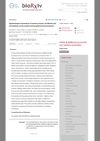 February 2023 in “bioRxiv (Cold Spring Harbor Laboratory)”
 Merkel cells stabilize nerve endings in the skin, and they change independently of each other.
 April 2018 in “Journal of Investigative Dermatology”
 The keratin network in mouse skin changes during cornification and affects the skin's protective barrier.
26 citations
,
January 1964 in “Experimental Cell Research” 59 citations
,
August 1981 in “PubMed” Trichilemmal keratinization is a unique process in hair follicles where the outer root sheath turns into keratin without a specific layer.
Sensory neuron remodeling and Merkel-cell changes happen independently during skin maintenance.
86 citations
,
May 2002 in “Journal of comparative neurology” Nerve growth in mouse skin and hair follicles happens in stages and is closely linked to hair development.
7 citations
,
September 1980 in “Zoological Journal of the Linnean Society” Dendritic cells help regulate skin development and hair growth in mice.
3 citations
,
October 2021 in “Neuroscience Letters” 36 citations
,
September 2009 in “Molecular Neurobiology” January 2000 in “Neuroscience Research” 
Sensory neuron and Merkel-cell changes in the skin happen independently during normal skin maintenance.
34 citations
,
July 2006 in “The Journal of Comparative Neurology” Increasing neurotrophin 4 in skin boosts nerve endings but not sensory neuron count.
 14 citations
,
May 2013 in “American Journal of Physiology-endocrinology and Metabolism”
14 citations
,
May 2013 in “American Journal of Physiology-endocrinology and Metabolism” Removing myelin protein zero-like 3 in mice leads to better metabolism and resistance to obesity.