September 2025 in “Journal of the American Academy of Dermatology” Some JAK inhibitors are effective for significant hair regrowth in alopecia areata.
 33 citations
,
November 1994 in “Archives of Biochemistry and Biophysics” 1 citations
,
June 2015 in “Journal of anatomy”
33 citations
,
November 1994 in “Archives of Biochemistry and Biophysics” 1 citations
,
June 2015 in “Journal of anatomy” A compound named ZCZ90 can increase muscle spindle firing, potentially helping treat muscle spasms and hypertension.
 45 citations
,
October 2008 in “Cytokine & Growth Factor Reviews”
45 citations
,
October 2008 in “Cytokine & Growth Factor Reviews” Activins and follistatins, part of the TGFβ family, are crucial for hair follicle development and skin health, affecting growth, repair, and the hair cycle.
 1 citations
,
May 2023 in “Prospects in Pharmaceutical Sciences”
1 citations
,
May 2023 in “Prospects in Pharmaceutical Sciences” New cytokine-targeted therapies show promise for treating alopecia areata.
Somatostatin helps hair follicles suppress immune responses, which might aid in treating certain hair loss conditions.
 May 2023 in “Metabolites”
 Myo-inositol plus α-lactalbumin works better than myo-inositol alone for improving symptoms of PCOS.
 April 2025 in “Journal of Investigative Dermatology”
 Two microRNAs in stem cell exosomes help treat hair loss by targeting a specific signaling pathway.
 January 2023 in “Research Square (Research Square)”
 Nano selenium and CoQ10 helped reduce blood fat levels and insulin resistance while preventing muscle damage from statin drugs in rats.
 2 citations
,
March 2024 in “Meditsinskiy sovet = Medical Council”
2 citations
,
March 2024 in “Meditsinskiy sovet = Medical Council” JAK inhibitors effectively treat severe atopic dermatitis and alopecia areata.
 2 citations
,
November 2017 in “Gynecological Endocrinology”
2 citations
,
November 2017 in “Gynecological Endocrinology” The enzyme myo-inositol oxygenase is not linked to the cause of polycystic ovarian syndrome.
 April 2024 in “Expert opinion on investigational drugs”
 JAK inhibitors are safe and effective for treating moderate-to-severe alopecia areata.
 3 citations
,
May 2018 in “Biochemical and Biophysical Research Communications”
3 citations
,
May 2018 in “Biochemical and Biophysical Research Communications” iNOS contributes to hair loss in obese diabetic mice and blocking it may encourage hair growth.
 April 2019 in “Journal of Investigative Dermatology”
 Removing REDD1 in mice increases skin fat by making fat cells larger and more numerous.
 5 citations
,
February 2019 in “bioRxiv (Cold Spring Harbor Laboratory)”
5 citations
,
February 2019 in “bioRxiv (Cold Spring Harbor Laboratory)” Rapamycin may help treat Leigh syndrome by targeting protein kinase C.

Activin A and Follistatin affect how mouse hair follicles grow.

The data suggests that dosing differences can help manage spasticity in patients with upper motor neuron dysfunction.
 59 citations
,
August 2021 in “Frontiers in Endocrinology”
59 citations
,
August 2021 in “Frontiers in Endocrinology” GLP-1 receptor agonists, like Dulaglutide, Liraglutide, and Semaglutide, have potential benefits beyond the pancreas, including neuroprotection, pain suppression, cardiovascular protection, obesity management, and cancer treatment, but there are concerns about pancreatitis and pancreatic cancer risks.
7 citations
,
August 2025 in “European Journal of Endocrinology” Long-term use of calcineurin inhibitors in transplant patients can cause hormone issues that can be managed with proper care.
 7 citations
,
June 2010 in “Bioorganic & medicinal chemistry letters”
7 citations
,
June 2010 in “Bioorganic & medicinal chemistry letters” Two new compounds were found to effectively reduce hair growth in mice.
April 2020 in “The FASEB journal” Poncirin is a promising inhibitor of Janus Kinase 3, potentially better than tofacitinib.
20 citations
,
January 1995 in “Journal of Dermatological Science” Cyclosporin A and FK506 can start new hair growth without needing immunosuppression.
7 citations
,
October 2015 in “Experimental dermatology” Blocking the mineralocorticoid receptor can help treat skin thinning caused by steroids.
 37 citations
,
June 2011 in “Journal of Cellular Biochemistry”
37 citations
,
June 2011 in “Journal of Cellular Biochemistry” Androgen is important in controlling stem cell differentiation, reducing fat development, and increasing lean mass.
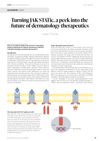 August 2024 in “New Zealand Medical Student Journal”
 JAK inhibitors show promise for treating skin diseases effectively and safely.
 4 citations
,
April 2015 in “Experimental Dermatology”
4 citations
,
April 2015 in “Experimental Dermatology” Certain genes controlled by OVOL1 are crucial for creating new hair follicles.
2 citations
,
May 2019 in “운동과학” Resistance exercise can reduce muscle protein issues caused by finasteride.
JAK inhibitors show promise in treating moderate to severe alopecia areata.
 April 2023 in “Journal of Investigative Dermatology”
 SOX2 helps reduce wound size and pressure ulcer formation by suppressing oxidative stress and increasing antioxidant activity in mice.