18 citations
,
February 1992 in “Molecular Biology Reports” A specific type II hair keratin was identified and found in hair cortex and tongue cells.
31 citations
,
September 2003 in “International Journal of Dermatology” Vitamin D-dependent rickets Type II causes bone problems and hair loss, and doesn't improve with Vitamin D treatment.
 August 2023 in “Acta Scientific Paediatrics”
 A baby from an Indian family had a rare genetic disorder causing no scalp or body hair due to a specific gene deletion.
26 citations
,
October 1998 in “Experimental Dermatology” A keratin hHb6 mutation causes a hair disorder with varying severity, influenced by other factors.
4 citations
,
January 2021 in “Current Research in Physiology” μ-Crystallin in mouse muscle increases fat metabolism.
January 2013 in “International Journal of Trichology” Early diagnosis and a multidisciplinary approach are crucial for children with Trichothiodystrophy and hidden learning disorders.
 January 2020 in “Medical journal of clinical trials & case studies”
 A 37-year-old male with severe skin and internal issues has a rare inherited skin condition called dystrophic epidermolysis bullosa.
10 citations
,
March 1997 in “Pediatric Dermatology” A rare case of trichothiodystrophy was found with autism, seizures, and mental retardation.
 36 citations
,
November 2000 in “Journal of the American Academy of Dermatology”
36 citations
,
November 2000 in “Journal of the American Academy of Dermatology” A woman with dermatomyositis showed rare skin symptoms, was treated successfully, and her case suggests checking for cancer in similar patients.
80 citations
,
June 2002 in “Molecular Biology of the Cell” Type II keratins are uniquely phosphorylated during stress and mitosis, affecting their structure and function.
 June 2023 in “British Journal of Dermatology”
 The protein called small nuclear ribonucleoprotein polypeptide E is identified as a cause of a type of hair loss without other symptoms.
175 citations
,
December 1980 in “Archives of Dermatology” Trichothiodystrophy is a condition with brittle hair and various physical and mental issues due to low sulfur in proteins.
54 citations
,
January 1995 in “Human Molecular Genetics” Monilethrix is linked to a gene cluster on chromosome 12.
January 2022 in “International journal of dermatology and venereology” A Chinese man with KID syndrome had a new mutation in the GJB2 gene.
March 2005 in “Journal of the American Academy of Dermatology” Recognizing minor skin lesions can help identify serious cancer syndromes.
April 2023 in “Journal of clinical and translational science”  January 2013 in “International Journal of Trichology”
 A new mutation in the TRPS1 gene was found in a Ukrainian girl with Trichorhinophalangeal syndrome type I.
33 citations
,
September 2017 in “Journal of Investigative Dermatology” A mutation in the KRT25 gene causes woolly hair and hair loss.
27 citations
,
July 1997 in “PubMed” The harlequin ichthyosis mouse mutation causes thick skin and early death, resembling a human skin disorder.
 1 citations
,
January 2016 in “Journal of Nepal Paediatric Society”
1 citations
,
January 2016 in “Journal of Nepal Paediatric Society” A child with rickets and hair loss might have a rare type of rickets that doesn't improve much with usual vitamin D and calcium treatment.
1 citations
,
January 2008 7 citations
,
October 2008 in “Arthritis Care & Research” Aggressive immunosuppressive treatment improved a woman's severe heart condition linked to autoimmune disease.
 May 2025 in “The Journal of Rheumatology”
 Mixed Connective Tissue Disease can develop from overlapping symptoms of several autoimmune diseases, making diagnosis complex.
 11 citations
,
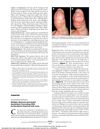
December 2010 in “Archives of Dermatology”
11 citations
,
December 2010 in “Archives of Dermatology” A man with rare skin changes on his fingers was diagnosed with multiple myeloma-linked amyloidosis.
 1 citations
,
June 2021 in “Cureus”
1 citations
,
June 2021 in “Cureus” A girl with hereditary chorea, likely Huntington's disease, had her condition worsened by lupus.
694 citations
,
April 2000 in “Nature genetics” Msx2 deficiency in mice leads to bone growth and organ development problems.
June 2025 in “Proceedings of the National Academy of Sciences” A PIK3CA mutation in Schwann cells causes severe nerve damage and increased glycolysis, but early treatment can help.
19 citations
,
January 1991 in “PubMed” Glucocorticoid treatment improved symptoms in a girl with Satoyoshi disease.
 January 2025 in “Frontiers in Immunology”
 IVIG therapy significantly improved symptoms in a patient with APS-2 and SPS.
 2 citations
,
January 2008 in “International Journal of Neuroscience”
2 citations
,
January 2008 in “International Journal of Neuroscience” A 38-year-old man was diagnosed late with Kearns-Sayre syndrome after being wrongly treated for epilepsy.