 30 citations
,
February 1994 in “Journal of Cutaneous Pathology”
30 citations
,
February 1994 in “Journal of Cutaneous Pathology” A woman's hair loss was initially mistaken for a common hair loss condition but was later found to be caused by breast cancer cells in her scalp.
June 2026 in “ACS Applied Nano Materials” New microneedles may improve vitiligo treatment.
17 citations
,
May 2018 in “Journal of Biomedical Optics” Certain types of human hair might help ultraviolet rays reach and damage cells, possibly leading to melanoma.
January 2016 in “UNESP Institutional Repository (São Paulo State University)” Melasma results from changes in the skin's pigment and structure, not just pigment cell growth.
 16 citations
,
July 2021 in “Histopathology”
16 citations
,
July 2021 in “Histopathology” New markers and pathways have been found in skin tumors, helping better understand and diagnose them.
 September 2017 in “Journal of Investigative Dermatology Symposium Proceedings”
 A 73-year-old woman with Hypopigmented Mycosis Fungoides, a rare skin lymphoma, experienced disease progression despite treatment, emphasizing the need for ongoing monitoring.
 24 citations
,
March 2018 in “Pigment Cell & Melanoma Research”
24 citations
,
March 2018 in “Pigment Cell & Melanoma Research” The environment around melanocyte stem cells is key for hair regeneration and color, with certain injuries affecting hair color and potential treatments for pigmentation disorders.
1 citations
,
April 2004 in “Cancer” Imatinib mesylate can cause skin lightening, especially in Chinese patients, due to its effect on pigment production.
11 citations
,
February 1982 in “Mutation Research/Fundamental and Molecular Mechanisms of Mutagenesis” A new method can detect mutations in mice by observing changes in hair follicle cells.
 8 citations
,
April 2010 in “JEADV. Journal of the European Academy of Dermatology and Venereology/Journal of the European Academy of Dermatology and Venereology”
8 citations
,
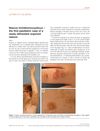
April 2010 in “JEADV. Journal of the European Academy of Dermatology and Venereology/Journal of the European Academy of Dermatology and Venereology” The first pediatric case of naevus trichilemmocysticus was documented.
March 2005 in “Journal of the American Academy of Dermatology” Recognizing minor skin lesions can help identify serious cancer syndromes.
1 citations
,
January 2022 in “Book Publisher International (a part of SCIENCEDOMAIN International)” Hydrogen peroxide is the main risk factor for melanoma in swimmers, not UV light.
 August 2018 in “Pediatric Dermatology”
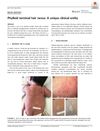
 A baby had a unique skin condition with a pale patch and surrounding dark hairs, not linked to other health issues.
 15 citations
,
December 2016 in “Obstetrics & Gynecology”
15 citations
,
December 2016 in “Obstetrics & Gynecology” Most skin changes during pregnancy are harmless and moles don't significantly change, but many women experience pigmentation changes due to hormones and sun exposure.
 2 citations
,
September 2022 in “Annals of Medicine and Surgery”
2 citations
,
September 2022 in “Annals of Medicine and Surgery” A man with a rare scalp cancer was successfully treated, highlighting the need for early management to prevent spread and complications.
 88 citations
,
July 2014 in “Journal of the American Academy of Dermatology”
88 citations
,
July 2014 in “Journal of the American Academy of Dermatology” Targeted cancer therapies often cause skin reactions, so dermatologists must manage these effects.
 2 citations
,
February 2023 in “Research Square (Research Square)”
2 citations
,
February 2023 in “Research Square (Research Square)” The scaffold effectively prevents melanoma relapse and aids wound healing.
26 citations
,
February 2015 in “Pediatric blood & cancer” Targeted anticancer therapies in children often cause skin side effects like rash and dry skin.
 15 citations
,
December 2016 in “Advanced Pharmaceutical Bulletin”
15 citations
,
December 2016 in “Advanced Pharmaceutical Bulletin” The new cream with N-acetyl glucosamine didn't change skin color after 8 weeks.
March 2026 in “Skin Appendage Disorders” Some patients on immune therapy for melanoma may develop scarring hair loss, but cancer treatment remains effective.
January 2008 in “Projeto: revista mensal de arquitetura” Targeted cancer drugs can cause skin reactions, so dermatologists must manage these effects.
53 citations
,
October 2012 in “Journal of dermatological treatment” The laser treatment effectively and safely improved melasma in Asian patients.
7 citations
,
July 2013 in “Acta Biochimica Polonica” Chemotherapy reduces splenic melanin in mice.
 4 citations
,
May 2018 in “International Journal of Molecular Sciences”
4 citations
,
May 2018 in “International Journal of Molecular Sciences” The research showed how melanocytes develop, move, and respond to UV light, and their stem cells' role in hair color and skin cancer risk.
 September 2025 in “Journal of King Saud University - Science”
 Lophocereus marginatus extracts may help treat melanoma and stimulate hair growth.
March 2022 in “JAAD case reports” A man had a non-cancerous, fast-growing skin lump on his arm that was removed with surgery.
 10 citations
,
November 2010 in “Pigment Cell & Melanoma Research”
10 citations
,
November 2010 in “Pigment Cell & Melanoma Research” Only skin melanocytes, not other types, can color hair in mice.
 April 2023 in “Authorea (Authorea)”
 Hair transplantation can improve scars after removing a rare skin cancer.
 4 citations
,
January 2016 in “Dermatology Review”
4 citations
,
January 2016 in “Dermatology Review” Cancer treatments often cause skin, nail, and hair problems.
January 2022 in “Clinical Cases in Dermatology” A man developed a unique rash on his neck after taking niacinamide, and doctors recommend considering niacinamide as a cause for similar rashes and using dermatoscopy for diagnosis.