 January 2025 in “International Journal of Research in Medical Science”
 Homeopathy successfully treated complete hair loss in a man.
 January 2025 in “RSC Pharmaceutics”
 Smart microneedles using advanced tech could improve psoriasis treatment.
 January 2025 in “Universidad de Córdoba Insitutional Repository (Universidad de Córdoba)”
 An imbalanced scalp microbiome may worsen alopecia areata severity and inflammation, but treatment can partially restore balance.
 December 2024 in “Journal of Population Therapeutics and Clinical Pharmacology”
 Psoriasis worsens in winter in India due to less sunlight and dry skin, needing personalized treatment.

A young athlete's fragile hair condition improved by cutting hair and using gentle shampoo.
 August 2024 in “OSMANGAZİ JOURNAL OF MEDICINE”
 The visfatin GT genotype may increase the risk of Alopecia Areata.
 July 2024 in “Plastic and Aesthetic Research”
 Careful planning and accurate diagnosis are crucial for successful hair restoration surgery.
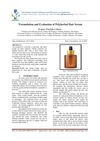 June 2024 in “International Journal of Pharmaceutical Research and Applications”
 Polyherbal hair serum can hydrate the scalp and promote hair growth safely.
 April 2024 in “International Journal of Research Publication and Reviews”
 Alopecia areata causes hair loss with varied treatment responses and frequent relapses.
 February 2024 in “International neuropsychiatric disease journal”
 Alopecia areata severely impacts quality of life, mental health, and work productivity.
 February 2024 in “Digital Library of Theses and Dissertations (Universidade de São Paulo)”
 Argan, avocado, and coconut oils are absorbed into hair, improving hydration and protection.
 December 2023 in “International journal of research in dermatology”
 Most pregnant women experience common skin changes like linea nigra and stretch marks.
 October 2023 in “Cognizance journal”
 The document suggests using natural remedies like bloodletting and honey for various health issues but lacks scientific evidence for their effectiveness.
 September 2023 in “Curēus”
 Alopecia areata may be linked to hearing problems, so patients should monitor their hearing.
 August 2023 in “International Journal of Research in Dermatology”
 Most women found Mintop Shampoo effective for reducing hair fall and improving hair quality.
 June 2023 in “Dermatology and therapy”
 The Middle East and Africa need better data, treatment consensus, and support for Alopecia Areata.
 May 2023 in “Sučasna pedìatrìâ. Ukraïna”
 An 11-year-old child with total hair loss may have a genetic autoimmune disease, and the outlook for hair regrowth is not good.
 November 2022 in “SAS journal of medicine”
 There's no link between low iron levels and the hair loss condition, alopecia areata.
 November 2022 in “Journal of Education, Health and Sport”
 The skin's bacteria might influence the development of a hair loss condition called alopecia areata.
 January 2022 in “Al-Azhar Medical Journal”
 Higher antigliadin antibody levels are linked to alopecia areata severity.
 January 2022 in “Dermatology Review”
 Microneedling with bleomycin effectively treats plantar warts with fewer sessions.
 September 2021 in “Physiology News”
 Air Vice-Marshal Sir Ralph Jackson significantly advanced dialysis technology in the UK.
 September 2021 in “Physiology News”
 Addressing underrepresentation in Parkinson's research is crucial for better treatments and understanding.

Researchers found a genetic link for hereditary hair loss but need more analysis to identify the exact gene.
 July 2021 in “Scholars Journal of Medical Case Reports”
 Woodhouse-Sakati Syndrome can include unique symptoms like liver issues and low growth hormone.
 July 2021 in “International journal of dermatology, venereology and leprosy sciences”
 Diphenylcyclopropenone is more effective and has fewer side effects than dinitrochlorobenzene for treating alopecia areata.

Lamivudine might reverse hair graying and needs more research for potential treatments.

Alopecia Areata has no cure, treatments are limited, and the condition often recurs, but new therapies like JAK inhibitors show promise.
 January 2021 in “Middle East journal of applied sciences”
 Zinc is essential for plant growth and human health, but many soils lack enough zinc, affecting crops and potentially leading to health problems.
 January 2021 in “Online Publication Service of Würzburg University (Würzburg University)”
 Diphenylcyclopropenon treatment for Alopecia areata is effective and safe, improving patients' quality of life.