80 citations
,
September 2007 in “Cell Cycle” Stem cells in hair follicles can become various cell types, including neurons.
 23 citations
,
September 2017 in “The journal of investigative dermatology/Journal of investigative dermatology”
23 citations
,
September 2017 in “The journal of investigative dermatology/Journal of investigative dermatology” NF-κB is crucial for different stages and types of hair growth in mice.
193 citations
,
May 2008 in “Development” Activating β-catenin can turn skin cells into hair follicles.
 3 citations
,
February 2021 in “Experimental dermatology”
3 citations
,
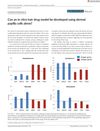
February 2021 in “Experimental dermatology” Dermal papilla microtissues could be useful for initial hair growth drug testing.
 June 2013 in “Faculty Opinions – Post-Publication Peer Review of the Biomedical Literature”
 A substance called FGF9 from certain immune cells can trigger new hair growth during wound healing in mice, but humans may not have the same response due to fewer of these cells.
November 2024 in “Journal of Investigative Dermatology” Red ginseng components help prevent skin aging by reducing inflammation and improving cell function.
 131 citations
,
July 2009 in “Experimental Dermatology”
131 citations
,
July 2009 in “Experimental Dermatology” The document concludes that specific cells are essential for hair growth and more research is needed to understand how to maintain their hair-inducing properties.
 108 citations
,
July 2004 in “American Journal of Pathology”
108 citations
,
July 2004 in “American Journal of Pathology” Stress increases a factor in mice that leads to hair loss, and blocking this factor may prevent it.
294 citations
,
February 2011 in “Cell” Nephronectin helps attach muscle cells to hair follicles.
 September 2021 in “C&EN global enterprise”
 Scientists have created a patch filled with tiny enzymes that can treat hair loss and regrow hair as effectively as common hair-loss drugs, but with fewer applications.
 January 2019 in “Global Dermatology”
 Genetic hair shaft abnormalities can be seen with microscopes and often affect scalp hair.
 759 citations
,
February 2009 in “Current Biology”
759 citations
,
February 2009 in “Current Biology” Hair follicles are complex, dynamic mini-organs that help us understand cell growth, death, migration, and differentiation, as well as tissue regeneration and tumor biology.
 13 citations
,
October 2002 in “Journal of Investigative Dermatology”
13 citations
,
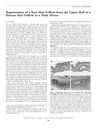
October 2002 in “Journal of Investigative Dermatology” The upper half of a human hair follicle can grow a new hair in a mouse, but success is rare.
 11 citations
,
February 2002 in “International Journal of Cosmetic Science”
11 citations
,
February 2002 in “International Journal of Cosmetic Science” Recent findings show that hair growth and color are controlled by a complex network of signals in the hair follicle.
 28 citations
,
February 2016 in “F1000Research”
28 citations
,
February 2016 in “F1000Research” Understanding glycans and enzymes that alter them is key to controlling hair growth.
 92 citations
,
August 2017 in “Proceedings of the National Academy of Sciences of the United States of America”
92 citations
,
August 2017 in “Proceedings of the National Academy of Sciences of the United States of America” Newborn mouse skin cells can grow hair and this process can be recreated in adult cells to potentially help with hair loss.
22 citations
,
June 2008 in “Experimental Dermatology” Heparanase is essential for hair follicle health and inner root sheath differentiation.
 479 citations
,
January 2005 in “BioEssays”
479 citations
,
January 2005 in “BioEssays” Hair follicle development is controlled by interactions between skin tissues and specific molecular signals.
 April 2023 in “Journal of Investigative Dermatology”
 The research found that certain factors in hair follicle cells control hair growth and development, and these could be used to create new treatments for hair loss.
 109 citations
,
July 1993 in “The journal of investigative dermatology/Journal of investigative dermatology”
109 citations
,
July 1993 in “The journal of investigative dermatology/Journal of investigative dermatology” Hair color production is closely linked to the active growth phase of hair in mice and may also influence hair growth itself.
October 2001 in “Science news” Understanding hair growth and loss is complex, involving genetic and molecular factors.
July 2026 in “Journal of Investigative Dermatology” January 2008 in “Medical Entomology and Zoology” 4 citations
,
January 2022 in “SSRN Electronic Journal” Bioprinting hair follicle germs can effectively regenerate hair and improve hair growth.
 August 2016 in “Journal of Investigative Dermatology”
 The research found that certain microRNAs are important for human hair growth and health.
 22 citations
,
July 2012 in “International Journal of Trichology”
22 citations
,
July 2012 in “International Journal of Trichology” Miniaturized hairs stay connected to muscle in alopecia areata, allowing possible regrowth, but not in androgenetic alopecia.
 34 citations
,
December 1991 in “Annals of the New York Academy of Sciences”
34 citations
,
December 1991 in “Annals of the New York Academy of Sciences” The conclusion is that small hair follicles cause baldness in macaques, and treatments like antiandrogens and minoxidil can prevent hair loss and promote regrowth.
41 citations
,
January 2001 in “Journal of Investigative Dermatology”  April 2017 in “Journal of Investigative Dermatology”
 Scientists created a tiny, 3D model of a hair follicle that grows and acts like a real one.
 74 citations
,
October 1998 in “Journal of biological chemistry/The Journal of biological chemistry”
74 citations
,
October 1998 in “Journal of biological chemistry/The Journal of biological chemistry” The 190-kbp domain contains all human type I hair keratin genes, showing their organization and evolution.