5 citations
,
April 2022 in “IntechOpen eBooks” Nanoemulgel is a better way to deliver drugs through the skin for various conditions.
 March 2012 in “Korean Journal of Microscopy”
 Quantum dot nanoparticles can penetrate skin and reach sebocytes through hair follicles.
 239 citations
,
December 2013 in “Scientific Reports”
239 citations
,
December 2013 in “Scientific Reports” A new method quickly creates controllable cell clusters for tissue engineering and drug testing.
 May 2023 in “Cytotherapy”
 Hair follicle and adipose cell vesicles both protect neurons and reduce inflammation similarly.
November 2018 in “Zenodo (CERN European Organization for Nuclear Research)” Silver nanoparticles may reduce chemotherapy side effects and improve cancer treatment.
13 citations
,
February 2025 in “ChemMedChem” Lipid nanoparticles improve treatment delivery and are key to future therapies, but challenges in manufacturing and safety remain.
 39 citations
,
April 2011 in “Recent Patents on Drug Delivery & Formulation”
39 citations
,
April 2011 in “Recent Patents on Drug Delivery & Formulation” Nanoemulsion-based drug delivery systems are versatile and have potential for treating various medical conditions and improving vaccines.
 November 2025 in “Journal of Nanobiotechnology”
 A new treatment using special nanovesicles with linoleic acid shows promise in improving hair growth and reducing irritation for hair loss.
22 citations
,
April 2022 in “Stem cell research & therapy” Hair follicle-derived extracellular vesicles may help heal chronic wounds as effectively as those from adipose tissue.
Tiny particles called extracellular vesicles show potential for improving skin health in cosmetics, but more research is needed to confirm their safety and effectiveness.
July 2013 in “Pharmaceutical Regulatory Affairs Open Access” Formulation F1 is the best for delivering finasteride effectively.
 17 citations
,
May 2021 in “Journal of Applied Pharmaceutical Science”
17 citations
,
May 2021 in “Journal of Applied Pharmaceutical Science” Transferosomes effectively deliver drugs through the skin, improving treatment for skin disorders.
April 2026 in “SSRN Electronic Journal”  1 citations
,
December 2023 in “Annals of Phytomedicine An International Journal”
1 citations
,
December 2023 in “Annals of Phytomedicine An International Journal” Nanoemulgel improves delivery and effectiveness of plant-based drugs for various conditions.
 April 2026 in “Zenodo (CERN European Organization for Nuclear Research)”
 Nanocrystals improve drug delivery and effectiveness.
 September 2025 in “Institutional Repositories DataBase (IRDB)”
 The nanoemulsion system effectively delivers drugs through the skin and shows promise for treating skin conditions.
353 citations
,
May 2016 in “TrAC Trends in Analytical Chemistry” Droplet microfluidics improves efficiency and control in chemistry, biology, and nanotechnology.
 2 citations
,
April 2021 in “International Journal of Pharmaceutics”
2 citations
,
April 2021 in “International Journal of Pharmaceutics” Serum formulations were better at delivering molecules to the hair bulb than nanoparticles.
2 citations
,
October 2022 in “Journal of Sustainable Materials Processing and Management” Vitamin-E and aloe-vera nano-transfersomes may effectively treat psoriasis.
October 2017 in “Doctoral thesis, UCL (University College London).” Lipid-based nanoparticles are effective for applying hair growth treatments to the skin.
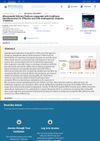 March 2024 in “ACS Applied Materials & Interfaces”
 A new tool using tiny needles and special carriers can treat hair loss effectively and safely.
January 2026 in “Chemical Engineering Journal” Engineered nanovesicles from hair follicle stem cells enable scarless healing of infected wounds.
 263 citations
,
February 2011 in “Journal of Controlled Release”
263 citations
,
February 2011 in “Journal of Controlled Release” Medium-sized particles penetrate hair follicles better than smaller or larger ones, which could improve delivery of skin treatments.
 27 citations
,
September 2018 in “Medicines”
27 citations
,
September 2018 in “Medicines” Oleic acid nanovesicles improve minoxidil absorption in hair follicles for alopecia treatment.
46 citations
,
March 2009 in “Die Pharmazie” Minoxidil-loaded nanostructured lipid carriers are effective for topical use.
 January 2021 in “Figshare”
 Coenzyme Q10 in nanocarriers improves treatment for hair loss.
January 2026 in “Journal of Nanomaterials”  May 2026 in “Medical Sciences”
 Vesicle-based therapies from stem cells and plants improve burn healing and could be safe, scalable alternatives to cell transplants.
 9 citations
,
October 2013 in “Drug Delivery”
9 citations
,
October 2013 in “Drug Delivery” Ethosomal carriers effectively deliver hair loss drug into skin.
21 citations
,
July 2015 in “International Journal of Nanomedicine” Increased liposome fluidity boosts skin penetration of sodium fluorescein.