 15 citations
,
January 2022 in “Journal of Oleo Science”
15 citations
,
January 2022 in “Journal of Oleo Science” Phytosomal nanocarriers can significantly increase the bioavailability of Cuscuta reflexa extract.
 March 2024 in “Chinese Chemical Letters”
 Tiny glowing gold particles can stop hair growth by blocking a specific cell signal.
26 citations
,
January 2005 in “PubMed” RUM-loaded SLN shows promise for treating acne and hair loss topically.
 22 citations
,
November 2024 in “Planta”
22 citations
,
November 2024 in “Planta” Aromatic plants can naturally help prevent skin aging and improve skin health.
6 citations
,
December 2019 in “International Journal of Cosmetic Science” White hair has weaker tryptophan fluorescence than other unpigmented fibers, possibly due to UV exposure or unknown substances.
 March 2025 in “International Journal For Multidisciplinary Research”
 Computational techniques can improve drug development for treating certain conditions.
34 citations
,
June 2022 in “Viruses” Certain plant compounds can help prevent and treat a virus in pigs.
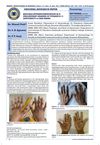 July 2021 in “PARIPEX INDIAN JOURNAL OF RESEARCH”
 Knuckle darkening can be an early sign of vitamin B12 deficiency.
 109 citations
,
March 2011 in “Journal of controlled release”
109 citations
,
March 2011 in “Journal of controlled release” New micelle solutions greatly improve skin delivery of certain antifungal drugs.
 1 citations
,
July 2022 in “Plant Cell, Tissue and Organ Culture (PCTOC)”
1 citations
,
July 2022 in “Plant Cell, Tissue and Organ Culture (PCTOC)” The study found that in Eclipta prostrata roots, coumestans come from acetate and shikimate pathways, and phenylpropanoid is made only through the shikimate pathway.
77 citations
,
December 2004 in “Choice Reviews Online” The document summarized how various modern drugs are made.

A rigid compound with a common structural motif was successfully synthesized.
9 citations
,
January 1983 in “Journal of Chromatography B Biomedical Sciences and Applications” Human hair follicles can assess carcinogen metabolism and imidazole compounds might be effective anticarcinogens.
 April 2026 in “Biomedical Materials”
 Gold nanoparticle-phytochemical combinations work better against melanoma in 3D models than separate components.
12 citations
,
May 2022 in “Plants” Nano-phytopharmaceuticals show promise but need more research for safe, effective use in treating certain disorders.
36 citations
,
August 2020 in “Polymers” The patch delivers more drugs through the skin effectively.
5 citations
,
January 2024 in “Crystals” The salts have diverse molecular packing with significant hydrogen interactions.
December 2024 in “European journal of medical research” 115 citations
,
August 2004 in “The journal of investigative dermatology/Journal of investigative dermatology” Modulating Cytochrome P450 activity could help develop new skin disease treatments.
45 citations
,
January 2016 in “Journal of Nanomaterials” Silver nanoparticles from Ziziphus nummularia leaves have better antibacterial, antifungal, antioxidant, and hair growth effects than the leaf extract alone.
 4 citations
,
December 2014 in “European Journal of Chemistry”
4 citations
,
December 2014 in “European Journal of Chemistry” Iron chloride helps create compounds that could be useful in medicine, like treating hair loss.
 April 2026 in “BMC Biotechnology”
 Curcumin spanlastics are the most effective for cancer therapy due to their strong antimicrobial, antioxidant, and antitumor effects.
 June 2024 in “ACTA SCIENTIAE VETERINARIAE”
 qPCR is effective for quickly diagnosing fungal infections in horses.
 January 2022 in “Social Science Research Network”
 A new patch that releases quercetin, copper, and zinc ions under the skin can effectively treat hair loss by promoting hair follicle regeneration.
 December 2023 in “Annales Pharmaceutiques Françaises”
 The UV–Vis Spectrophotometry method effectively measures minoxidil in rat skin for alopecia treatment.
32 citations
,
July 2018 in “FEBS letters” A specific protein complex increases the activity of a plant enzyme, but this action is not required for plant root hair growth.
 32 citations
,
June 2017 in “Journal of Pharmaceutical Sciences”
32 citations
,
June 2017 in “Journal of Pharmaceutical Sciences” Chitosan-coated nanoparticles improve skin delivery of hair loss treatments with fewer side effects.
8 citations
,
July 2024 in “Journal of Advanced Research” CDK inhibitors may help treat ARDS and psoriasis but need more testing for safety and effectiveness.
15 citations
,
February 2014 in “Toxicology Letters” Coumarin derivatives cause skin irritation, but coumarin itself does not.
January 2018 in “Surgical and Cosmetic Dermatology” The document's conclusion cannot be provided because the text is not in a processable format.