 35 citations
,
January 1996 in “Dermatologic clinics”
35 citations
,
January 1996 in “Dermatologic clinics” Tinea capitis is a common scalp infection causing hair loss, mostly in young children.
April 2021 in “Pediatric Practice and Research” Early diagnosis and treatment of hair and scalp diseases in children can improve their growth and mental health.
 46 citations
,
December 2003 in “Advances in neonatal care”
46 citations
,
December 2003 in “Advances in neonatal care” Assessing newborn scalp hair can reveal important health information.
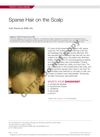
A 5-year-old girl has sparse, dry, and brittle hair but is otherwise healthy.
3 citations
,
January 2014 in “Indian dermatology online journal” Hair casts can be mistaken for lice, so correct identification is important.
3 citations
,
January 2021 in “International journal of general medicine” An 8-year-old boy with a scabies infection was successfully treated with permethrin, antihistamines, and antibiotics.
46 citations
,
January 2002 in “Paediatric drugs” Tinea capitis, a scalp fungal infection in children, is best treated with newer antifungal agents for shorter periods.
4 citations
,
April 1978 in “PubMed” Netherton syndrome in a boy caused skin and hair issues, and treatment didn't work.
September 2017 in “Journal of Evidence Based Medicine and Healthcare” Eczema is the most common skin condition in children.
3 citations
,
January 2014 in “Indian dermatology online journal” A newborn girl has a rare skin condition with two ulcers on her buttock that are healing on their own.
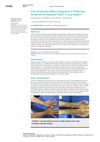
Doctors should consider Netherton syndrome in patients with chronic skin and hair issues to avoid misdiagnosis.
17 citations
,
September 2000 in “Journal of dermatology” A baby with a rare metabolic disorder developed a rash not cured by zinc alone, likely due to both zinc and amino acid deficiencies.
14 citations
,
April 1976 in “Journal of Cutaneous Pathology” A calcified nodule on a boy's face came from hair follicles and expelled calcium through the skin.
April 2021 in “Cermin Dunia Kedokteran” Two siblings with scalp fungus improved after 2 months of treatment.
4 citations
,
March 1999 in “International Journal of STD & AIDS” Netherton's syndrome can cause frequent bacterial infections beyond just skin issues.
 January 2017 in “Turkiye Klinikleri Journal of Dermatology”
 A 9-month-old baby had a rare, persistent ring-shaped hair loss condition.
October 2025 in “Indian Journal of Paediatric Dermatology” Trichoscopy is a helpful tool for diagnosing Netherton syndrome.
15 citations
,
August 2010 in “Annals of saudi medicine/Annals of Saudi medicine” Hair tourniquet syndrome is a rare condition where hair wraps around an infant's body part, needing quick removal to prevent damage.
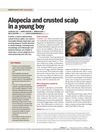 March 2026 in “Open MIND”
 Early treatment of scalp infections can prevent permanent hair loss.
September 2023 in “Journal of the American Academy of Dermatology” The hair care routine effectively improved scalp health and reduced fungus in children with kinky hair.
 3 citations
,
March 2019 in “Contact Dermatitis”
3 citations
,
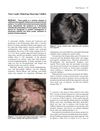
March 2019 in “Contact Dermatitis” Using Indian marking nut sap for hair loss caused a skin rash on a woman's face.
 9 citations
,
October 2013 in “Pediatric dermatology”
9 citations
,
October 2013 in “Pediatric dermatology” Proper antifungal treatment is crucial to avoid misdiagnosis and prevent scarring alopecia.
 November 2018 in “International Journal of Research in Dermatology”
 Teaching kids about hygiene can reduce scalp infections.
 September 2009 in “Pediatric Dermatology”
 UVB is good for a skin condition in Asian kids, a lotion works for head lice, a drug helps with a skin blistering disorder, a foam reduces itchiness in skin inflammation, birthmarks can be more widespread, and criteria for a neurocutaneous disorder were agreed upon.
 July 2018 in “Elsevier eBooks”
 Acne keloidalis nuchae is a chronic skin condition more common in African men, causing itchy or painful bumps and can lead to permanent hair loss if not treated early.
31 citations
,
March 1963 in “American journal of diseases of children” Acrodermatitis enteropathica is a rare inherited disorder causing skin issues, diarrhea, and hair loss.
 27 citations
,
June 2017 in “International Journal of Dermatology”
27 citations
,
June 2017 in “International Journal of Dermatology” The study suggests that acne keloidalis nuchae is linked to conditions like pseudofolliculitis barbae, scalp infections, metabolic syndrome, and is more common in males with an average onset age of 25.4 years.
 November 2023 in “Global Medical Genetics”
 Netherton syndrome can cause severe dehydration, infections, and growth issues in infants.
 4 citations
,
November 2012 in “Dermatitis”
4 citations
,
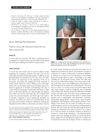
November 2012 in “Dermatitis” A man got severe skin irritation after using marking nut sap for hair loss.
 2 citations
,
August 1994 in “Archives of dermatology”
2 citations
,
August 1994 in “Archives of dermatology” A 19-month-old boy with a rare hair disorder showed mild improvement with treatment, but his family chose gentle hair care due to limited success.