1 citations
,
January 2016 in “Journal of Advanced Plastic Surgery Research” The laser treatment effectively reduced hair growth in women with hirsutism, with temporary side effects.
 November 2021 in “Research Square (Research Square)”
 A 532 nm laser at 15 J/cm2 speeds up tendon healing by increasing tendon stem cell growth and tendon-related gene activity.
January 2026 in “National Science Review”  520 citations
,
January 2017 in “AIMS biophysics”
520 citations
,
January 2017 in “AIMS biophysics” Photobiomodulation therapy using red and near-infrared light can reduce inflammation and aid in healing various conditions.
June 2026 in “Journal of Cutaneous Pathology” Polarized light microscopy is better at distinguishing scarring from non-scarring alopecia than diffractive microscopy.
 1 citations
,
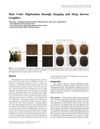
January 2022 in “Electronic Imaging”
1 citations
,
January 2022 in “Electronic Imaging” A new method accurately captures and renders hair color for virtual reality and hair dye use.
 April 2026 in “International Journal of Clinical Case Reports and Reviews”
 A new non-invasive laser system improves chronic disease management and metabolic health.
January 2026 in “SSRN Electronic Journal” 11 citations
,
January 2014 in “Mass spectrometry” Silver oxide nanoparticles help detect small molecules effectively.
December 2015 in “European Journal of Pediatric Dermatology” Newborns can experience temporary hair loss in bands, unrelated to sleeping position.
29 citations
,
September 2008 in “Dermatologic Therapy” Lasers and light sources are effective for removing unwanted hair.
3 citations
,
August 2024 in “Clinical Cosmetic and Investigational Dermatology” The 1927 nm fractional thulium laser effectively treats acne by targeting and improving affected skin areas.
9 citations
,
June 2009 in “Cell Proliferation” Cream 1 protects skin nerve endings from UV damage.
 58 citations
,
November 2013 in “Journal of Innovative Optical Health Sciences”
58 citations
,
November 2013 in “Journal of Innovative Optical Health Sciences” Multiphoton microscopy is a promising tool for detailed skin imaging and could improve patient care if its challenges are addressed.
6 citations
,
October 2020 in “Actas Dermo-Sifiliográficas” 54 citations
,
November 2014 in “JEADV. Journal of the European Academy of Dermatology and Venereology/Journal of the European Academy of Dermatology and Venereology” Combining LFQS and IPL is more effective and faster for treating melasma than LFQS alone.
 14 citations
,
January 2020 in “International Journal of Biological Sciences”
14 citations
,
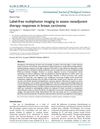
January 2020 in “International Journal of Biological Sciences” Multiphoton microscopy can effectively assess breast cancer treatment responses without labels.
 7 citations
,
August 2015 in “Dermatologic Surgery”
7 citations
,
August 2015 in “Dermatologic Surgery” The cross beam laser is a useful tool for safely measuring scalp stretchiness to improve hair transplant results.
 24 citations
,
January 2011 in “International Journal of Trichology”
24 citations
,
January 2011 in “International Journal of Trichology” Light microscopy is useful for diagnosing different hair disorders.
 July 2024 in “Dermatology Practical & Conceptual”
 LC-OCT helps accurately diagnose different types of infant hair loss without invasive methods.
August 2020 in “OPAL (Open@LaTrobe) (La Trobe University)”  81 citations
,
August 2014 in “Lasers in Surgery and Medicine”
81 citations
,
August 2014 in “Lasers in Surgery and Medicine” Red light therapy is safe and effectively increases hair growth in women with hair loss.
 6 citations
,
August 1993 in “Archives of Dermatology”
6 citations
,
August 1993 in “Archives of Dermatology” The study found that polymorphous light eruption varies among patients and can be distinguished from benign summer light eruption by the time it takes for symptoms to appear after sun exposure.
25 citations
,
March 2002 in “Scanning” Confocal microscopy is better than scanning electron microscopy for studying hair in its natural state and understanding hair products' effects.
143 citations
,
January 2013 in “Dermatologic surgery” In-office laser hair removal works well long-term, especially Nd:YAG for darker skin, but home devices need more testing.
February 2012 in “Proceedings of SPIE, the International Society for Optical Engineering/Proceedings of SPIE” A new imaging technique can observe stem cells in living mice without harming them.
15 citations
,
December 1972 in “Journal of Investigative Dermatology” 109 citations
,
April 1997 in “Archives of Dermatological Research” Mast cell and nerve fiber interactions in mouse skin change with the hair cycle.
 July 2023 in “Journal of lasers in medical sciences”
 Red laser therapy helped regrow hair in an alopecia areata patient within 21 days.
 June 2020 in “Journal of Investigative Dermatology”
 The technique effectively shows how human skin and hair cells form into ball-like structures.