 February 2023 in “Molecules”
 Cactus extract from Notocactus ottonis may help promote hair growth.
The treatment showed promising results in improving advanced-stage hair loss.
September 2024 in “Journal of the American Academy of Dermatology” Most U.S. keratinocyte carcinoma patients are older white males living in urban areas.
 September 2020 in “Research Square (Research Square)”
 Researchers found that certain RNA sequences play a role in yak hair growth and these sequences are somewhat similar to those in cashmere goats.
5 citations
,
July 2023 in “Journal of Autonomous Intelligence” Artificial neural networks can accurately diagnose Alopecia Areata.
 January 2025 in “Indian Dermatology Online Journal”
 Treatment reduced cystic lesions but didn't change existing Nevus Comedonicus.
13 citations
,
October 2020 in “BMC Genomics” Long non-coding RNAs play a key role in yak hair growth cycles.
 August 2016 in “Journal of Investigative Dermatology”
 Blocking the CCR5 receptor may be a new way to treat hair loss from alopecia areata.
 August 2023 in “Gastroenterology”
 A 78-year-old man with Cronkhite-Canada syndrome improved significantly after treatment and remains symptom-free.
January 2009 in “Epsilon: Revista de la Sociedad Andaluza de Educación Matemática "Thales"” A CCS patient with severe complications was successfully treated using combined therapies.
 April 2023 in “Research Square (Research Square)”
 A specific RNA helps increase the growth of skin cells in Liaoning cashmere goats by working with a protein to boost a growth-related gene.
 7 citations
,
January 2018 in “Neurodegenerative Diseases”
7 citations
,
January 2018 in “Neurodegenerative Diseases” Researchers found a new ABCD1 gene mutation linked to a rare brain and nerve disorder with unusual brain changes.
21 citations
,
March 2003 in “Acta Dermato Venereologica” Tacalcitol ointment effectively improves bilateral nevus comedonicus.
18 citations
,
September 1994 in “Clinical and Experimental Dermatology” Localized trichorrhexis nodosa is a hair condition where hair becomes fragile and breaks easily due to damage.
 September 2023 in “medRxiv (Cold Spring Harbor Laboratory)”
 Long-COVID has diverse, long-term health impacts, especially in young people.
The report aimed to improve health and safety standards in day care by identifying risks and suggesting solutions.
1 citations
,
November 2016 in “Frontiers in neurology” Steroid treatment improved both gut and nerve symptoms in a man with Cronkhite–Canada syndrome.
 7 citations
,
January 2015 in “Case reports in endocrinology”
7 citations
,
January 2015 in “Case reports in endocrinology” The document concludes that HAIR-AN syndrome should be considered when a patient shows severe hyperandrogenism and insulin resistance after excluding tumors.
Recognizing bamboo hair helps diagnose Netherton’s syndrome.
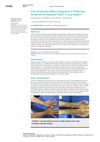
Doctors should consider Netherton syndrome in patients with chronic skin and hair issues to avoid misdiagnosis.
 November 2024 in “International Journal of Dermatology”
 LC-OCT is a useful noninvasive tool for diagnosing and monitoring alopecia areata.
 8 citations
,
September 2017 in “Journal of Investigative Dermatology”
8 citations
,
September 2017 in “Journal of Investigative Dermatology” CXXC5 is a protein that prevents hair growth and could be a target for hair loss treatment.
12 citations
,
July 2017 in “International Journal of Cosmetic Science” N‐AOHPA is a promising alternative to traditional surfactants for better hair conditioning.
January 2022 in “Mammalian Genome” The wavy coat in NCT mice is caused by multiple genes, including a mutation in the Prss53 gene.
25 citations
,
November 2020 in “Proceedings of the National Academy of Sciences” HoxC genes are crucial for normal hair and nail development.
 17 citations
,
April 2021 in “Biointerface Research in Applied Chemistry”
17 citations
,
April 2021 in “Biointerface Research in Applied Chemistry” Nanostructured lipid carriers are promising for improving drug delivery in medicine and food.
4 citations
,
March 2024 in “Journal of the American Academy of Dermatology” Scalp cooling therapy is costly and often not covered by insurance, limiting access for low-income patients.
November 2022 in “Journal of Investigative Dermatology” NCSTN gene mutation causes abnormal skin cell differentiation and more inflammation, contributing to Hidradenitis Suppurativa.
July 2021 in “MVP journal of medical science” Liquid Nitrogen Cryotherapy effectively treats unresponsive Alopecia Areata with minimal side effects.
March 2025 in “International Journal of Trichology” Vigorous rubbing of herbal powder on the scalp caused hair damage and loss.