April 2026 in “Human Genome Variation” Long-read RNA sequencing can identify complex gene changes in IFAP syndrome.
74 citations
,
October 2012 in “The American Journal of Human Genetics” Mutations in the HOXC13 gene cause hair and nail development issues.
 10 citations
,
August 2020 in “Drug metabolism and drug interactions”
10 citations
,
August 2020 in “Drug metabolism and drug interactions” The NUDT15 gene variant causes severe side effects from azathioprine in some Indian patients.
 July 2024 in “British journal of dermatology/British journal of dermatology, Supplement”
 A variant in the KRT31 gene causes a rare hereditary hair disorder called monilethrix.
 April 2018 in “Journal of Investigative Dermatology”
 Higher levels of nidogen1 and type IV collagen are found in basal cell carcinoma compared to normal skin.
The RNA AL136131.3 slows down hair growth and speeds up hair loss by affecting sugar breakdown in hair follicles.
477 citations
,
March 2004 in “Proceedings of the National Academy of Sciences” The DMI3 gene is essential for nodule development and symbiosis in certain plants.
A specific gene change in APCDD1 increases the risk of hair loss.
September 2025 in “Development” Nelfb is crucial for forming skin fat tissue by regulating genes needed for fat cell development.
 12 citations
,
February 2021 in “Translational Psychiatry”
12 citations
,
February 2021 in “Translational Psychiatry” Researchers found two new genetic variants linked to Alzheimer's disease.
April 2023 in “Journal of Investigative Dermatology” AL136131.3 slows hair growth by affecting energy processes in hair loss.
 October 2023 in “Psychiatry research. Case reports”
 A new HRAS gene variant may cause a range of symptoms including intellectual disability and psychiatric issues.
8 citations
,
June 2020 in “The journal of investigative dermatology/Journal of investigative dermatology” A boy's skin fragility and sparse hair were caused by a genetic mutation affecting skin cell adhesion.
 12 citations
,
August 1984 in “Genetics Research”
12 citations
,
August 1984 in “Genetics Research” The N gene affects the protein makeup of mouse hair.
August 2022 in “International Journal of Molecular Sciences” DNA methylation controls lncRNA2919, which negatively affects hair growth.
September 2025 in “Science Advances” PADI4 enzyme slows down cell growth in developing hair follicles.
March 2026 in “Journal of Investigative Dermatology” July 2026 in “Pediatric Allergy and Immunology”  April 1974 in “Pediatric Research”
 The Naked (N) trait in mice is linked to lower glycine and tyrosine in hair proteins.
 260 citations
,
July 2010 in “Cell”
260 citations
,
July 2010 in “Cell” Mutations in the SRD5A3 gene cause a new type of glycosylation disorder by blocking the production of a molecule necessary for protein glycosylation.
 October 2024 in “Journal of the Endocrine Society”
 Certain genetic variants reduce enzyme activity, contributing to non-classic congenital adrenal hyperplasia.
1 citations
,
December 2016 in “Revista română de medicină de laborator” The NIPAL4 mutation c.527C>A is common in Romanian patients with autosomal recessive congenital ichthyosis.
Loss of Dnmt3a and Dnmt3b increases aggressive skin tumors by affecting PPAR-γ.
 28 citations
,
February 2010 in “British journal of dermatology/British journal of dermatology, Supplement”
28 citations
,
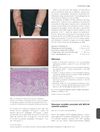
February 2010 in “British journal of dermatology/British journal of dermatology, Supplement” WNT10A mutations cause varied symptoms in patients with odonto-onycho-dermal dysplasia.
13 citations
,
February 2012 in “International Journal of Dermatology” A new genetic mutation in the CDH3 gene causes hair loss and eye problems in young people.
 21 citations
,
April 2014 in “PLoS ONE”
21 citations
,
April 2014 in “PLoS ONE” A rare gene variant causes hair and nail issues in a family.
January 2025 in “Repository of Digital Objects for Teaching Research and Culture (University of Valencia)” Non-coding RNAs may be key in diagnosing and treating rare skin disorders.
 November 2022 in “Journal of the Endocrine Society”
 A boy with a new NR5A1 gene mutation has a sex development disorder without affecting his adrenal glands.
 24 citations
,
July 1994 in “Molecular Endocrinology”
24 citations
,
July 1994 in “Molecular Endocrinology” Researchers found an RNA transcript that might help control a growth factor linked to tumor development.
188 citations
,
June 1998 in “Molecular cell” Researchers created a mouse with the same mutation as humans with trichothiodystrophy, showing similar symptoms and confirming the condition is due to defects in DNA repair and gene activity.