 July 2023 in “Journal of Education, Health and Sport”
 Fractional microneedle radiofrequency is a safe and effective skin treatment with minimal serious side effects.
27 citations
,
July 2020 in “Stem Cells International” ADSC therapy is more effective and safer for treating photoaged skin than PRP.
 20 citations
,
January 2005 in “Australasian Journal of Dermatology”
20 citations
,
January 2005 in “Australasian Journal of Dermatology” A woman had a skin condition with increased normal elastic fibers, not related to other known disorders, likely due to aging.
April 2023 in “Journal of Investigative Dermatology” CD8+ T cells attack hair follicle stem cells, causing scarring and hair loss.
 April 2017 in “Journal of Investigative Dermatology”
 Certain mutations in the KLHL24 gene cause a skin disorder by breaking down an important skin protein.
18 citations
,
January 2018 in “BMC dermatology” A new mutation in the PLEC gene causes a rare condition with skin blistering, muscle weakness, and hair loss.
19 citations
,
May 2016 in “Matrix Biology” Deleting a specific protein in skin cells disrupts normal hair growth and development.
 13 citations
,
February 2007 in “British Journal of Dermatology”
13 citations
,
February 2007 in “British Journal of Dermatology” EF and PXE not closely related.
 20 citations
,
February 2019 in “Genes”
20 citations
,
February 2019 in “Genes” The study concludes that mutations in the AEBP1 gene can cause a form of Ehlers-Danlos syndrome and should be considered in diagnosis.
 January 2023 in “Indian dermatology online journal”
 A child with ectodermal dysplasia-syndactyly syndrome has a new mutation in the NECTIN4 gene.
 3 citations
,
January 2019 in “Journal of Dermatology”
3 citations
,
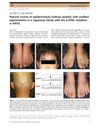
January 2019 in “Journal of Dermatology” The p.P25L mutation in the KRT5 gene causes a rare skin condition that worsens over time and may lead to hair loss starting in young adulthood.
March 2026 in “Experimental Dermatology” The new model helps understand and develop treatments for genetic skin disorders like AEC.
June 2005 in “Journal of Investigative Dermatology” A bull with a gene mutation was asymptomatic, synthetic retinoids cause hair loss, and new therapeutic targets were identified for skin diseases.
3 citations
,
July 2024 in “Frontiers in Medicine” Mutations in the KLHL24 gene cause a skin disorder in some Russian families.
189 citations
,
July 2009 in “The Journal of clinical investigation/The journal of clinical investigation” Epidermolysis bullosa simplex causes easily blistered skin due to faulty skin cell proteins, leading to new treatment ideas.
5 citations
,
January 2011 in “Archives de Pédiatrie” A severe form of Netherton syndrome caused by a specific gene mutation led to neonatal deaths in a family.
14 citations
,
May 2017 in “Journal of Investigative Dermatology” A rare gene mutation causes skin fragility and itching without affecting hair or nails.
 September 2016 in “Journal of Dermatological Science”
 A specific mutation known for causing cancer is also found to cause a skin condition in a young girl.
 4 citations
,
May 2021 in “The journal of investigative dermatology/Journal of investigative dermatology”
4 citations
,
May 2021 in “The journal of investigative dermatology/Journal of investigative dermatology” ELL is crucial for gene transcription related to skin cell growth.
40 citations
,
November 2021 in “International Journal of Molecular Sciences” Mutant keratins cause inflammation in Epidermolysis Bullosa Simplex, suggesting targeting them could help treat the disorder.
372 citations
,
December 2004 in “Nature Genetics” Defective nuclear transport may cause gene expression changes in Progeria.
21 citations
,
September 2013 in “Pediatric Dermatology” Growth hormone therapy can improve growth in Netherton syndrome patients with growth hormone deficiency.
44 citations
,
January 2017 in “Journal of Investigative Dermatology” Mutations in the KLHL24 gene cause skin blistering in epidermolysis bullosa simplex.
 10 citations
,
March 2015 in “Journal of dermatology”
10 citations
,
March 2015 in “Journal of dermatology” The boy's severe skin disorder is caused by two new mutations in his TGM1 gene.
 September 2019 in “Journal of Investigative Dermatology”
 Scientists used stem cells to create a model of the skin disease Epidermolysis Bullosa simplex, which helped them understand its molecular mechanisms and could aid in finding treatments.
87 citations
,
September 2012 in “Journal of Cell Science” Keratins are crucial for tissue strength, and mutations in keratin genes can lead to various diseases, highlighting the need for targeted therapies.
 April 2023 in “Journal of Investigative Dermatology”
 The specific skin disease variant p.(Arg2000Trp) in plectin can cause a wide range of symptoms, which should be considered when diagnosing patients.
 31 citations
,
August 2005 in “The American Journal of Dermatopathology”
31 citations
,
August 2005 in “The American Journal of Dermatopathology” The study concluded that PKP1 is essential for skin integrity and hair growth, and its dysfunction causes the symptoms of ectodermal dysplasia/skin fragility syndrome.
10 citations
,
July 2001 in “PubMed” A new type of pachyonychia congenita may exist, caused by a different keratin mutation.