 2 citations
,
May 2017 in “International journal of pharmacy and pharmaceutical sciences/International Journal of Pharmacy and Pharmaceutical Sciences”
2 citations
,
May 2017 in “International journal of pharmacy and pharmaceutical sciences/International Journal of Pharmacy and Pharmaceutical Sciences” Hutchinson-Gilford Progeria Syndrome is a rare genetic disorder caused by a specific gene mutation, characterized by aging symptoms and managed by monitoring heart health and using low-dose aspirin.
 7 citations
,
January 2015 in “Case reports in genetics”
7 citations
,
January 2015 in “Case reports in genetics” Using SNP array testing helped quickly find the gene causing Woodhouse-Sakati syndrome in two related individuals.
January 2024 in “Revista del Centro Dermatológico Pascua” Avoiding damage and using specific shampoo and supplements improved the hair condition.
January 2023 in “Indian Dermatology Online Journal” Uncombable hair syndrome is linked to Zellweger syndrome.
22 citations
,
February 2012 in “Journal of Investigative Dermatology” A specific gene mutation causes severe skin and nail issues and hair loss.
 8 citations
,
May 2017 in “IUBMB life”
8 citations
,
May 2017 in “IUBMB life” Astrotactin proteins are important for brain and skin development and are linked to several neurodevelopmental disorders.
 1 citations
,
June 2022 in “Curēus”
1 citations
,
June 2022 in “Curēus” Early detection and multidisciplinary treatment are crucial for managing Papillon-Lefévre syndrome.
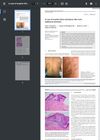 1 citations
,
December 2022 in “Pediatric dermatology”
1 citations
,
December 2022 in “Pediatric dermatology” A boy developed a rare skin condition after recovering from a severe skin reaction, and it improved with lotion treatment.
43 citations
,
September 2001 in “Annals of Neurology” Hair root analysis can effectively detect somatic mosaicism in double cortex syndrome.
7 citations
,
March 2004 in “Journal of the American Academy of Dermatology” Tiger tail banding and hair abnormalities are reliable indicators for diagnosing trichothiodystrophy.
 February 2026 in “Frontiers in Medicine”
 Personalized sonidegib dosing can effectively treat Gorlin-Goltz syndrome with fewer side effects.
 2 citations
,
August 2012 in “Journal of the American Academy of Dermatology”
2 citations
,
August 2012 in “Journal of the American Academy of Dermatology” Two patients with the same genetic mutation had both blistering skin and easily pulled out hair.
 6 citations
,
July 1990 in “The Journal of Pediatrics”
6 citations
,
July 1990 in “The Journal of Pediatrics” A boy with toxic shock syndrome had severe heart rhythm problems but recovered with treatment.
 September 2021 in “Mağallaẗ al-Muẖtar li-l-ʿulūm”
 Two sisters have rare hair disorders causing short, fragile, kinky hair.
Defective nuclear transport may cause gene expression changes in Progeria.
 October 2024 in “Journal of the Endocrine Society”
 A rare genetic mutation causes resistance to vitamin D, leading to severe rickets and requiring high doses of calcium and vitamin D for treatment.
 6 citations
,
January 2014 in “Clinical hemorheology and microcirculation”
6 citations
,
January 2014 in “Clinical hemorheology and microcirculation” Hereditary elliptocytosis causes elongated red blood cells and can lead to mild or no symptoms.
Light tickling can be unpleasant and may feel worse for individuals with autism.
2 citations
,
January 2007 in “Actas Dermo-Sifiliográficas” Two cases of hairy elbows syndrome were described, with normal skin texture and symmetrical hair growth.
44 citations
,
January 1999 in “Dermatology” Nevus comedonicus is a rare skin condition with grouped open pores, sometimes linked to other body issues.
9 citations
,
November 2014 in “Indian Journal of Endocrinology and Metabolism” A 15-year-old girl with rare reproductive disorders received hormone therapy to develop secondary sexual traits, but infertility persisted.
 October 2022 in “Journal of advanced research in medicine”
 A woman with Sheehan syndrome improved with hormone treatment.
11 citations
,
February 2011 in “The Journal of Dermatology” Mutations in the hairless gene cause a rare form of permanent hair loss.
January 2011 in “대한피부과학회지” A 7-year-old girl was diagnosed with trichothiodystrophy due to low sulfur levels in her hair.
October 1984 in “Kidney international” The patient had complex urinary tract issues and ambiguous genitalia, with physical features suggesting a hormonal imbalance.
6 citations
,
April 2012 in “PubMed” Enteral supplements can improve symptoms of Cronkhite-Canada syndrome.
2 citations
,
May 2006 in “Archives of Pathology & Laboratory Medicine” Early recognition of skin lesions in Birt-Hogg-Dubé syndrome is crucial for detecting renal tumors early.
 74 citations
,
September 1980 in “Medical Clinics of North America”
74 citations
,
September 1980 in “Medical Clinics of North America” Toxic epidermal necrolysis is a severe skin condition often caused by drugs, with complex treatment and a high risk of death, but survivors usually heal without scars.
15 citations
,
May 2010 in “Pediatrics in Review” Delayed puberty often runs in families, can affect growth, and may need hormone treatment.
8 citations
,
January 2014 in “Indian Journal of Paediatric Dermatology” Congenital atrichia with papular lesions causes permanent hair loss and skin bumps from birth.