 59 citations
,
January 2010 in “International Journal of Pediatric Endocrinology”
59 citations
,
January 2010 in “International Journal of Pediatric Endocrinology” NonClassic Congenital Adrenal Hyperplasia is a less severe form of a genetic disorder affecting adrenal gland function.
 3 citations
,
May 2013 in “Pediatric Dermatology”
3 citations
,
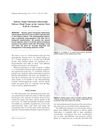
May 2013 in “Pediatric Dermatology” A newborn girl had a rare case of salivary gland tissue on her chest, which was safely removed.
15 citations
,
July 2024 in “Current Issues in Molecular Biology” Understanding molecular processes in skin development is key to creating targeted treatments for skin disorders.
4 citations
,
January 2020 in “Dermatology Online Journal” Congenital atrichia with papular lesions causes permanent hair loss and skin bumps due to a gene mutation.
12 citations
,
May 2013 in “International Journal of Molecular Sciences” Stem cells from elderly skin can become neurons, offering potential for brain therapy.
8 citations
,
October 2024 in “Developmental Cell”  146 citations
,
May 2002 in “The American journal of pathology”
146 citations
,
May 2002 in “The American journal of pathology” Cathepsin L is essential for normal hair growth and development.
 109 citations
,
July 1993 in “The journal of investigative dermatology/Journal of investigative dermatology”
109 citations
,
July 1993 in “The journal of investigative dermatology/Journal of investigative dermatology” Hair color production is closely linked to the active growth phase of hair in mice and may also influence hair growth itself.
 66 citations
,
June 2010 in “Experimental Dermatology”
66 citations
,
June 2010 in “Experimental Dermatology” The hair follicle is a great model for research to improve hair growth treatments.
 65 citations
,
February 2015 in “Neuro-Oncology”
65 citations
,
February 2015 in “Neuro-Oncology” Alisertib was found to be an effective and tolerable treatment for children with recurrent brain tumors.
 65 citations
,
September 2004 in “The American journal of pathology”
65 citations
,
September 2004 in “The American journal of pathology” Blocking BMP signaling causes hair loss and disrupts hair growth cycles.
 52 citations
,
October 1999 in “Developmental Dynamics”
52 citations
,
October 1999 in “Developmental Dynamics” Mutations in the hairless gene in mice affect its expression and lead to a range of developmental issues in multiple tissues.
 25 citations
,
August 2017 in “Lasers in Medical Science”
25 citations
,
August 2017 in “Lasers in Medical Science” Fractional lasers seem effective and safe for treating hair loss, but more research is needed to find the best treatment methods.
 24 citations
,
February 2006 in “Chinese Medical Journal”
24 citations
,
February 2006 in “Chinese Medical Journal” Cultured dermal papilla cells can regenerate hair follicles and sustain hair growth.
 8 citations
,
August 2016 in “Journal of pathology and translational medicine”
8 citations
,
August 2016 in “Journal of pathology and translational medicine” CD99 is highly present in certain skin cells and could help treat skin conditions.
 8 citations
,
January 2013 in “The scientific world journal/TheScientificWorldjournal”
8 citations
,
January 2013 in “The scientific world journal/TheScientificWorldjournal” Human hair follicles may provide a noninvasive way to diagnose diseases and have potential in regenerative medicine.
 7 citations
,
February 2019 in “International Journal of Dermatology”
7 citations
,
February 2019 in “International Journal of Dermatology” Gray hair is caused by reduced melanin production or transfer issues, linked to aging and possibly health conditions, with treatments focusing on color camouflage.
 June 2023 in “Livestock studies”
 The article concludes that understanding the molecular processes in hair follicle development can improve the quality of fibers like Angora and cashmere.
 January 2019 in “Advances in stem cells and their niches”
 Skin health and repair depend on the signals between skin stem cells and their surrounding cells.
4 citations
,
July 2019 in “Clinical and experimental dermatology” Early diagnosis and biotin treatment are crucial for infants with biotinidase deficiency to prevent severe complications.
119 citations
,
November 2016 in “American journal of human genetics” Mutations in three genes cause Uncombable Hair Syndrome, leading to frizzy hair that can't be combed flat.
 September 2017 in “Pediatric Dermatology”
 The document concludes that an experimental drug may help wound healing in Epidermolysis Bullosa, links Hydroa vacciniforme to EBV, discusses diagnosing hair loss disorders, finds many children with eczema have allergies, reviews the safety of a skin medication in children, notes side effects of a Duchenne's treatment, and identifies a marker for pediatric mastocytosis.
29 citations
,
June 2020 in “International Journal of Molecular Sciences” Notch signaling disruptions can cause various skin diseases.
 October 2024 in “Journal of the Endocrine Society”
 Ayme-Gripp Syndrome was confirmed in a woman through genetic testing, highlighting the need to consider rare genetic conditions in diagnoses.
30 citations
,
August 2005 in “British journal of dermatology/British journal of dermatology, Supplement” A specific gene mutation causes hair loss and potential eye issues, even if vision seems normal.
 11 citations
,
January 2020 in “BMC pediatrics”
11 citations
,
January 2020 in “BMC pediatrics” New mutations in the SLC39A4 gene found in twins help understand the genetic cause of acrodermatitis enteropathica.
 January 2026 in “Frontiers in Cellular Neuroscience”
 Neurosteroids like neuro-estrogen and neuro-androgen are crucial for brain function and can improve cognition and protect against aging-related decline.
 2 citations
,
December 2013 in “Veterinary dermatology”
2 citations
,
December 2013 in “Veterinary dermatology” Three dogs with a rare skin condition improved with treatment.
2 citations
,
January 2022 in “International journal of trichology” Eruptive vellus hair cysts are often missed in diagnoses.
2 citations
,
January 2016 in “Journal of clinical & experimental dermatology research” Acrodermatitis Enteropathica is a rare skin condition treated effectively with zinc supplements, and early diagnosis is key.