 1 citations
,
January 2006 in “Elsevier eBooks”
1 citations
,
January 2006 in “Elsevier eBooks” The conclusion is that different types of hair loss in dogs and cats can be cosmetic or serious, and affected animals should not be bred.
 September 2016 in “Elsevier eBooks”
 Different types of hair loss in dogs and cats have various causes and treatments, with outcomes ranging from good to uncertain.
February 2024 in “Animals” Most dogs with adrenal-dependent hypercortisolism had normal blood pressure after one year of treatment or surgery.
 1 citations
,
April 2023 in “Journal of the Hellenic Veterinary Medical Society”
1 citations
,
April 2023 in “Journal of the Hellenic Veterinary Medical Society” Most dogs with paw inflammation had chronic issues, often due to allergies, and certain breeds were more affected.
 16 citations
,
July 2016 in “Veterinary Dermatology”
16 citations
,
July 2016 in “Veterinary Dermatology” Dermoscopy is useful for diagnosing hair loss patterns in dogs.
Dermoscopy is useful for diagnosing hair loss patterns in dogs.
 August 2001 in “Veterinary Dermatology”
 The meeting presented findings on effective treatments for various pet skin conditions and insights into the immune responses of dogs with atopic dermatitis.
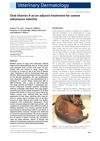 15 citations
,
May 2011 in “Veterinary Dermatology”
15 citations
,
May 2011 in “Veterinary Dermatology” Vitamin A might be a safe extra treatment for dogs with sebaceous adenitis, but more research is needed to prove its effectiveness.
2 citations
,
December 2021 in “BMC veterinary research” Long-term use of difluprednate eye drops in dogs can lead to hair loss and hormone imbalance.
 July 2019 in “Acta Scientiae Veterinariae”
 Removing a testicular tumor in a dog reduced its aggressive behavior and skin problems.
 20 citations
,
February 2004 in “Veterinary dermatology”
20 citations
,
February 2004 in “Veterinary dermatology” Dog hair grows back in about 14 weeks after being clipped for surgery, and the season doesn't really affect this growth rate.
1 citations
,
September 2024 in “Veterinary Dermatology” Trichography is important for diagnosing hair fragility in Pomeranian dogs with hair cycle issues.
![2-Deoxy-2-[18F]Fluoro-D-Glucose Positron Emission Tomography/Computed Tomography](/images/assets/35fab163-57b7-4db8-b1e0-2929b51b2144/small/60162.jpg) January 2016 in “Electronic Theses of LMU Munich (Ludwig-Maximilians-Universität München)”
January 2016 in “Electronic Theses of LMU Munich (Ludwig-Maximilians-Universität München)” FDG PET/CT can improve cancer treatment plans in dogs.
 April 2026 in “Frontiers in Veterinary Science”
 Male cats have higher stress levels than females.
 February 2025 in “Animals”
 Amino acid-complexed trace minerals improve hair quality and activity in senior dogs.
 November 2009 in “Companion Animal”
 The document suggests that Alopecia X in dogs is mainly a cosmetic issue and might be better left untreated.
 36 citations
,
May 2004 in “The journal of small animal practice/Journal of small animal practice”
36 citations
,
May 2004 in “The journal of small animal practice/Journal of small animal practice” Combining cyclosporine A and ketoconazole can effectively treat anal furunculosis in dogs, with some experiencing recurrences and mild side effects.
 24 citations
,
May 2010 in “Veterinary dermatology”
24 citations
,
May 2010 in “Veterinary dermatology” Oral ciclosporin A and topical treatments both reduce hair loss and scaling in dogs with sebaceous adenitis, but using both together is most effective.
199 citations
,
July 2007 in “General and Comparative Endocrinology” Hair cortisol can reliably indicate chronic stress in cats and dogs.

Melatonin and photobiomodulation are effective for treating Alopecia X in German Spitz dogs.
July 2025 in “Veterinary Parasitology Regional Studies and Reports” NexGard® and Frontline Combo® are both 100% effective at eliminating lice in dogs.
 1 citations
,
September 2003 in “The Journal of the American Animal Hospital Association/Journal of the American Animal Hospital Association”
1 citations
,
September 2003 in “The Journal of the American Animal Hospital Association/Journal of the American Animal Hospital Association” Transdermal fluoxetine is less effective in cats, clomipramine may help with feline alopecia, younger dogs often start fights, dietary changes can reduce cribbing in horses, negative aggression tests in shelter dogs predict good behavior, many older cats show cognitive issues, and fluoxetine or paroxetine can improve canine anxiety.
 28 citations
,
May 2012 in “Veterinary Dermatology”
28 citations
,
May 2012 in “Veterinary Dermatology” Different types of dog hair loss are linked to problems starting the hair growth phase and early hair cycle ending.
 January 2011 in “Elsevier eBooks”
 Alopecia in animals can be hereditary, congenital, or acquired, with treatments and outcomes varying widely.
 15 citations
,
September 2005 in “The Journal of the American Animal Hospital Association/Journal of the American Animal Hospital Association”
15 citations
,
September 2005 in “The Journal of the American Animal Hospital Association/Journal of the American Animal Hospital Association” Trilostane effectively treated hair loss in Alaskan Malamutes with no adverse effects.
 2 citations
,
July 2013 in “Veterinary dermatology”
2 citations
,
July 2013 in “Veterinary dermatology” Dog skin with hair loss, when transplanted to mice, regrew hair, suggesting the hair loss cause is likely body-wide, not skin-specific.
 October 2020 in “Veterinary Dermatology”
 New treatments and diagnostic methods for various animal skin conditions showed promising results.
 24 citations
,
January 2008 in “KARGER eBooks”
24 citations
,
January 2008 in “KARGER eBooks” The document concludes that ongoing research using animal models is crucial for better understanding and treating Alopecia Areata.
 January 2023 in “International Journal of Zoology and Animal Biology”
 Canine hypothyroidism can be linked to diabetes, requiring thorough testing for proper diagnosis.
 5 citations
,
February 2015 in “Journal of Comparative Pathology”
5 citations
,
February 2015 in “Journal of Comparative Pathology” High proliferative activity and peripheral invasion indicate malignancy in canine sebaceous gland tumors; the term 'epithelioma' should be updated for clarity.