 23 citations
,
September 2014 in “JEADV. Journal of the European Academy of Dermatology and Venereology/Journal of the European Academy of Dermatology and Venereology”
23 citations
,
September 2014 in “JEADV. Journal of the European Academy of Dermatology and Venereology/Journal of the European Academy of Dermatology and Venereology” Laser treatments are the most effective for porokeratotic adnexal ostial nevus.
19 citations
,
July 1994 in “International Journal of Dermatology” A 9-year-old boy had a calcium deposit nodule on his earlobe.
 17 citations
,
September 2010 in “Pediatric dermatology”
17 citations
,
September 2010 in “Pediatric dermatology” A 15-year-old with KID syndrome developed a rare skin condition called PEHFN.
12 citations
,
September 2012 in “Pediatric Dermatology” The boy's skin condition improved significantly with a specific ointment after other treatments showed only mild results.
 6 citations
,
February 2016 in “American Journal of Dermatopathology”
6 citations
,
February 2016 in “American Journal of Dermatopathology” The boy with woolly hair nevus had thinner hair and abnormal hair follicles, which improved with treatment but worsened when treatment stopped.
 5 citations
,
January 2017 in “Anais brasileiros de dermatologia/Anais Brasileiros de Dermatologia”
5 citations
,
January 2017 in “Anais brasileiros de dermatologia/Anais Brasileiros de Dermatologia” Porokeratotic eccrine and hair follicle nevus is a very rare skin disorder possibly caused by a GJB2 gene mutation.
4 citations
,
August 2018 in “Journal of pediatric neurology” Becker's Nevus Syndrome is a rare condition with a skin patch and possible bone and muscle abnormalities, treated mainly for appearance.
3 citations
,
August 2018 in “Medical Journal Armed Forces India/MJAFI” Intense Pulse Light effectively reduces hair growth in faun tail nevus.
 3 citations
,
August 2012 in “The American Journal of Dermatopathology”
3 citations
,
August 2012 in “The American Journal of Dermatopathology” A man with a birthmark on his scalp developed hair loss that improved with treatment, but the link between the birthmark and hair loss was unclear.
3 citations
,
November 2010 in “The Journal of Dermatology” A giant blue nevus on the scalp can cause hair loss and may damage underlying structures.
 2 citations
,
December 2019 in “Cureus”
2 citations
,
December 2019 in “Cureus” A patient with a scalp condition and benign skin tumor experienced hair loss and did not improve with treatment, choosing not to have surgery despite a small cancer risk.
1 citations
,
July 2024 in “Journal of Investigative Dermatology” Immune cells boost stem cell activity in hairy moles, causing more hair growth.
1 citations
,
April 2021 in “Annals of Otology Rhinology & Laryngology” Surgical removal is advised for large congenital blue nevi due to rare cancer risk.
March 2026 in “Journal of Investigative Dermatology”  September 2023 in “Curēus”
 A 21-year-old male has a benign skin condition called Becker's nevus, which he chose not to treat.
February 2022 in “Authorea (Authorea)” PAON shows skin patterns due to genetic mosaicism.
10 citations
,
October 2009 in “Photomedicine and laser surgery” IPL treatment can significantly reduce hair in faun tail but may need local anesthesia.
 8 citations
,
July 2007 in “International Journal of Dermatology”
8 citations
,
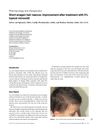
July 2007 in “International Journal of Dermatology” Using 5% topical minoxidil improved and normalized the hair growth in a girl with short anagen hair naevus.
7 citations
,
January 2020 in “Dermatology online journal” An adult with a rare skin condition improved with tazarotene treatment.
6 citations
,
January 2015 in “Indian Dermatology Online Journal” PEODDN is a rare skin disorder with limited treatment options, best treated with laser therapy.
 5 citations
,
September 2015 in “Journal of The American Academy of Dermatology”
5 citations
,
September 2015 in “Journal of The American Academy of Dermatology” Taking photos of your own skin can lead to fewer skin biopsies for mole monitoring.
1 citations
,
April 2025 in “Clinical Cosmetic and Investigational Dermatology” A rare skin lesion in a 64-year-old woman was successfully treated with a laser, showing minimal redness and no return after one month.
January 2026 in “Indian Journal of Paediatric Dermatology” A rare case shows a possible link between Neurofibromatosis type 1 and Becker nevus due to genetic mutations.
13 citations
,
January 2021 in “The American journal of gastroenterology” Sirolimus effectively reduces lesions and improves quality of life in Blue Rubber Bleb Nevus Syndrome with manageable side effects.
August 2019 in “Anais Brasileiros de Dermatologia”  1 citations
,
July 2023 in “Foods”
1 citations
,
July 2023 in “Foods” Mushrooms offer benefits for food, energy, and water security, and have potential uses in health and environmental applications.
 September 2024 in “Egyptian Journal of Medical Human Genetics”
 Consider NF1 in newborns with rare congenital anomalies.
56 citations
,
October 2010 in “Pediatric Clinics of North America” Epidermal nevi are skin cell clusters linked to various syndromes.
11 citations
,
April 2012 in “American Journal of Dermatopathology” Adenolipomas may develop from gland entrapment by fat tissue, showing complex and varied forms.
 7 citations
,
February 2021 in “Dermatologic Therapy”
7 citations
,
February 2021 in “Dermatologic Therapy” Sebaceous glands are involved in various skin disorders, some treatable with medications like finasteride and minoxidil.