 April 2019 in “University of Huddersfield Repository (University of Huddersfield)”
 Alopecia causes emotional distress, and better psychological support is needed.
 January 2019 in “LASER THERAPY”
 Laser technologies improve medical treatments and outcomes.
 November 2018 in “Springer eBooks”
 The document concludes that hair transplant clinics should focus on effective marketing, online presence, and quality patient care, while the industry should promote high standards and education through organizations like FUE Europe.
 October 2018 in “InTech eBooks”
 The most effective treatments for hair loss are minoxidil, finasteride, PRP, and hair transplants, with steroids and immunosuppressants for autoimmune types.
 July 2018 in “British Journal of Dermatology”
 Mindfulness reduces anxiety and depression in skin disease patients; dermatologists and psychiatrists often lack confidence in treating psychodermatological conditions.
Tailored nonsurgical cosmetic procedures are crucial for safely treating diverse skin types, especially skin of color.
 March 2017 in “Fundamental & Clinical Pharmacology”
 The model and estimator can predict drug exposure in kidney transplant patients well.
 December 2016 in “University of Birmingham Institutional Research Archive (University of Birmingham)”
 Steroid-producing capabilities in certain cancers may contribute to treatment resistance.
Forensic hair analysis for drugs is now more reliable and accurate.
 January 2016 in “Research Explorer (The University of Manchester)”
 Activating the Eda/Edar pathway improves wound healing by enhancing hair follicle growth.
 December 2015 in “Biomedical and biopharmaceutical research”
 Argan oil makes hair care products spread better and improves their texture.
 March 2015 in “Surgery (oxford)”
 Critical illness can lead to long-lasting physical and psychological problems, requiring ongoing, specialized care and rehabilitation.
 August 2014 in “Warwick Research Archive Portal (University of Warwick)”
 Obesity negatively affects the endometrium, leading to higher miscarriage risk and impaired cell function.
 April 2014 in “Significance”
 Unconventional home remedies can sometimes show surprising results.
 November 2012 in “Econometric Theory”
 Herman Bierens had a successful career in econometrics, contributed to education, and plans to continue research after retirement.
 January 2012 in “Methods in pharmacology and toxicology”
 Hair follicle culture helps study hair growth but has limitations in modeling the full hair cycle.
 December 2011 in “The Diabetes Educator”
 The Blood Glucose Management Service improved patient safety and outcomes in managing blood sugar in hospitalized patients.
 January 2010 in “Springer eBooks”
 Hirsutism can lower a woman's quality of life, causing emotional distress and affecting social and work opportunities.
 June 2008 in “British Journal of Dermatology”
 UK medical students lack dermatology education, liver biopsy patients with risk factors show more fibrosis, and certain fungi resist drugs due to melanin; genetics may influence female hair loss.
 March 2007 in “Journal of hypertension”
 Minoxidil effectively lowers blood pressure in patients with resistant hypertension.
 February 2006 in “Journal of The American Academy of Dermatology”
 Terbinafine is more effective than itraconazole for toenail fungus, especially in older patients, and debridement improves its effectiveness.
 January 2006 in “Advances in developmental biology”
 The Hairless gene is crucial for healthy skin and hair growth.
 September 2004 in “Experimental dermatology”
 Melatonin directly affects mouse hair follicles and may influence hair growth.
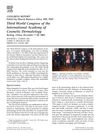 July 2004 in “Clinics in Dermatology”
 The Third World Congress of the International Academy of Cosmetic Dermatology discussed various topics like hair disorders, skin conditions, wound healing, shampoo technology, acne treatment, and the use of lasers in dermatology.
 July 2004 in “British Journal of Dermatology”
 The document concludes that accurate diagnosis and treatment are crucial in dermatology, and it presents various findings on skin conditions and treatments.
 May 2004 in “The Journal of Laryngology & Otology”
 The first book is highly recommended for facial surgery education, the second book is useful despite its limited focus, and the third book is not user-friendly due to dense text and poor images.
 September 2003 in “Journal of the Royal Society of Medicine”
 The document concludes that while some advocate for a patient voucher system, it may be unequal and current healthcare reforms should be given a chance, and it also recommends various medical books for their comprehensive coverage and advice on specific health issues.
 September 2003 in “Journal of the Royal Society of Medicine”
 The book has valuable information but is hard to read due to poor writing.
 September 2003 in “Journal of the Royal Society of Medicine”
 Doctors should set boundaries and seek outside help for family medical issues.
 September 2003 in “Journal of the Royal Society of Medicine”
 Understanding breast cancer requires considering both medical advancements and social influences.