135 citations
,
March 2000 in “Journal of Biological Chemistry” Agouti and AGRP affect pigmentation and obesity, with implications for metabolic disorders.
 6 citations
,
June 2008 in “Journal of the European Academy of Dermatology and Venereology”
6 citations
,
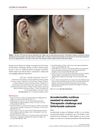
June 2008 in “Journal of the European Academy of Dermatology and Venereology” A man with Acrodermatitis continua did not get better with etanercept treatment, and his condition worsened, suggesting treatment effectiveness may vary by genetics and race.
17 citations
,
July 2018 in “Environmental and Experimental Botany” Silencing NtNCED3-2 gene in tobacco reduces drought tolerance and impairs growth.
16 citations
,
October 2018 in “BMC Complementary and Alternative Medicine” Crataeva nurvala leaves may help reduce anxiety and improve sleep.
 18 citations
,
April 2001 in “Bioorganic & Medicinal Chemistry Letters”
18 citations
,
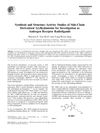
April 2001 in “Bioorganic & Medicinal Chemistry Letters” The nature of the side chain in RU 58841 derivatives greatly affects its AR affinity, with the N-(iodopropenyl) derivative 13 showing the highest AR binding affinity, suggesting its potential for developing high-affinity radioiodinated AR radioligands.
 January 2017 in “Brazilian Journal of Pharmaceutical Sciences”
 Arteannuin might work against cancer and Alzheimer's by targeting neprilysin.
 1 citations
,
February 2022 in “bioRxiv (Cold Spring Harbor Laboratory)”
1 citations
,
February 2022 in “bioRxiv (Cold Spring Harbor Laboratory)” Certain interactions help prepare the androgen receptor for pairing and activation, which is important for its role in development and disease.
July 2026 in “Journal of Enzyme Inhibition and Medicinal Chemistry” Improved CRBN ligands make protein degraders more effective and drug-like.
2 citations
,
May 2023 in “The Journal of Immunology” NXC736 significantly reduced hair loss in mice with alopecia areata.
![Benzo[c]quinolizin-3-ones: A Novel Class of Potent and Selective Nonsteroidal Inhibitors of Human Steroid 5α-Reductase 1](/images/assets/ff6e6cbe-cb9c-4d11-87ef-671d28ffd4fa/small/15506.jpg) 28 citations
,
September 2000 in “Journal of Medicinal Chemistry”
28 citations
,
September 2000 in “Journal of Medicinal Chemistry” Benzo[c]quinolizin-3-ones are effective nonsteroidal inhibitors of human steroid 5α-reductase 1.
 44 citations
,
August 2010 in “Journal of Investigative Dermatology”
44 citations
,
August 2010 in “Journal of Investigative Dermatology” Alopecia areata seriously lowers quality of life, especially affecting self-image, mental health, and social life.
 4 citations
,
February 2016 in “Clinical Pharmacology & Therapeutics”
4 citations
,
February 2016 in “Clinical Pharmacology & Therapeutics” Hair follicle samples effectively show how well the drug MK-0752 targets and engages with the Notch pathway.
 11 citations
,
January 2000 in “The Journal of Steroid Biochemistry and Molecular Biology”
11 citations
,
January 2000 in “The Journal of Steroid Biochemistry and Molecular Biology” LY320236 is a strong blocker of two enzymes that change testosterone into dihydrotestosterone and might help treat conditions related to male hormones.
21 citations
,
January 1999 in “Molecular and Cellular Biochemistry” Niacin deficiency makes rats more sensitive to cancer-causing chemicals.
 201 citations
,
November 1964 in “Journal of neurophysiology”
201 citations
,
November 1964 in “Journal of neurophysiology” The cuneate nucleus has two main neuron types: relay neurons and interneurons.
41 citations
,
April 2009 in “Journal of comparative neurology” P2X3-IR fibers are widespread in rat skin and likely help detect pain.
64 citations
,
March 2008 in “Neuropsychopharmacology”  August 2016 in “Journal of Investigative Dermatology”
 Blocking the CCR5 receptor may be a new way to treat hair loss from alopecia areata.
April 2026 in “ENLIGHTEN (Jurnal Bimbingan dan Konseling Islam)” January 2008 in “OhioLink ETD Center (Ohio Library and Information Network)” SARMs work differently in tissues due to unique interactions and structures.
 January 2023 in “Annals of Dermatology”
 Patients with a specific genetic variant have more severe alopecia areata and higher recurrence rates.
April 2016 in “The journal of investigative dermatology/Journal of investigative dermatology” Laminin-511 is involved in psoriasis development and can be regulated by cannabinoid receptor type 1.
 74 citations
,
March 1963 in “Archives of Dermatology”
74 citations
,
March 1963 in “Archives of Dermatology” Triparanol therapy can cause hair loss and skin dryness without inflammation or damage to hair follicles or skin structures.
 1 citations
,
August 1946 in “Archives of dermatology”
1 citations
,
August 1946 in “Archives of dermatology” The meeting highlighted the complexity and variability of skin conditions and differing opinions on their diagnoses and treatments.
January 2011 in “The Chinese Journal of Dermatovenereology” Shorter GGN repeats in the androgen receptor gene are linked to androgenetic alopecia.
February 2009 in “RePub (Erasmus University Rotterdam)” Androgen receptor activity is influenced by hormones, co-factors, modifications, and mutations.
3 citations
,
March 2012 in “Arab Journal of Urology” Certain drugs can reduce bladder muscle contractions, potentially helping treat bladder diseases.
 May 2025 in “Journal of Nanobiotechnology”
 The gel improves hair regrowth and reduces irritation in alopecia areata treatment.
 May 2026 in “The Journal of Headache and Pain”
 Inhibiting certain brain neurons may reduce pain and anxiety in trigeminal neuralgia.
 19 citations
,
May 2014 in “Molecules”
19 citations
,
May 2014 in “Molecules” Avicequinone C, a compound found in the Avicennia marina plant, can reduce hair loss by inhibiting a hormone linked to androgenic alopecia.