 27 citations
,
June 2017 in “International Journal of Dermatology”
27 citations
,
June 2017 in “International Journal of Dermatology” The study suggests that acne keloidalis nuchae is linked to conditions like pseudofolliculitis barbae, scalp infections, metabolic syndrome, and is more common in males with an average onset age of 25.4 years.
 25 citations
,
February 2019 in “Genomics”
25 citations
,
February 2019 in “Genomics” Cashmere and milk goats have different hair growth cycles and gene expressions, which could help improve wool production.
 September 2025 in “Wound Repair and Regeneration”
 Understanding how new hair follicles form after skin injury could help prevent scars.
 March 2024 in “Tissue engineering. Part A”
 Negative pressure therapy increases hair growth in mice.
The PI's development is closely linked to skin and hair pigmentation in macaques.
April 2015 in “Journal of Investigative Dermatology”  1 citations
,
February 2023 in “All Life”
1 citations
,
February 2023 in “All Life” The research identified proteins that change as goat hair follicles begin to form, helping to understand how cashmere grows.
 15 citations
,
December 2016 in “Obstetrics & Gynecology”
15 citations
,
December 2016 in “Obstetrics & Gynecology” Most skin changes during pregnancy are harmless and moles don't significantly change, but many women experience pigmentation changes due to hormones and sun exposure.
3 citations
,
April 2019 in “Stem cells international” Markers CRABP1, Nestin, and Ephrin B2 are present in skin cancer environments and may influence their development.
51 citations
,
August 2012 in “Differentiation” Mouse genital development depends on male or female hormones for specific features.
August 2025 in “Current Issues in Molecular Biology” Key pathways like WNT, EGF, FGF, SHH, and BMP regulate poultry feather growth, with BMP inhibiting it.
5 citations
,
March 1993 in “The Journal of Cell Biology” A soluble factor in developing mouse whisker pads boosts nerve growth factor mRNA production.
23 citations
,
June 2023 in “Cell Reports” Early hair follicle development involves distinct cell populations and Wnt signaling influences cell identity.
 47 citations
,
May 2002 in “Journal of Cutaneous Medicine and Surgery”
47 citations
,
May 2002 in “Journal of Cutaneous Medicine and Surgery” Pregnancy can cause normal skin changes that usually go away after childbirth and don't need treatment.
 192 citations
,
March 2017 in “Cell host & microbe”
192 citations
,
March 2017 in “Cell host & microbe” Hair follicle development and microbes help regulatory T cells gather in newborn skin.
January 2023 in “Nature Immunology” Certain immune cells help hair growth by regulating iron in the skin.
 4 citations
,
July 2013 in “Journal of Dermatological Science”
4 citations
,
July 2013 in “Journal of Dermatological Science” Pregnancy right after giving birth in mice lacking IL-10 causes milk that leads to liver issues and hair loss in their babies.
 July 2025 in “International Journal of Dermatology”
 Safe alopecia treatments for breastfeeding women are limited due to potential risks to infants.
 829 citations
,
May 2007 in “Nature”
829 citations
,
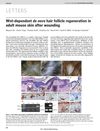
May 2007 in “Nature” Hair follicles can regrow in wounded adult mouse skin using a process like embryo development.
 60 citations
,
July 2011 in “Stem Cells and Development”
60 citations
,
July 2011 in “Stem Cells and Development” Certain signals and genes play a key role in hair growth and regeneration, and understanding these could lead to new treatments for skin regeneration.
11 citations
,
January 1988 3 citations
,
August 2023 in “Genes” The document concludes that various signaling pathways and genetic factors are crucial for chicken feather development, affecting poultry quality.
 May 2022 in “Research Square (Research Square)”
 Nestin marks cells that can become a specific type of skin cell in hair follicles of both developing and adult mice.
 11 citations
,
October 2015 in “Journal der Deutschen Dermatologischen Gesellschaft”
11 citations
,
October 2015 in “Journal der Deutschen Dermatologischen Gesellschaft” Women who had bariatric surgery risk nutritional deficiencies causing skin issues during pregnancy and breastfeeding.
 June 2026 in “Scientific Reports”
 Nestin-expressing hair follicle cells may be useful for nerve repair and regeneration.
47 citations
,
November 1966 in “Archives of Dermatology” Trichorrhexis nodosa is mainly caused by hair trauma, not a metabolic defect.
September 2019 in “Journal of Investigative Dermatology” Sox13 is a new marker for early hair follicle development and differentiation.
4 citations
,
January 2013 in “Genetics and Molecular Research” VEGF and microvessel density are closely linked and peak during specific hair growth phases in cashmere goats.
 24 citations
,
May 1963 in “Archives of Dermatology”
24 citations
,
May 1963 in “Archives of Dermatology” Most new moms had their hair grow back within 4-6 months after childbirth, and hair loss is likely due to hormonal changes.
18 citations
,
May 2004 in “Archives of Dermatology” Severe nutritional deficiency can cause serious health and development issues, including skin problems and hair loss.