6 citations
,
November 2020 in “bioRxiv (Cold Spring Harbor Laboratory)” Gene expression, especially Dkk4, is key to cat color patterns.
122 citations
,
June 1998 in “PubMed” Neurotrophins regulate nerve growth by balancing promotion and suppression.
October 2024 in “International Journal of Comprehensive Veterinary Research.” Neonate rabbits have consistent skin layers and no sweat glands.
 31 citations
,
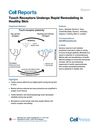
November 2016 in “Cell Reports”
31 citations
,
November 2016 in “Cell Reports” Touch sensitivity in mouse skin decreases during hair growth due to changes in touch receptors.
January 2024 in “Revista del Centro Dermatológico Pascua” Avoiding damage and using specific shampoo and supplements improved the hair condition.
3 citations
,
June 2002 in “PubMed” Two sisters with Netherton's syndrome had skin and hair issues, needing special diet and ointments.
1 citations
,
April 1936 in “Journal of Experimental Biology” Hanson's thymus extract sped up growth and development in mice over generations.
 16 citations
,
March 2016 in “The journal of investigative dermatology/Journal of investigative dermatology”
16 citations
,
March 2016 in “The journal of investigative dermatology/Journal of investigative dermatology” The Notch signaling pathway helps in mouse hair development through a noncanonical mechanism that does not rely on RBPj or transcription.
 155 citations
,
August 2003 in “Journal Of Experimental Zoology Part B: Molecular And Developmental Evolution”
155 citations
,
August 2003 in “Journal Of Experimental Zoology Part B: Molecular And Developmental Evolution” Understanding hair growth involves complex interactions between molecules and could help treat hair disorders.
 1 citations
,
January 2017 in “Springer eBooks”
1 citations
,
January 2017 in “Springer eBooks” The document explains how hair follicles develop, their structure, and how they grow.
 10 citations
,
October 2016 in “Experimental Dermatology”
10 citations
,
October 2016 in “Experimental Dermatology” Nail stem cells and Wnt signaling are important for fingertip regeneration but not sufficient for regenerating more complex limb structures.
 205 citations
,
April 2005 in “Journal of Investigative Dermatology”
205 citations
,
April 2005 in “Journal of Investigative Dermatology” Scientists have found a way to create hair follicles from skin cells of newborn mice, which can grow and cycle naturally when injected into adult mouse skin.
 10 citations
,
September 2018 in “Regenerative Medicine”
10 citations
,
September 2018 in “Regenerative Medicine” New hair can grow from large wounds in mice, but less so as they age, involving reprogramming of skin cells and specific molecular pathways.
 73 citations
,
June 2001 in “Endocrinology”
73 citations
,
June 2001 in “Endocrinology” Prolactin affects when mice shed and grow hair.
January 2019 in “Durham e-Theses (Durham University)” Less stiff collagen promotes higher cell growth in hair follicles.
 138 citations
,
June 2012 in “Genes & Development”
138 citations
,
June 2012 in “Genes & Development” Sonic hedgehog signaling is crucial for hair growth and maintaining hair follicle identity.
 16 citations
,
October 2014 in “Cell death and disease”
16 citations
,
October 2014 in “Cell death and disease” FoxN1 overexpression in young mice harms immune cell and skin development.
54 citations
,
October 2007 in “The FASEB Journal” Phospholipase C-δ1 is crucial for normal hair development.
2 citations
,
May 2020 in “Anais brasileiros de dermatologia/Anais Brasileiros de Dermatologia” The study found that specific proteins are markers of hair follicle development in human fetuses.
 January 1994 in “Nihon Chikusan Gakkaiho”
 Collagen fibrils in mink skin change structure during hair growth, becoming looser and thicker in the active phase.
 15 citations
,
January 2019 in “Experimental Dermatology”
15 citations
,
January 2019 in “Experimental Dermatology” Lanyu pigs show that partial-thickness wounds can partially regenerate important skin structures, which may help improve human skin healing.
 June 2022 in “Research Square (Research Square)”
 Nestin-expressing cells turn into a specific type of skin cell in hair follicles during development and in adults.
 July 2023 in “bioRxiv (Cold Spring Harbor Laboratory)”
 The mesenchyme can start hair growth, but the exact signal that causes this is still unknown.
December 2001 in “中華皮膚科醫學雜誌” An 18-year-old boy had a harmless skin nodule near his nose with hair and oil glands inside.
January 1998 in “The Nishinihon Journal of Dermatology” A 7-year-old girl was diagnosed with Netherton's Syndrome, shown by skin and hair symptoms.
April 2026 in “Development” Hemidesmosomes and Notch signaling help skin cells mature by moving them to the outer layer.
 January 2024 in “Dermatologic therapy”
 AKN is a chronic scalp condition in African-descended males, treated with topicals, antibiotics, steroids, and sometimes surgery or laser.
50 citations
,
September 1997 in “Developmental Biology” 2 citations
,
October 2023 in “JDDG Journal der Deutschen Dermatologischen Gesellschaft” Dupilumab significantly improved a 5-year-old girl's prurigo nodularis without side effects.
February 2020 in “Research Square (Research Square)” The research identified key genes that control the growth cycle of cashmere in goats, which could help improve cashmere goat breeding.