
Blocking the Mitochondrial Pyruvate Carrier causes stress in hair follicles, which can be reduced by an ISR inhibitor.
1 citations
,
February 2023 in “IntechOpen eBooks” Targeted photodynamic therapy is a promising method for precise disease treatment and diagnosis.
November 2023 in “Cosmetics” Rice derivatives in conditioners protect and improve hair health.
198 citations
,
September 2007 in “Clinics in Dermatology” Radiofrequency devices effectively tighten skin without surgery.
January 2024 in “Defence life science journal” Light therapy can help heal soft tissue injuries and reduce pain and inflammation.
 December 2024 in “Journal of Biophotonics”
 Dual wavelength LEDs may help reduce hair loss by lowering DHT levels.
 September 2025 in “The health sciences AUS.”
 Intralesional triamcinolone acetonide effectively treats acne keloidalis nuchae with minimal side effects.
Liquid nitrogen cryotherapy effectively promotes hair regrowth in alopecia areata.
 3 citations
,
June 2017 in “Medical lasers”
3 citations
,
June 2017 in “Medical lasers” A treatment combining laser energy and injections improved hair loss and unexpectedly also reduced hair graying.
April 2023 in “Journal of The American Academy of Dermatology” Use a 3-mm spot size and specific protective eyewear for safer and more effective laser treatment of facial veins.
1 citations
,
April 2024 in “PubMed” Photobiomodulation is effective and safe for healing injuries and improving appearance.
April 2018 in “Dermatologic Surgery”  April 2018 in “Journal of Investigative Dermatology”
 Finasteride helps female-pattern hair loss.
 July 1999 in “Journal of The European Academy of Dermatology and Venereology”
 Bath PUVA therapy works well for a skin condition without as many cancer risks and is cheaper, and iron deficiency might not cause female hair loss.
 14 citations
,
January 2006 in “Skinmed”
14 citations
,
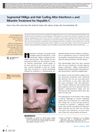
January 2006 in “Skinmed” A woman developed white patches on her skin and curly hair after hepatitis C treatment, likely due to the medication interferon alpha.
19 citations
,
October 2016 in “Journal of oncology pharmacy practice” A cancer patient's hair became permanently curly after treatment with nivolumab.
February 2024 in “Indian Journal of Chemistry” Compound N4 effectively kills breast cancer cells and compounds N2 and N3 have strong antibacterial and antifungal properties.
April 2026 in “Frontiers in Medicine” The 675-nm diode laser may safely help treat telogen effluvium.
 5 citations
,
January 2004 in “Biochimie”
5 citations
,
January 2004 in “Biochimie” Arsenic trioxide effectively treats APL, improving survival rates despite its toxicity.
4 citations
,
October 2019 in “Skin Appendage Disorders” Gefitinib can cause hair and eyebrow darkening.
September 2023 in “Journal of the American Academy of Dermatology” Low-dose oral naltrexone may help reduce inflammation in some scarring alopecia patients.
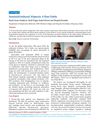 November 2022 in “The Indian journal of chest diseases & allied sciences”
 Isoniazid can rarely cause hair loss, which is reversible after stopping the drug.
 February 2009 in “Journal of The American Academy of Dermatology”
 Fractional infrared technology is effective and safe for treating cervical laxity.
March 2026 in “Dyes and Pigments” Riboflavin and blue light speed up genipin hair dye, making it fast, glossy, stable, and eco-friendly.
 January 2025 in “Dermatology and Therapy”
 UVFT helps diagnose hair and scalp diseases by showing different fluorescence patterns.
July 2025 in “Journal of Investigative Dermatology” BrdU speeds up hair follicle aging and reduces hair quality.
15 citations
,
January 1954 in “Endocrinology” Iodine in rat hair is linked to hair growth.
1 citations
,
August 2019 in “Journal of Dentistry Indonesia” A 645-nm diode laser effectively penetrates swine soft tissues, suggesting predictable therapeutic effects.
5 citations
,
July 2022 in “Radiation Research” The mouse model helps study and develop treatments for radiation-induced saliva reduction.
 8 citations
,
March 2018 in “Cosmetics”
8 citations
,
March 2018 in “Cosmetics” UV radiation damages hair by creating holes and peeling cuticle layers.