 April 2017 in “Journal of Investigative Dermatology”
 The PON1 192R gene variant is linked to a higher risk of psoriasis and heart disease in Western Mexico.
1 citations
,
December 2015 in “TURKDERM” Lichen planopilaris can be accurately diagnosed and effectively treated.
August 2025 in “BMC Pharmacology and Toxicology” The LTF gene may help predict and manage nonspecific orbital inflammation.
17 citations
,
November 2000 in “Journal of Investigative Dermatology” ZPK helps skin cells mature and may affect skin health.
29 citations
,
March 2016 in “Dermatologic therapy” Platelet-rich plasma may successfully treat lichen planopillaris, as shown by one patient's symptom regression.
 April 2023 in “Journal of Investigative Dermatology”
 PX-12 may help treat psoriasis by blocking inflammation and cell death.
 76 citations
,
June 2008 in “Journal of the American Academy of Dermatology”
76 citations
,
June 2008 in “Journal of the American Academy of Dermatology” The conclusion is that certain scalp tissue changes are characteristic of lichen planopilaris, with mucinous perifollicular fibroplasia being a new feature for diagnosis.
48 citations
,
November 2018 in “Journal of dermatological treatment” Women are more likely to have Lichen planopilaris, and treatments with cyclosporine and methotrexate are most effective but less safe than mycophenolate mofetil.

Lnc056 helps hair follicle stem cells grow by increasing TRIP6 expression.
July 2025 in “Cell & Bioscience” Specific immune cells and pathways contribute to hair follicle inflammation and hair loss, suggesting potential treatments for lichen planopilaris.
August 2009 in “Mechanisms of Development”  13 citations
,
April 2020 in “Experimental Cell Research”
13 citations
,
April 2020 in “Experimental Cell Research” PCAT1 helps hair growth by controlling miR-329/Wnt10b.
 3 citations
,
June 2022 in “European journal of human genetics”
3 citations
,
June 2022 in “European journal of human genetics” A new type of pachyonychia congenita linked to a specific keratin gene mutation was found in two Pakistani families.
April 2023 in “Journal of Investigative Dermatology” CD8+ T cells attack hair follicle stem cells, causing scarring and hair loss.
38 citations
,
January 2017 in “PPAR Research” PPAR-γ helps control skin oil glands and inflammation, and its disruption can cause hair loss diseases.
 6 citations
,
February 2010 in “Journal of The American Academy of Dermatology”
6 citations
,
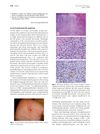
February 2010 in “Journal of The American Academy of Dermatology” A woman had a rare skin condition with recurring painful nodules that heal in 6 weeks, often without needing treatment.
 April 2018 in “Journal of Investigative Dermatology”
 Macrophages are more involved in Lichen planopilaris than in Frontal fibrosing alopecia.
 July 2022 in “The journal of investigative dermatology/Journal of investigative dermatology”
 A patient with a PLEC mutation has epidermolysis bullosa, muscular dystrophy, and myasthenia gravis, which improved with steroid treatment.
40 citations
,
May 2005 in “Journal of Cell Science” Truncated LTBP-1 disrupts TGF-β signaling, affecting hair growth.
July 2025 in “Journal of Investigative Dermatology” Nelfb is essential for dermal fat development and survival.
 April 2023 in “Journal of Investigative Dermatology”
 PTEN was identified as a specific marker for the skin disease cutaneous lupus erythematosus, and it helps increase the expression of harmful type I interferons.
18 citations
,
May 2006 in “Journal of Cutaneous Medicine and Surgery” Linear lichen planopilaris can affect the trunk, not just the face.
 6 citations
,
January 2020 in “International journal of biological sciences”
6 citations
,
January 2020 in “International journal of biological sciences” Removing the ROBO4 gene in mice reduces skin inflammation and hair loss by affecting certain inflammation pathways and gene expression.
4 citations
,
August 2022 in “Cells” lncRNA2919 slows down rabbit hair growth by stopping cell growth and causing cell death.
 September 2017 in “The journal of investigative dermatology/Journal of investigative dermatology”
 Scarred skin in lichen planopilaris loses immune cells due to a decrease in a specific protein in skin cells.
 April 2020 in “International journal of clinical and diagnostic pathology”
 COX-2 and Bcl-2 proteins are involved in Lichen Planus.
 September 2021 in “CRC Press eBooks”
 Lichen planopilaris causes permanent hair loss and scarring due to damage to hair follicles and can be mistaken for other hair loss conditions.
1 citations
,
March 2013 in “Journal of Dermatological Case Reports” A rare skin condition affected only the facial hair of a 46-year-old man.
Selenium levels are similar in healthy people from both high and low NPC risk areas.
November 2025 in “OPAL (Open@LaTrobe) (La Trobe University)” A new method helps find proteins in hair to identify fetal growth issues.