 1 citations
,
May 1965 in “Medical Clinics of North America”
1 citations
,
May 1965 in “Medical Clinics of North America” Hair growth dysfunction involves various conditions with limited treatment options.
 32 citations
,
June 2019 in “Frontiers in Endocrinology”
32 citations
,
June 2019 in “Frontiers in Endocrinology” Polycystic Ovary Syndrome (PCOS) is common in women with conditions like anovulation, hirsutism, hair loss, and type 2 diabetes, and it can lead to health risks like heart disease, obesity, insulin resistance, and depression. Non-Classic Congenital Adrenal Hyperplasia (NC-CAH) is also discussed.
 6 citations
,
January 2011 in “PubMed”
6 citations
,
January 2011 in “PubMed” The document concludes that most patients with endocrine disorders experience diffuse, non-scarring hair loss, with scarring hair loss being rare.
 October 2007 in “Clinical Biochemistry”
 New genotype linked to non-classical congenital adrenal hyperplasia found in Italian siblings.
January 2023 in “Indian Dermatology Online Journal” A 23-year-old man has a benign, non-progressive hair loss patch that doesn't respond to treatment but can be cosmetically treated.
 December 2020 in “TURKDERM”
 A 3-year-old boy was diagnosed with a rare, non-scarring hair loss condition called temporal triangular alopecia.
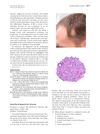
The man has Temporal Triangular Alopecia, a stable, non-scarring hair loss condition best treated with hair transplantation.
Trichoscopic examination is crucial for diagnosing congenital triangular alopecia.
April 2025 in “Pediatric Dermatology” Scalp biopsies are essential for diagnosing congenital alopecia areata.
 June 2023 in “Asian Journal of Pharmaceutical Research”
 Different types of hair loss require specific treatments, and new treatments are being developed.
9 citations
,
July 2016 in “Genes” Genetic variants in PDE6H and LPAR6 cause vision impairment and hair loss in two Pakistani brothers.
 56 citations
,
March 2010 in “Journal of Dermatology”
56 citations
,
March 2010 in “Journal of Dermatology” Most cases of Temporal Triangular Alopecia are found in early childhood and may be related to genetic conditions.
April 2023 in “The Medical Journal of Australia” A five-year-old girl has a harmless, unchanging bald patch on her scalp.
January 2022 in “Clinical Cases in Dermatology” A 12-year-old boy has a rare, harmless hair loss on his chin with no need for treatment.
 February 2014 in “Medicine - Programa De Formación Médica Continuada Acreditado”
 The document concludes that non-scarring alopecias can be reversed, but scarring alopecias cause permanent hair loss.
 7 citations
,
May 1978 in “International Journal of Dermatology”
7 citations
,
May 1978 in “International Journal of Dermatology” Recent hair loss research shows some progress, especially in understanding male pattern baldness, but effective treatments for many types of hair loss are still lacking.
71 citations
,
January 2011 in “Orphanet Journal of Rare Diseases” IFAP syndrome is a rare genetic disorder causing skin, hair, and eye issues, with limited treatment options.
7 citations
,
December 2011 in “InTech eBooks” Glucocorticoid and mineralocorticoid therapy effectively manage Congenital Adrenal Hyperplasia symptoms but have limitations.
 5 citations
,
November 2011 in “Expert Review of Dermatology”
5 citations
,
November 2011 in “Expert Review of Dermatology” The document concludes that early diagnosis and a comprehensive treatment plan are crucial for managing hair loss in children, with a focus on both medical and psychological support.
6 citations
,
January 2022 in “BMC Medical Genomics” Different gene mutations cause different types of ichthyosis, with some new mutations found.
 3 citations
,
January 2020 in “Clinical dermatology review”
3 citations
,
January 2020 in “Clinical dermatology review” Trichoscopy is useful for diagnosing hair and scalp disorders in people with darker skin.
 40 citations
,
October 2002 in “Endocrinology”
40 citations
,
October 2002 in “Endocrinology” Vitamin D3 analogs can promote hair growth in mice genetically prone to hair loss.
 33 citations
,
November 2006 in “Survey of Ophthalmology”
33 citations
,
November 2006 in “Survey of Ophthalmology” Madarosis is the loss of eyelashes and eyebrows due to various health issues and requires thorough examination to diagnose and treat the underlying cause.
 July 2015 in “Hair transplant forum international”
 Facial hair transplants are generally successful, with hair growth beginning around 3 months post-surgery.
 9 citations
,
July 2011 in “Scientific Reports”
9 citations
,
July 2011 in “Scientific Reports” Changes in the HR gene have influenced hair growth and may lead to hair loss conditions in humans.
1 citations
,
October 2000 in “Journal of Investigative Dermatology” The Thr1022Ala variant in the hairless gene is not a disease-causing mutation.
 14 citations
,
March 2022 in “Clinical Endocrinology”
14 citations
,
March 2022 in “Clinical Endocrinology” The document concludes that a systematic approach is crucial to identify causes of androgen excess in women beyond the most common cause, Polycystic ovary syndrome (PCOS).
 June 1997 in “Australasian Journal of Dermatology”
 Researchers found new hair and nail genes, how hair reacts to UV, differences in white and pigmented hair growth, nerve changes in alopecia, treatments for baldness and alopecia, a toenail condition linked to a genetic disorder, and that nail fungus is more common in people with psoriasis.
3 citations
,
January 2021 in “Veterinary dermatology” A litter of cats had a hair condition similar to a mouse mutation, leading to hair loss and abnormal hair and skin.
 1 citations
,
January 2013 in “Elsevier eBooks”
1 citations
,
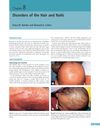
January 2013 in “Elsevier eBooks” The document reviews various hair and nail disorders, their causes, and treatments, emphasizing the need for proper diagnosis and the link between nail changes and systemic diseases.