 165 citations
,
September 2003 in “Toxicology and applied pharmacology”
165 citations
,
September 2003 in “Toxicology and applied pharmacology” Blocking COX, especially COX-2, in the skin can reduce inflammation and pain and may help prevent skin cancer.
 13 citations
,
October 2015 in “Journal of the European Academy of Dermatology and Venereology”
13 citations
,
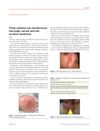
October 2015 in “Journal of the European Academy of Dermatology and Venereology” The document concludes that early recognition and appropriate treatment of red scalp, red ear, and red scrotum syndromes can lead to remission.
 1 citations
,
January 2010 in “Elsevier eBooks”
1 citations
,
January 2010 in “Elsevier eBooks” Any drug can cause skin reactions, but antibiotics, NSAIDs, and psychotropic drugs are more common, with some reactions being life-threatening.
 18 citations
,
March 2004 in “Clinics in Dermatology”
18 citations
,
March 2004 in “Clinics in Dermatology” Lupus can cause hair loss and nail changes, with treatments available for both.
 11 citations
,
January 2022 in “Journal der Deutschen Dermatologischen Gesellschaft”
11 citations
,
January 2022 in “Journal der Deutschen Dermatologischen Gesellschaft” Alopecia areata is a chronic condition causing hair loss, with new treatments targeting the immune system showing promise.
 September 2025 in “Dermatology and Therapy”
 Baricitinib is a promising treatment for alopecia areata in the UAE, but there are challenges with data and access.
 451 citations
,
March 2005 in “Endocrine Reviews”
451 citations
,
March 2005 in “Endocrine Reviews” The enzyme steroid sulfatase is linked to breast cancer and other conditions, and inhibitors are being developed for treatment.
 7 citations
,
March 2011 in “Expert Opinion on Drug Safety”
7 citations
,
March 2011 in “Expert Opinion on Drug Safety” Exemestane is effective and safe for treating certain breast cancers, with mild side effects, but needs more research on long-term effects.
February 2006 in “DOAJ (DOAJ: Directory of Open Access Journals)” Alopecia areata treatments include immune inhibitors, topical sensitizers, irritants, and minoxidil, with future focus on immunosuppressive approaches.
June 2015 in “Annals of the Rheumatic Diseases” Managing multiple autoimmune diseases in one patient is very challenging.
 1 citations
,
July 2014 in “Our Dermatology Online”
1 citations
,
July 2014 in “Our Dermatology Online” The patient with both scarring and non-scarring hair loss showed complex immune reactions and improved with steroid treatment.
 January 2022 in “Current Enzyme Inhibition”
 New nonsteroidal molecules can potentially increase dihydrotestosterone in neurons by blocking certain enzymes, without affecting prostate and seminal vesicle weight.
 November 2025 in “Russian Journal of Oncology”
 Modifying steroidal inhibitors shows promise for developing new cancer treatments.
 January 2026 in “Zenodo (CERN European Organization for Nuclear Research)”
 LX-38 is a safer drug option for hair loss and prostate issues without hormonal side effects.
 January 2026 in “Zenodo (CERN European Organization for Nuclear Research)”
 LX-38 is a safer drug option for treating prostate issues and hair loss without hormonal side effects.
13 citations
,
January 2015 in “Steroids” The study created a model to help design new inhibitors for steroidal 5α-reductase enzymes.
 15 citations
,
October 2014 in “Hormone Molecular Biology and Clinical Investigation”
15 citations
,
October 2014 in “Hormone Molecular Biology and Clinical Investigation” Some hair loss and prostate drugs might increase the risk of diabetes and heart disease.
 4 citations
,
August 2021 in “Biomedicine & Pharmacotherapy”
4 citations
,
August 2021 in “Biomedicine & Pharmacotherapy” 5-alpha reductase inhibitors, like finasteride and dutasteride, may cause depression, but more research is needed to understand why.
 7 citations
,
April 2023 in “Frontiers in immunology”
7 citations
,
April 2023 in “Frontiers in immunology” Oral baricitinib and ruxolitinib are effective and safe for treating alopecia areata.
 1 citations
,
March 2023 in “Clinical, Cosmetic and Investigational Dermatology”
1 citations
,
March 2023 in “Clinical, Cosmetic and Investigational Dermatology” Current treatments for Alopecia Areata have mixed success, and there's a need for better, more accessible options and support for affected individuals.
 14 citations
,
April 2017 in “American Journal of Transplantation”
14 citations
,
April 2017 in “American Journal of Transplantation” Skin problems from transplant drugs are common and need careful management in organ transplant patients.
 November 2023 in “Research Portal Denmark”
 Baricitinib shows promise for severe alopecia areata but isn't a cure and has side effects.
May 2025 in “Skin Appendage Disorders” Frontal fibrosing alopecia can be diagnosed by examining facial areas and treated with specific medications to stop its progression.
 April 2017 in “Journal of Investigative Dermatology”
 SIG-1451 could be a promising new treatment for atopic dermatitis.
21 citations
,
June 2017 in “Case Reports in Dermatology” Reducing gefitinib dosage improved hair loss, but scarring remained.
 9 citations
,
August 2014 in “Journal of The American Academy of Dermatology”
9 citations
,
August 2014 in “Journal of The American Academy of Dermatology” Hormonal imbalances may play a role in frontal fibrosing alopecia, and antiandrogenic drugs combined with steroids are currently the most effective treatment.
33 citations
,
March 2018 in “Italian Journal of Dermatology and Venereology” Cutaneous lupus erythematosus is a chronic skin disease that can progress to systemic lupus in some cases and requires treatment to prevent recurrences and scarring.
 7 citations
,
May 1978 in “International Journal of Dermatology”
7 citations
,
May 1978 in “International Journal of Dermatology” Recent hair loss research shows some progress, especially in understanding male pattern baldness, but effective treatments for many types of hair loss are still lacking.
 August 2015 in “Dermatología Argentina”
 Frontal fibrosing alopecia causes hairline recession and eyebrow loss in postmenopausal women.
 11 citations
,
May 2010 in “Journal of Medicinal Chemistry”
11 citations
,
May 2010 in “Journal of Medicinal Chemistry” A new compound was created in 2010 that can control oil production when applied to the skin, and its effects are completely reversible after two weeks.