 January 2015 in “Springer eBooks”
 Understanding hair structure and growth is key for diagnosing hair diseases accurately.
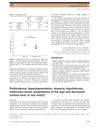 January 2013 in “Journal of dermatology”
 A new medical syndrome may include skin changes, hair loss, sweating issues, bone malformations, leg swelling, and low cortisol.
 January 2011 in “International Journal of Trichology”
 The conference highlighted new diagnostic tools, the role of genetics in hair loss, and emerging treatments.
 February 2008 in “Basic and clinical dermatology”
 Photographic imaging is crucial for documenting and managing hair loss, requiring careful preparation and standardization to be effective.
 December 2007 in “CRC Press eBooks”
 Alopecia areata incognita causes widespread hair loss without patches and needs a scalp biopsy for diagnosis.
 May 2006 in “Women's Health Medicine”
 Excessive hair growth in women, often from high androgen levels, is usually caused by PCOS, and can be treated with hair removal, medication, and possibly weight loss.
 January 2006 in “Yearbook of Dermatology and Dermatologic Surgery”
 Hair graying is caused by the loss of pigment cells due to poor maintenance of stem cells in the hair follicle.
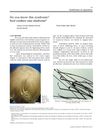
The document concludes that Loose Anagen Hair Syndrome is a benign condition where hair is thin and easily pulled out, often improving with age.
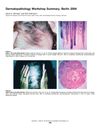 November 2005 in “Journal of Investigative Dermatology Symposium Proceedings”
 The workshop aimed to improve hair loss disorder diagnosis and understanding.
 July 2021 in “International Ophthalmology”
 Female hair loss patients more likely to have dry eye and gland issues.
 May 2021 in “Lasers in Surgery and Medicine”
 Minoxidil and photobiomodulation together improve hair growth better than minoxidil alone.
 May 2021 in “Experimental Cell Research”
 FOXC1 boosts SFRP1 in hair loss, suggesting new treatments.
 February 2021 in “Dermatological reviews”
 Nonablative radiofrequency therapy improves hair density, thickness, and growth rate.
 November 2020 in “Acta Scientific Women's Health”
 Low vitamin D levels can significantly contribute to hair loss, especially in women aged 35-45. Correcting these levels early may help prevent and treat this condition.
 March 2020 in “QJM: An International Journal of Medicine”
 SVF and PRP improve hair loss, but SVF causes more side effects.

Detailed history and physical examination are crucial for diagnosing hair loss.
 151 citations
,
May 2014 in “American Journal of Clinical Dermatology”
151 citations
,
May 2014 in “American Journal of Clinical Dermatology” Effective treatments for male pattern baldness include oral finasteride and topical minoxidil, while topical minoxidil is best for female pattern baldness.
 26 citations
,
March 2007 in “Clinical and experimental dermatology”
26 citations
,
March 2007 in “Clinical and experimental dermatology” Pimecrolimus cream is not effective for treating alopecia areata.
 13 citations
,
September 2018 in “Scientific Reports”
13 citations
,
September 2018 in “Scientific Reports” The research found that a complex gene network, controlled by microRNAs, is important for hair growth in cashmere goats.
 7 citations
,
September 2020 in “Journal of Cosmetic Dermatology”
7 citations
,
September 2020 in “Journal of Cosmetic Dermatology” Smoking increases early hair loss risk in men; quitting may help prevent it.
 3 citations
,
February 2019 in “Animal biotechnology”
3 citations
,
February 2019 in “Animal biotechnology” The PLP2 gene affects cashmere fiber quality in goats and is linked to hair growth and loss.
 2 citations
,
August 2023 in “Journal of Endocrinological Investigation”
2 citations
,
August 2023 in “Journal of Endocrinological Investigation” Excess maternal androgens can cause heart problems in offspring.
 2 citations
,
January 2012 in “International Journal of Trichology”
2 citations
,
January 2012 in “International Journal of Trichology” An Indian woman with Short Anagen Syndrome had very short hair and a lower quality of life.
 1 citations
,
August 2019 in “Research Square (Research Square)”
1 citations
,
August 2019 in “Research Square (Research Square)” Cashmere goats have a hair growth cycle with specific genes regulating growth, regression, and resting periods.
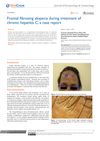 September 2017 in “Journal of Dermatology & Cosmetology”
 Hepatitis C treatment may cause frontal fibrosing alopecia.
 September 2003 in “Current Paediatrics”
 The document concludes that accurate diagnosis and understanding the type of hair disorder are crucial for treating hair loss in children.
 269 citations
,
August 2002 in “Journal of The American Academy of Dermatology”
269 citations
,
August 2002 in “Journal of The American Academy of Dermatology” 5% minoxidil works better for hair growth and density, with minor irritation.
 58 citations
,
October 1993 in “International Journal of Dermatology”
58 citations
,
October 1993 in “International Journal of Dermatology” Minoxidil helps hair growth and reduces shedding in women.
 13 citations
,
January 2016 in “Journal of the Egyptian Women's Dermatologic Society (Print)”
13 citations
,
January 2016 in “Journal of the Egyptian Women's Dermatologic Society (Print)” Minoxidil works faster and is more cost-effective for treating hair loss, but platelet-rich plasma microneedling can be an alternative for those who can't use minoxidil.
 160 citations
,
January 2009 in “Clinical Drug Investigation”
160 citations
,
January 2009 in “Clinical Drug Investigation” HairMax LaserComb® effectively promotes hair growth and stops hair loss in males with androgenetic alopecia, with no serious side effects.