1 citations
,
January 2019 in “Via Medica Journals” Graham-Little syndrome causes hair loss and skin bumps, with difficult treatment options.
 85 citations
,
October 2012 in “Dermatologic Clinics”
85 citations
,
October 2012 in “Dermatologic Clinics” Alopecia Areata is an autoimmune condition often starting before age 20, with varied treatment success and a need for personalized treatment plans.
8 citations
,
August 2019 in “JAAD case reports” Chronic cutaneous lupus erythematosus causes scarring, hair loss, and skin discoloration, especially on sun-exposed areas.
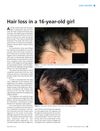 November 2014 in “Prescriber”
 The 16-year-old girl with hair loss was successfully treated for alopecia areata, leading to significant hair regrowth.
June 2024 in “Bioscientia Medicina Journal of Biomedicine and Translational Research” Most children with alopecia areata have patchy hair loss and common trichoscopic features like yellow and black dots.
 January 2008 in “Pratique médicale & chirurgicale de l'animal de compagnie”
 Alopecia X in dogs is a cosmetic issue, not a hormonal disorder, and harmful treatments should be avoided.
July 2024 in “Journal of Investigative Dermatology” Tailored treatments for alopecia areata show promising results, with pulse steroids effective for mild cases and Ritlecitinib, Dupilumab, or methotrexate and prednisone effective for severe cases.
 13 citations
,
July 2011 in “Journal of Dermatological Treatment”
13 citations
,
July 2011 in “Journal of Dermatological Treatment” Clobetasol and pimecrolimus are similarly effective for alopecia areata, but pimecrolimus has fewer side effects and is preferred for long-term use.
August 2016 in “Journal of the American Academy of Dermatology” The infant likely has Hay-Wells syndrome and needs genetic testing and heart screening.
 8 citations
,
May 2025 in “Dermatology and Therapy”
8 citations
,
May 2025 in “Dermatology and Therapy” Local corticosteroids can help with alopecia areata, but hair loss often returns after stopping treatment.
3 citations
,
April 2011 in “Journal of the American Academy of Dermatology” A 19-year-old man had a rare skin condition on one side of his face that looked like another skin disease.
Accurate diagnosis and tailored treatments are crucial for managing hair loss in humans and animals.
September 2014 in “The Journal for Nurse Practitioners” January 2016 in “Indian dermatology online journal” The patient has frontal fibrosing alopecia (FFA).
 4 citations
,
October 2018 in “Experimental Dermatology”
4 citations
,
October 2018 in “Experimental Dermatology” Dermoscopy shows that diffuse alopecia areata progresses through specific hair growth stages.
 1 citations
,
April 2019 in “The journal of investigative dermatology/Journal of investigative dermatology”
1 citations
,
April 2019 in “The journal of investigative dermatology/Journal of investigative dermatology” Melanocyte-associated antigens may play a key role in alopecia areata and could be targets for new treatments.
May 1979 in “Archives of Dermatology” Alopecia can be linked to autoimmune issues, vitiligo, nail problems, and sometimes cancer treatments.
 86 citations
,
July 2012 in “British journal of dermatology/British journal of dermatology, Supplement”
86 citations
,
July 2012 in “British journal of dermatology/British journal of dermatology, Supplement” There may be a connection between Frontal Fibrosing Alopecia and Lichen Planus Pigmentosus, and more research is needed to confirm this.
 1 citations
,
August 1946 in “Archives of dermatology”
1 citations
,
August 1946 in “Archives of dermatology” The meeting highlighted the complexity and variability of skin conditions and differing opinions on their diagnoses and treatments.
 4 citations
,
November 2021 in “Biomedicines”
4 citations
,
November 2021 in “Biomedicines” New digital tools are improving the diagnosis and understanding of irreversible hair loss conditions.
 July 2025 in “Pakistan Journal of Intensive Care Medicine”
 Clobetasol propionate 0.05% ointment is more effective than tacrolimus 0.1% ointment for treating alopecia areata.
 2 citations
,
May 2009 in “Medicine”
2 citations
,
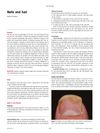
May 2009 in “Medicine” Hair and nails can help diagnose diseases, with nail issues often linked to skin conditions and hair loss having various causes and treatments.
February 2026 in “Journal of Advances in Biology & Biotechnology” Alopecia areata causes unpredictable hair loss and requires personalized treatment.
August 2025 in “American Journal of Dermatopathology” Accurate diagnosis and personalized treatment are crucial in dermatopathology.
February 2026 in “International Journal of Dermatology” Experts recommend specific treatments for alopecia areata based on age and severity, emphasizing the need for better treatments and acknowledging its psychological impact.
 January 2026 in “International Research Journal of Modernization in Engineering Technology and Science”
 Alopecia areata causes patchy hair loss and is often treated with corticosteroids.
3 citations
,
September 2024 in “JAAD reviews.” Topical corticosteroids are recommended first for treating pediatric alopecia areata due to their safety and ease of use.
 March 2021 in “Revista Medicina Cutánea Ibero-Latino-Americana”
 Trichoscopy helps diagnose scarring alopecia early and non-invasively.
 September 2021 in “CRC Press eBooks”
 Fibrosing alopecia in a pattern distribution is a type of hair loss that may often be overlooked, especially in men.
Low level laser therapy effectively treats alopecia areata on the scalp.